At a glance
What this guide can help you understand
How Ahmedabad patients can approach exercise after cardiac events or orthopaedic procedures with assessment, monitoring, and gradual progression.
What should you bring to a consultation?
Share your main concern, when it started, what affects it, current medicines, and any reports or precautions you have been given.
See our clinical assessment approachWhen should you pause and seek medical advice?
Pause routine exercise and seek medical advice for sudden severe change, new neurological symptoms, breathing difficulty, chest pain, major injury, or feeling acutely unwell.
This guide is educational and does not replace diagnosis or urgent care.
Cardiac and orthopaedic rehabilitation can both benefit from exercise, but they do not share one automatic progression. In Ahmedabad, a safer plan begins by identifying whether the person is returning after a cardiac event or procedure, rebuilding after orthopaedic surgery, or managing a mixture of pain, weakness, and deconditioning. Assessment and monitoring come before a generic target.
The practical context in this city
Ahmedabad’s care profile includes cardiac and orthopaedic rehabilitation as well as stroke, neurological, and post-surgery pathways. That makes it important to state the pathway clearly in a booking or follow-up conversation. A cardiac plan may require medical clearance or cardiac rehabilitation input; a post-operative plan may include weight-bearing, wound, or range restrictions; a neurological plan may need balance and supervision. Locality and city identify the enquiry route, not the safe intensity.
What a physiotherapist assesses
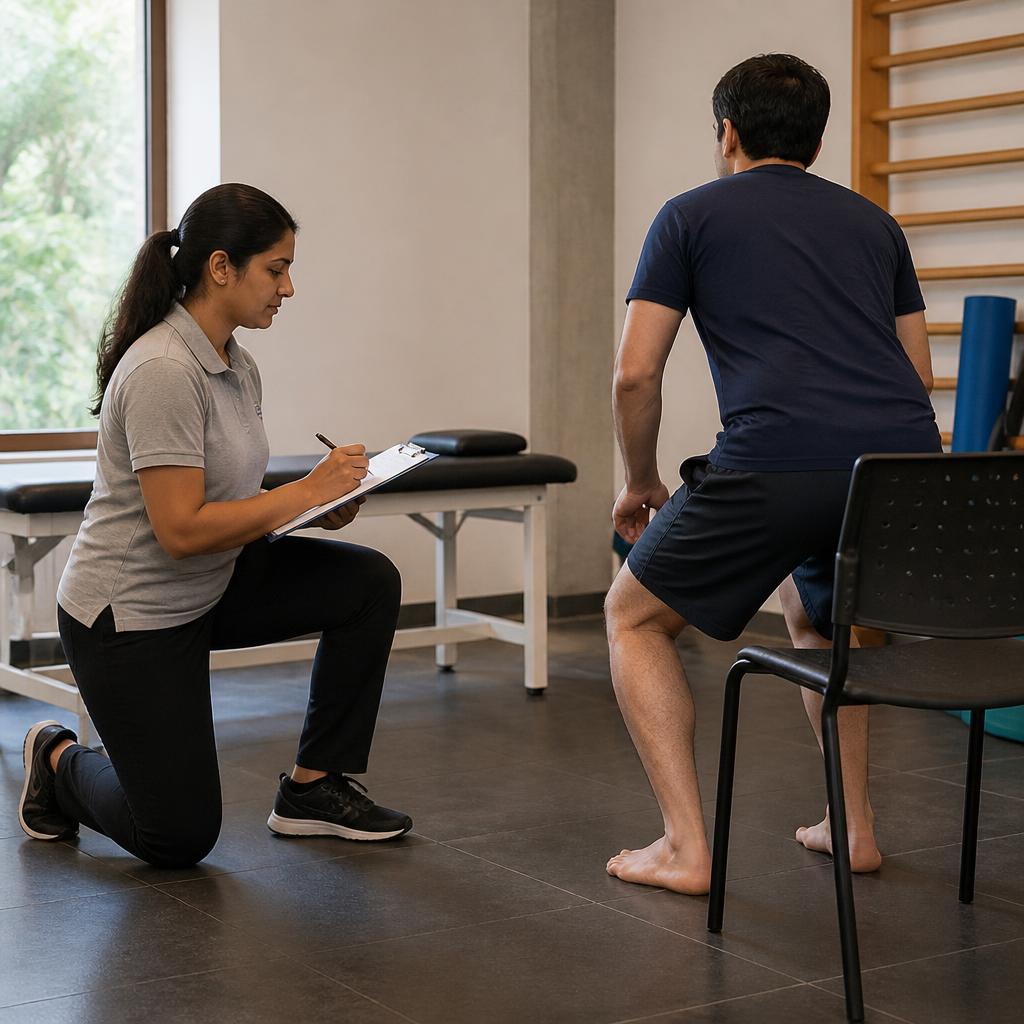
The assessment may review the procedure or event, current restrictions, medications, pain, swelling, wound status, breathing, dizziness, falls, strength, range, walking, and the response to a simple functional task. For some cardiac patients, the medical team may decide whether an exercise test or additional monitoring is appropriate. For orthopaedic recovery, the clinician considers the surgeon’s instructions and whether the person can control the joint through the needed daily task. The goal is to understand response and readiness, not to label someone by age alone.
How rehabilitation can progress
Aerobic work, strengthening, mobility, and balance can serve different purposes. The plan may start with supported transfers or short walking, then add duration, distance, resistance, or complexity one variable at a time. The person’s symptoms during the task and later that day or the next day help guide progression. An activity log can record the task, perceived effort, rest, pain or breathlessness, and function. A calendar promise is not a safe substitute for this feedback after a cardiac event or orthopaedic procedure.
What to expect from a home physiotherapy session
At home, the professional can observe how the person moves from a chair, uses a stair or corridor, turns, carries a light object, or prepares for an ordinary daily task. The environment is checked for trip hazards, stable furniture, footwear, and the correct use of any aid. The family should leave knowing what is allowed, what needs supervision, what symptoms mean stop, and when the team will reassess. Remote review is useful for a previously assessed plan, not for ignoring new chest symptoms or a worsening wound.
Do
- Keep the medical clearance and surgeon restrictions available, progress only the variable the clinician has selected, and record recovery as well as performance.
- Keep a simple record of symptoms, activity, sleep, and the tasks that are becoming easier or harder.
- Share medical reports, medication changes, surgeon restrictions, and any recent change in symptoms before exercise is progressed.
Don’t
- Do not set a universal heart-rate, oxygen, blood-pressure, load, or return-to-exercise date, and do not assume that a pain-free day means the joint or heart is ready for a larger workload.
- Do not copy an exercise from a video if it increases symptoms, requires equipment you cannot control, or conflicts with a medical restriction.
- Do not use pain, fatigue, or a single good day as the only measure of readiness for a harder task.
Safety and when to seek medical advice
Stop and seek urgent medical assessment for chest pain or pressure, fainting or near-fainting, severe unexpected breathlessness, new neurological symptoms, or a rapidly worsening symptom. After surgery, seek review for marked swelling, wound discharge, fever, calf pain, or a sudden loss of function. Exercise should not be started or progressed through an unstable cardiac, pulmonary, neurological, or postoperative concern.
Booking and follow-up
Home physiotherapy is arranged after the team understands the person’s condition, location, current precautions, and preferred care. Goswami Rehab offers home visits at ₹1,125–₹1,350 and online consultation at ₹742. Send the online booking request with the main concern, city, and preferred dates; the team confirms the appropriate next step within 24 hours. A teleconsultation can be useful when travel is difficult or when an exercise plan needs review, but it does not replace emergency or specialist medical care.
This article is educational information only. It does not diagnose a condition or replace advice from a doctor, surgeon, dietitian, speech and language therapist, or treating physiotherapist. Individual plans, timelines, and outcomes vary.
Related care: home physiotherapy coverage in Ahmedabad and knee pain physiotherapy.
Clinical sources & further reading
These public resources provide general clinical guidance. They do not replace an assessment or an individual treatment plan.
- Develop a physical activity plan for youAmerican Heart Association
- Exercise testing and prescriptionAmerican College of Sports Medicine
- Guidelines and recommended strategies for physical activityCenters for Disease Control and Prevention
- Postoperative rehabilitationNICE
- Physical activity and dietNICE
- Ahmedabad district: official district informationDistrict Administration, Ahmedabad
Continue exploring
Choose your next step
Keep exploring with a focused guide, a relevant care option, or a direct enquiry.
Need professional advice?
Book an assessment with our expert team.