At a glance
What this guide can help you understand
How Noida patients can use clinician-guided symptom and recovery feedback during pulmonary rehabilitation without fixed intensity or oxygen targets.
What should you bring to a consultation?
Share your main concern, when it started, what affects it, current medicines, and any reports or precautions you have been given.
See our clinical assessment approachWhen should you pause and seek medical advice?
Pause routine exercise and seek medical advice for sudden severe change, new neurological symptoms, breathing difficulty, chest pain, major injury, or feeling acutely unwell.
This guide is educational and does not replace diagnosis or urgent care.
Exercise during pulmonary rehabilitation for COPD is not a test of how much breathlessness a person can tolerate. It is a clinician-guided way to build useful activity while noticing recovery, symptom change, medication questions, oxygen instructions, and the difference between an expected response and a medical problem. The plan should be individualized rather than built from a universal target.
The practical context in this city
Noida is used as the home setting for a symptom-led pulmonary-rehabilitation question. The relevant route may be a room, corridor, lift lobby, or building entrance, and the practical difficulty may include heat, traffic, equipment, or the effort of leaving home. The city does not establish a safe oxygen level, heart-rate zone, distance, or intensity.
What a physiotherapist assesses
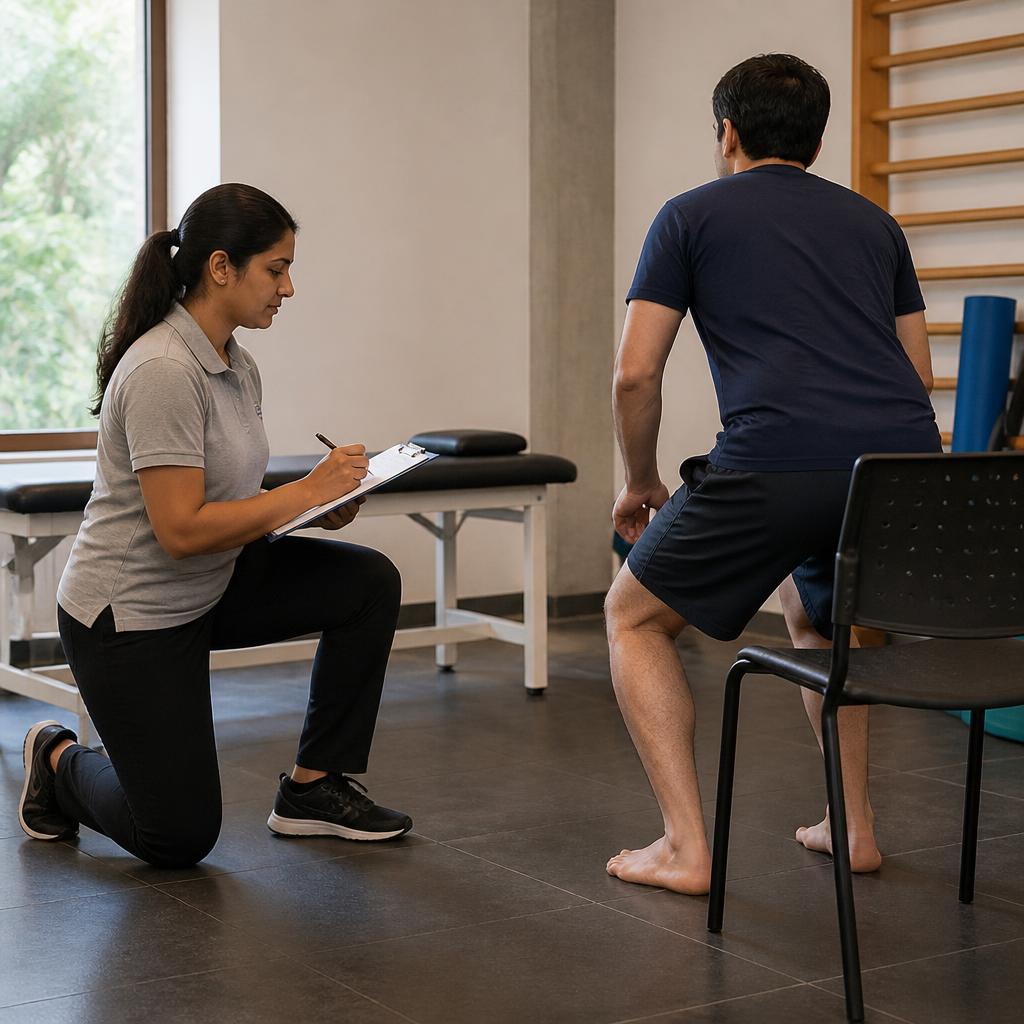
The professional reviews the respiratory diagnosis, recent exacerbations, medicines, inhaler technique, oxygen or other equipment, cough and sputum changes, chest symptoms, sleep, anxiety, strength, and the recovery after activity. They may observe a short functional task and ask what happens during it, later that day, and the next morning. A change in sputum, breathlessness pattern, confusion, or general function can require medical review instead of exercise progression.
How rehabilitation can progress
Pulmonary rehabilitation can use tailored aerobic, strengthening, breathing, and functional work with rest and education. Support, surface, duration, recovery, and task complexity can be adjusted according to the assessment. The response is information, not a score to chase: a persistent decline, unusual fatigue, or symptom change should lead to contact with the clinical team.
What to expect from a home physiotherapy session
A home session may check the space, walking route, chair, inhaler or oxygen setup, and the caregiver’s role. The clinician can rehearse a safe warm-up, pacing method, recovery position, and stop rule already suited to the person. A remote review can refine a previously assessed plan but should not clear a new or worsening respiratory symptom.
Do
- Use the prescribed respiratory support, record symptoms and recovery, keep the route clear, and tell the team when the usual response changes.
- Keep a short record of symptoms, sleep, activity, food or bowel changes where relevant, and the task that is becoming easier or harder.
- Share discharge summaries, medication changes, restrictions, equipment, and new symptoms before a programme is progressed.
Don’t
- Do not increase exercise because a single day feels easier, alter oxygen or inhaler instructions yourself, or push through a chest symptom or unexplained breathlessness.
- Do not copy another person’s protocol or use one good day as proof that a larger workload is safe.
- Do not delay medical review for a new or rapidly changing symptom because it appears during rehabilitation.
Safety and when to seek medical advice
Stop and seek urgent medical help for chest pain, fainting, blue lips, confusion, severe or unexpected breathlessness, a fast or irregular heartbeat with symptoms, or a marked change in sputum or alertness. Exercise should wait while a respiratory clinician assesses a new or unstable pattern.
Booking and follow-up
Home physiotherapy is arranged after the team understands the person’s condition, location, current precautions, and preferred care. Goswami Rehab offers home visits at ₹1,125–₹1,350 and online consultation at ₹742. Send the online booking request with the main concern, city, and preferred dates; the team confirms the appropriate next step within 24 hours. A teleconsultation can help review a previously assessed plan, but it does not replace emergency or specialist medical care.
This article is educational information only. It does not diagnose a condition or replace advice from a doctor, surgeon, neurologist, pulmonologist, dietitian, or treating physiotherapist. Individual plans, timelines, and outcomes vary.
Related care: home physiotherapy coverage in Noida and cardiopulmonary service overview.
Clinical sources & further reading
These public resources provide general clinical guidance. They do not replace an assessment or an individual treatment plan.
- Pulmonary rehabilitation for stable COPD and exercise limitationNICE
- Exercising with COPDNHS Inform
- Pulmonary rehabilitationNHS England
- Guideline for pulmonary rehabilitation in adultsBritish Thoracic Society
- Chronic obstructive pulmonary disease in over 16sNICE
- Gautam Buddh Nagar district: official informationDistrict Administration, Gautam Buddh Nagar
Continue exploring
Choose your next step
Keep exploring with a focused guide, a relevant care option, or a direct enquiry.
Need professional advice?
Book an assessment with our expert team.