At a glance
What this guide can help you understand
Physiotherapy guidance: Pain near the thumb can reflect tendon irritation, joint problems, or other conditions; provocative self-tests are not a diagnosis.
What should you bring to a consultation?
Share your main concern, when it started, what affects it, current medicines, and any reports or precautions you have been given.
See our clinical assessment approachWhen should you pause and seek medical advice?
Pause routine exercise and seek medical advice for sudden severe change, new neurological symptoms, breathing difficulty, chest pain, major injury, or feeling acutely unwell.
This guide is educational and does not replace diagnosis or urgent care.
A practical starting point
Pain near the thumb can reflect tendon irritation, joint problems, or other conditions; provocative self-tests are not a diagnosis.
How this concern can affect daily life
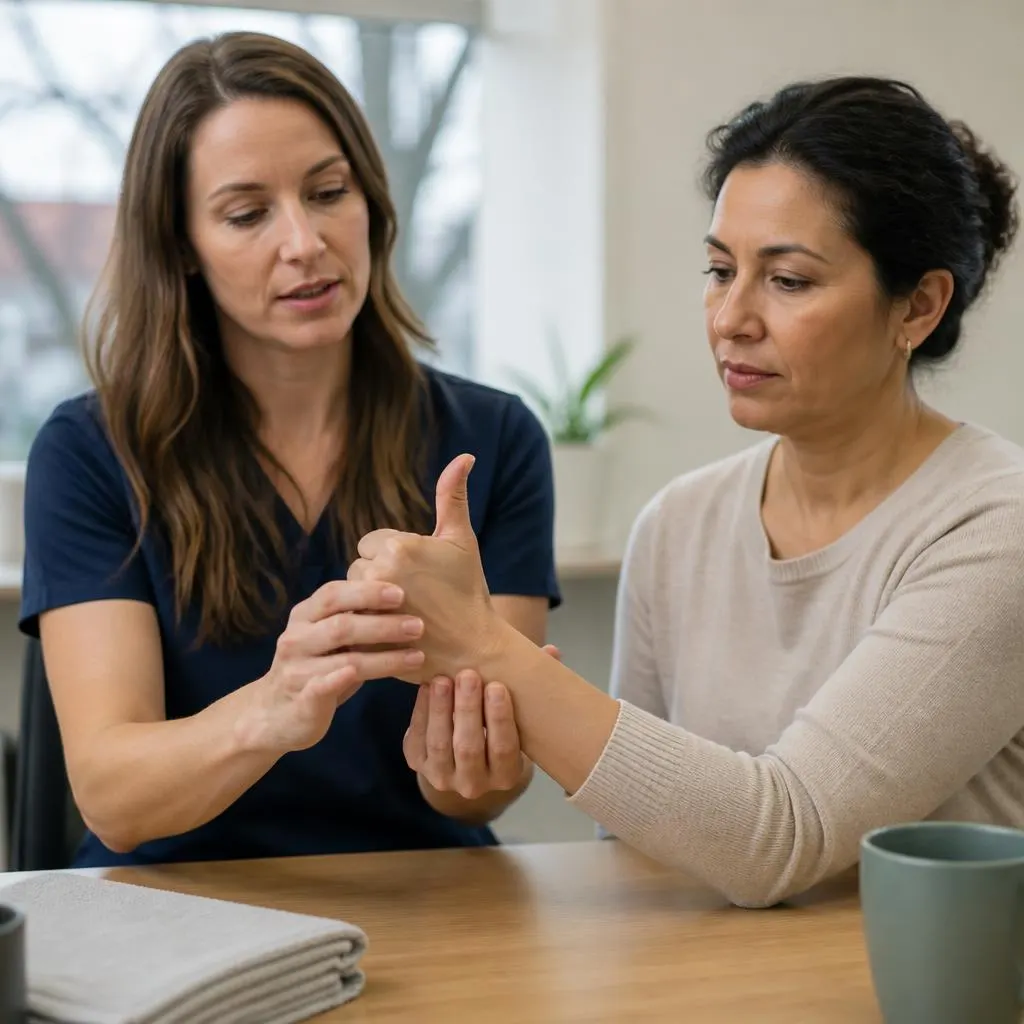
De Quervain tenosynovitis affects tendons on the thumb side of the wrist and can make gripping, lifting, or caring tasks uncomfortable. Similar pain can come from thumb-base arthritis, a sprain, or nerve irritation. Repeatedly bending the thumb into the palm to reproduce pain can aggravate symptoms and cannot confirm the diagnosis.
What an assessment can clarify
A clinician can ask about onset, repetitive tasks, pregnancy or postpartum status, injury, and the exact grip that hurts. They may examine wrist and thumb movement and compare local tenderness, while checking for signs of fracture or another cause. Imaging or specialist review is considered if the history warrants it.
An assessment should start with the person's history, priorities, and current medical advice. A clinician may ask when symptoms began, what changes them, which activities matter most, and whether other diagnoses or treatments affect the plan. Depending on the concern, the visit can include observation of movement, function, balance, strength, breathing, or a relevant daily task. A home or video appointment cannot replace an examination or test that requires in-person medical care.
Planning care safely
Initial management may reduce repeated high-force thumb movements and adjust how objects are held. A clinician can discuss whether a short-term splint, graded tendon loading, or medical treatment is appropriate. Keep the wrist moving within a tolerable range; prolonged immobilization or forceful stretching is not a default solution.
Progress is not measured by pain or effort alone. A clinician can agree on a baseline, choose a small number of relevant tasks, and review how symptoms respond later that day and the following day. If symptoms increase sharply, linger, or change in character, pause the new activity and contact the treating team. The plan may need to be reduced, changed, or reviewed by another health professional before progression.
Making the plan workable at home
Use a light everyday object to review grip and lifting strategy, then change one factor at a time. The clinician may suggest using two hands, reducing pinch force, or changing the handle size. Stop an exercise that produces sharp pain or a prolonged flare, and seek reassessment if hand function is falling.
Home advice should fit the actual task, available space, footwear, supports, and the person's energy and confidence. A family member can help with setup if the person wants that support, but should not be asked to lift or move someone beyond their training. For online care, use a stable camera position and clear floor space only when the clinician says a movement check is appropriate.
Questions to take to a clinician
Ask what findings point to tendon irritation rather than a joint or nerve issue, how long a splint should be used if recommended, and how to modify work or caregiving tasks. Discuss whether pain relief or an injection needs medical input.
It can help to bring a short symptom timeline, a current medication and treatment list, and one or two examples of activities that have become difficult. Ask which changes are expected, which are not, and how to contact the care team if the plan is not tolerated. Do not stop prescribed treatment, change medication, or delay a medical review because an exercise or nutrition article suggests a possible explanation.
When to pause and seek help
Seek prompt care after a wrist injury with deformity, marked swelling, or inability to use the hand. Numbness, color change, fever, rapidly increasing redness, or severe unexplained pain also needs medical assessment.
Seek urgent medical help for severe or rapidly worsening symptoms, chest pain, fainting, new major weakness, a serious injury, or any other emergency. For new, persistent, or unexplained symptoms, speak with a qualified clinician before starting or increasing an exercise programme.
Follow-up and availability
Care should be reviewed against the person's goals and medical plan, not a fixed calendar or a promised outcome. Online consultation can be requested from Bengaluru. A home visit is considered only where the service is active and after exact-locality and clinician availability are confirmed; the current introductory home-visit price is ₹1,125 – ₹1,350. The current introductory online consultation price is ₹742.
Local coverage: Home physiotherapy in Bengaluru.
Clinical sources & further reading
These public resources provide general clinical guidance. They do not replace an assessment or an individual treatment plan.
Continue exploring
Choose your next step
Keep exploring with a focused guide, a relevant care option, or a direct enquiry.
Need professional advice?
Book an assessment with our expert team.