At a glance
What this guide can help you understand
How activity can return after Guillain–Barré syndrome with assessment, fatigue monitoring, recovery logs, and clear medical stop rules.
What should you bring to a consultation?
Share your main concern, when it started, what affects it, current medicines, and any reports or precautions you have been given.
See our clinical assessment approachWhen should you pause and seek medical advice?
Pause routine exercise and seek medical advice for sudden severe change, new neurological symptoms, breathing difficulty, chest pain, major injury, or feeling acutely unwell.
This guide is educational and does not replace diagnosis or urgent care.
Exercise after Guillain–Barré syndrome needs a different question from ordinary fitness training: how can activity return without overlooking neurological fatigue, residual weakness, breathing history, pain, or autonomic symptoms? Research supports rehabilitation, but it does not provide one universal home dose for every person. The useful plan is assessed, supervised when needed, and adjusted from the response over time.
The practical context in this city
A Mumbai home programme can be shaped around the person’s current walking route, transfers, work or household role, equipment, and access to follow-up. The city does not establish a recovery date or a safe intensity. A person who had ventilation, severe weakness, pain, balance problems, or autonomic instability may need a different medical and rehabilitation pathway from someone with a milder course.
What a physiotherapist assesses
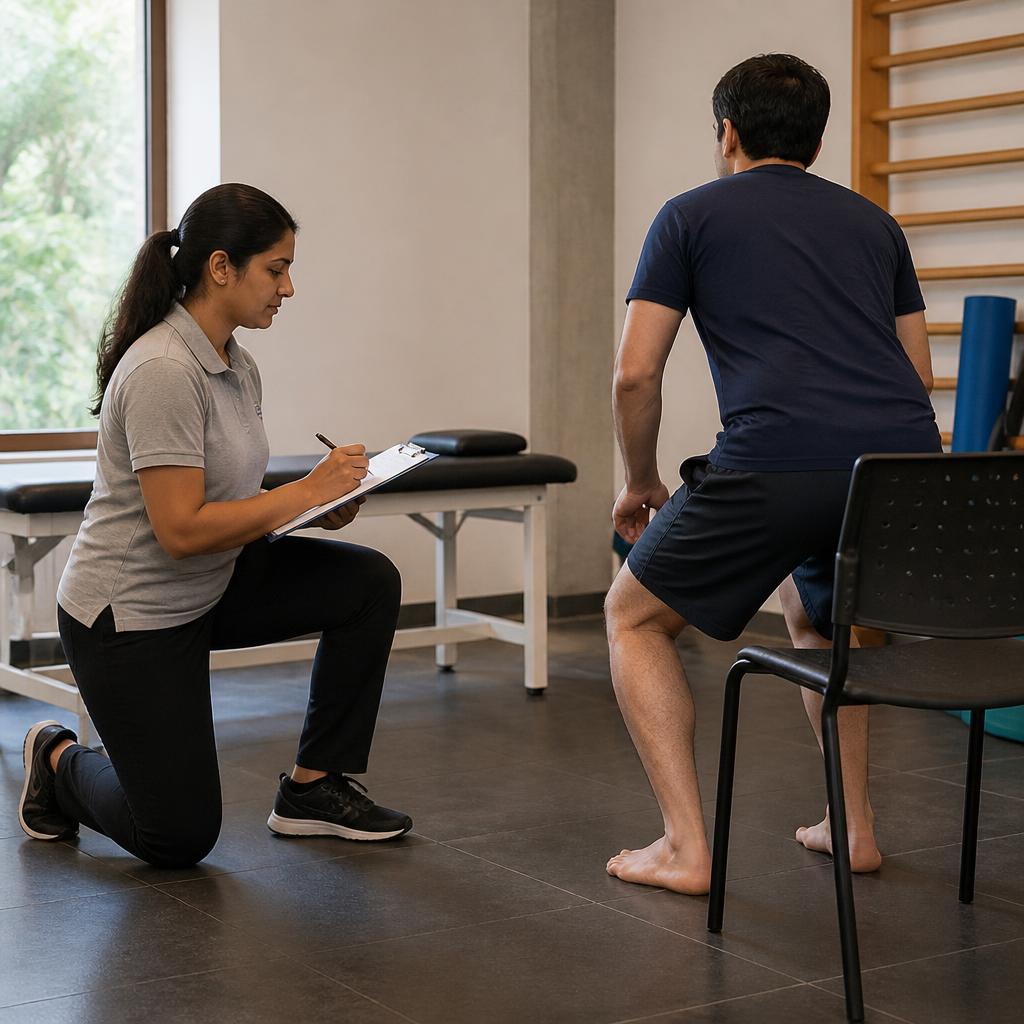
The clinician reviews the original illness, current strength, sensation, balance, breathing, pain, fatigue, sleep, falls, medicines, and any new symptoms. They may observe a functional task, such as rising from a chair, walking a short route, reaching, or using a step, while noting quality rather than chasing a score. The person can describe what happens during activity and later that day or the next morning. A neurologist or physician should reassess a new pattern of weakness instead of assuming it is ordinary exercise fatigue.
How rehabilitation can progress
Rehabilitation may combine functional practice, range-of-motion work, strengthening, endurance activity, breathing work, and rest according to the assessment. One variable can be changed at a time, such as support, distance, task complexity, or recovery, while the team watches whether function remains stable. The aim is not to feel exhausted after every session. A disproportionate or sustained deterioration is a reason to pause the progression and ask for review, not a reason to train harder.
What to expect from a home physiotherapy session
The professional may observe how the person moves between the bed, chair, bathroom, and doorway, then select a small number of tasks that fit the current level. The therapist checks guarding, walking-aid use, footwear, surface, breathing, and the family’s ability to assist without pulling. A home plan should state which activity is independent, which requires supervision, what response should be recorded, and when contact with the clinical team is needed.
Do
- Use the assessed support, note symptoms and next-day function, allow recovery, and tell the team about changes in strength, sensation, breathing, sleep, pain, or autonomic symptoms.
- Keep a short record of symptoms, sleep, activity, and the daily task that is becoming easier or harder.
- Share discharge summaries, medication changes, restrictions, and new symptoms before a programme is progressed.
Don’t
- Do not use a generic heart-rate zone, repetition target, online recovery timeline, or another person’s GBS programme as clearance for harder exercise.
- Do not copy a protocol from another person or use a good day as proof that a larger workload is safe.
- Do not delay medical review for a new or rapidly changing symptom because it appears during rehabilitation.
Safety and when to seek medical advice
Stop and seek urgent medical assessment for new or worsening weakness, new difficulty breathing or swallowing, fainting, severe palpitations, a sudden sensory change, collapse, or rapidly worsening neurological symptoms. Prompt review is also needed when fatigue becomes markedly different, function drops after a previously stable period, or falls increase. Exercise progression should wait while an unstable medical or neurological concern is being assessed.
Booking and follow-up
Home physiotherapy is arranged after the team understands the person’s condition, location, current precautions, and preferred care. Goswami Rehab offers home visits at ₹1,125–₹1,350 and online consultation at ₹742. Send the online booking request with the main concern, city, and preferred dates; the team confirms the appropriate next step within 24 hours. A teleconsultation can help review a previously assessed plan, but it does not replace emergency or specialist medical care.
This article is educational information only. It does not diagnose a condition or replace advice from a doctor, surgeon, cardiologist, neurologist, dietitian, or treating physiotherapist. Individual plans, timelines, and outcomes vary.
Related care: home physiotherapy coverage in Mumbai.
Clinical sources & further reading
These public resources provide general clinical guidance. They do not replace an assessment or an individual treatment plan.
- Physical exercise in Guillain–Barré syndrome: a scoping reviewJournal of Clinical Medicine
- Prevalence of fatigue in Guillain–Barré syndromeIndian Journal of Psychological Medicine
- Guillain–Barré syndromeNational Institute of Neurological Disorders and Stroke
- Guillain–Barré syndromeNHS
- Physical training and fatigue, fitness, and quality of life in GBS and CIDPNeurology
- Mumbai City district: official informationDistrict Administration, Mumbai City
Continue exploring
Choose your next step
Keep exploring with a focused guide, a relevant care option, or a direct enquiry.
Need professional advice?
Book an assessment with our expert team.