At a glance
What this guide can help you understand
How Ludhiana patients can plan exercise after spinal cord injury while monitoring autonomic symptoms, fatigue, skin, temperature, and recovery.
What should you bring to a consultation?
Share your main concern, when it started, what affects it, current medicines, and any reports or precautions you have been given.
See our clinical assessment approachWhen should you pause and seek medical advice?
Pause routine exercise and seek medical advice for sudden severe change, new neurological symptoms, breathing difficulty, chest pain, major injury, or feeling acutely unwell.
This guide is educational and does not replace diagnosis or urgent care.
Exercise after spinal cord injury needs more than a general fitness plan because autonomic symptoms, orthostatic changes, thermoregulation, skin protection, fatigue, and upper-limb loading can alter the response. The purpose of monitoring is not to find a universal blood-pressure or repetition target. It is to help the clinical team recognize when a session is appropriate, when it needs modification, and when it must stop.
The practical context in this city
Ludhiana is the home setting for this SCI-specific monitoring question. A programme may involve a wheelchair, transfer surface, resistance equipment, or a short route, and the safe setup depends on injury level, trunk and arm function, skin status, bladder and bowel triggers, medicines, and supervision. The city does not determine clearance or exercise dose.
What a physiotherapist assesses
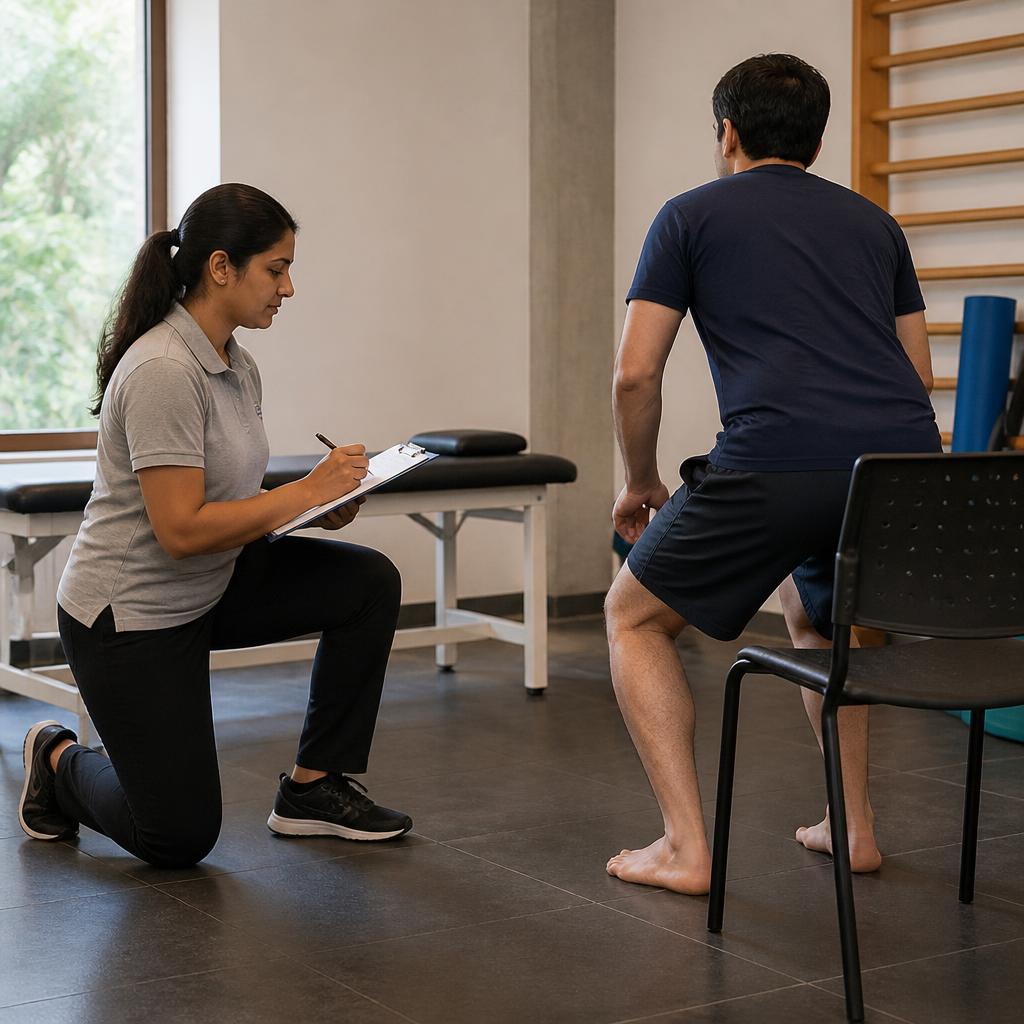
The professional reviews injury level and completeness, autonomic history, orthostatic symptoms, pressure areas, pain, temperature sensitivity, fatigue, respiratory function, medicines, and the response to previous activity. They teach the person and caregiver which symptoms matter and how to communicate them. New headache, flushing, sweating, dizziness, weakness, chest symptoms, or a change in skin status may require an immediate pause and clinical pathway.
How rehabilitation can progress
When the plan is stable, the team may change support, mode, resistance, duration, task complexity, or recovery one at a time. The response during the session and later in the day is recorded. Conditioning should not be advanced when the person is developing a pressure injury, repeated orthostatic symptoms, unexplained pain, overheating, or a sustained decline.
What to expect from a home physiotherapy session
A session can check the transfer into equipment, wheelchair position, skin protection, caregiver placement, and access to cooling or rest. The professional can rehearse the agreed stop rule and help separate a normal effort response from an autonomic or medical warning. Follow-up should review the log rather than reward a person for training through danger.
Do
- Keep the agreed monitoring and emergency instructions accessible, check the setup and skin as taught, record symptoms, and change only one training factor after review.
- Keep a short record of symptoms, sleep, activity, food or bowel changes where relevant, and the task that is becoming easier or harder.
- Share discharge summaries, medication changes, restrictions, equipment, and new symptoms before a programme is progressed.
Don’t
- Do not train through suspected autonomic dysreflexia, ignore orthostatic symptoms, use a universal blood-pressure or oxygen target, or treat a borrowed SCI programme as clearance.
- Do not copy another person’s protocol or use one good day as proof that a larger workload is safe.
- Do not delay medical review for a new or rapidly changing symptom because it appears during rehabilitation.
Safety and when to seek medical advice
Stop and seek urgent help for sudden severe headache, flushing or sweating with suspected autonomic dysreflexia, chest pain, fainting, severe breathlessness, new neurological weakness, collapse, or acute loss of function. Prompt review is needed for repeated dizziness, overheating, new pain, pressure injury, or sustained post-session deterioration.
Booking and follow-up
Home physiotherapy is arranged after the team understands the person’s condition, location, current precautions, and preferred care. Goswami Rehab offers home visits at ₹1,125–₹1,350 and online consultation at ₹742. Send the online booking request with the main concern, city, and preferred dates; the team confirms the appropriate next step within 24 hours. A teleconsultation can help review a previously assessed plan, but it does not replace emergency or specialist medical care.
This article is educational information only. It does not diagnose a condition or replace advice from a doctor, surgeon, neurologist, pulmonologist, dietitian, or treating physiotherapist. Individual plans, timelines, and outcomes vary.
Related care: home physiotherapy coverage in Ludhiana and stroke and neurological rehabilitation.
Clinical sources & further reading
These public resources provide general clinical guidance. They do not replace an assessment or an individual treatment plan.
- Physical activity after stroke and spinal cord injuryNational Library of Medicine
- Clinical practice guideline development for autonomic dysreflexiaNational Library of Medicine
- Autonomic dysreflexiaNSW Agency for Clinical Innovation
- Physical activityWorld Health Organization
- Spinal cord injuryNational Center on Health, Physical Activity and Disability
- Ludhiana district: official informationDistrict Administration, Ludhiana
Continue exploring
Choose your next step
Keep exploring with a focused guide, a relevant care option, or a direct enquiry.
Need professional advice?
Book an assessment with our expert team.