At a glance
What this guide can help you understand
How Kochi families can connect frailty exercise with meaningful daily tasks while adapting for falls, comorbidities, fatigue, and recovery.
What should you bring to a consultation?
Share your main concern, when it started, what affects it, current medicines, and any reports or precautions you have been given.
See our clinical assessment approachWhen should you pause and seek medical advice?
Pause routine exercise and seek medical advice for sudden severe change, new neurological symptoms, breathing difficulty, chest pain, major injury, or feeling acutely unwell.
This guide is educational and does not replace diagnosis or urgent care.
Frailty and sarcopenia can make a small loss of strength affect chair rises, walking, carrying food, or recovering from an illness. Exercise physiology can help build capacity around those tasks, but the right plan depends on assessment and response. It should not promise a reversal, use a fixed set of repetitions, or treat fatigue as proof that the exercise worked.
The practical context in this city
Kochi is the setting for planning strength around daily function, not a claim about local frailty or outcomes. A home assessment can identify a low chair, narrow doorway, uneven surface, or family assistance that changes the movement challenge. Frailty, muscle loss, cognition, falls, pain, orthostatic symptoms, medicines, heart or lung disease, and nutrition concerns need to be considered together.
What a physiotherapist assesses
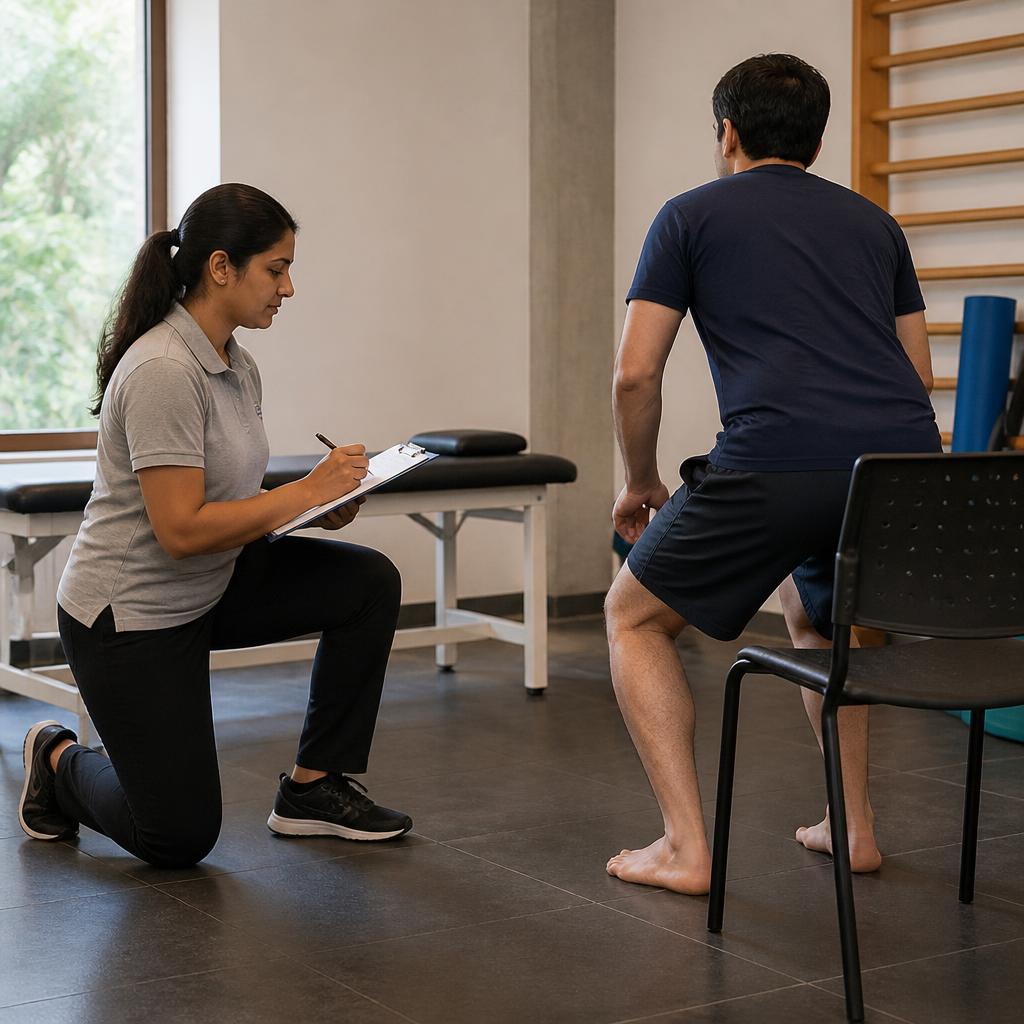
The professional asks about recent illness, falls and near-falls, walking, chair rises, grip or limb function, fatigue, appetite, weight change, dizziness, breathlessness, pain, medicines, and the person’s priorities. They may use a functional task when safe and note control, assistance, and recovery rather than relying on one number. A suspected acute illness or sudden decline needs medical review before progression.
How rehabilitation can progress
A plan may combine resistance, balance, endurance, and task practice with support that matches risk. The clinician can adjust the chair, hand support, task order, route, recovery, or supervision one at a time. Evidence supports individualized multi-component work, not a single best programme; a lasting decline is a reason to reassess.
What to expect from a home physiotherapy session
A home visit can practise standing from the person’s chair, walking to a meaningful destination, or handling a light daily task when cleared. The therapist teaches the family how to guard without lifting and how to recognize when a task is too demanding. The plan separates independent, supervised, and deferred activities.
Do
- Choose a daily task that matters, use the assessed support, protect sleep and recovery, and share changes in falls, appetite, pain, breathlessness, or next-day function.
- Keep a short record of symptoms, sleep, activity, food or bowel changes where relevant, and the task that is becoming easier or harder.
- Share discharge summaries, medication changes, restrictions, equipment, and new symptoms before a programme is progressed.
Don’t
- Do not chase exhaustion, use a borrowed frailty routine, progress after an acute illness without review, or treat a single successful chair rise as clearance for a harder route.
- Do not copy another person’s protocol or use one good day as proof that a larger workload is safe.
- Do not delay medical review for a new or rapidly changing symptom because it appears during rehabilitation.
Safety and when to seek medical advice
Stop and seek urgent care for chest pain, fainting, severe unexpected breathlessness, acute confusion, new neurological symptoms, or sudden inability to bear weight. Arrange prompt review for repeated falls, marked weakness, or deterioration that persists after activity.
Booking and follow-up
Home physiotherapy is arranged after the team understands the person’s condition, location, current precautions, and preferred care. Goswami Rehab offers home visits at ₹1,125–₹1,350 and online consultation at ₹742. Send the online booking request with the main concern, city, and preferred dates; the team confirms the appropriate next step within 24 hours. A teleconsultation can help review a previously assessed plan, but it does not replace emergency or specialist medical care.
This article is educational information only. It does not diagnose a condition or replace advice from a doctor, surgeon, neurologist, pulmonologist, dietitian, or treating physiotherapist. Individual plans, timelines, and outcomes vary.
Related care: home physiotherapy coverage in Kochi.
Clinical sources & further reading
These public resources provide general clinical guidance. They do not replace an assessment or an individual treatment plan.
- Managing frailtyBritish Geriatrics Society
- Sarcopenia: revised European consensus on definition and diagnosisNational Library of Medicine
- Effects of exercise interventions on frailtyNational Library of Medicine
- Effects of exercise on frailty in older peopleNational Library of Medicine
- Physical activityWorld Health Organization
- Ernakulam district: official informationDistrict Administration, Ernakulam
Continue exploring
Choose your next step
Keep exploring with a focused guide, a relevant care option, or a direct enquiry.
Need professional advice?
Book an assessment with our expert team.