At a glance
What this guide can help you understand
A safety-first Chandigarh guide to assessment, activity logs, progression, supervision, and stop rules across rehabilitation pathways.
What should you bring to a consultation?
Share your main concern, when it started, what affects it, current medicines, and any reports or precautions you have been given.
See our clinical assessment approachWhen should you pause and seek medical advice?
Pause routine exercise and seek medical advice for sudden severe change, new neurological symptoms, breathing difficulty, chest pain, major injury, or feeling acutely unwell.
This guide is educational and does not replace diagnosis or urgent care.
Exercise physiology in Chandigarh rehabilitation is less about finding a universal target and more about matching movement to the person’s diagnosis, baseline function, symptoms, and recovery setting. Someone rebuilding walking after stroke, managing Parkinson’s balance changes, returning after surgery, or recovering from cardiopulmonary illness may all need exercise, but not the same mode, dose, monitoring, or supervision.
The practical context in this city
The Chandigarh care profile combines neurological, post-surgery, orthopaedic, Parkinson’s, and cardiopulmonary pathways. General physical-activity guidance is useful background, but it does not prove that unsupervised exercise is safe for each pathway. Weather, indoor space, stairs, equipment, fatigue, and caregiver availability can also affect the practical plan. These factors are reasons to adapt the programme, not reasons to claim that one neighbourhood or season creates a specific clinical risk.
What a physiotherapist assesses
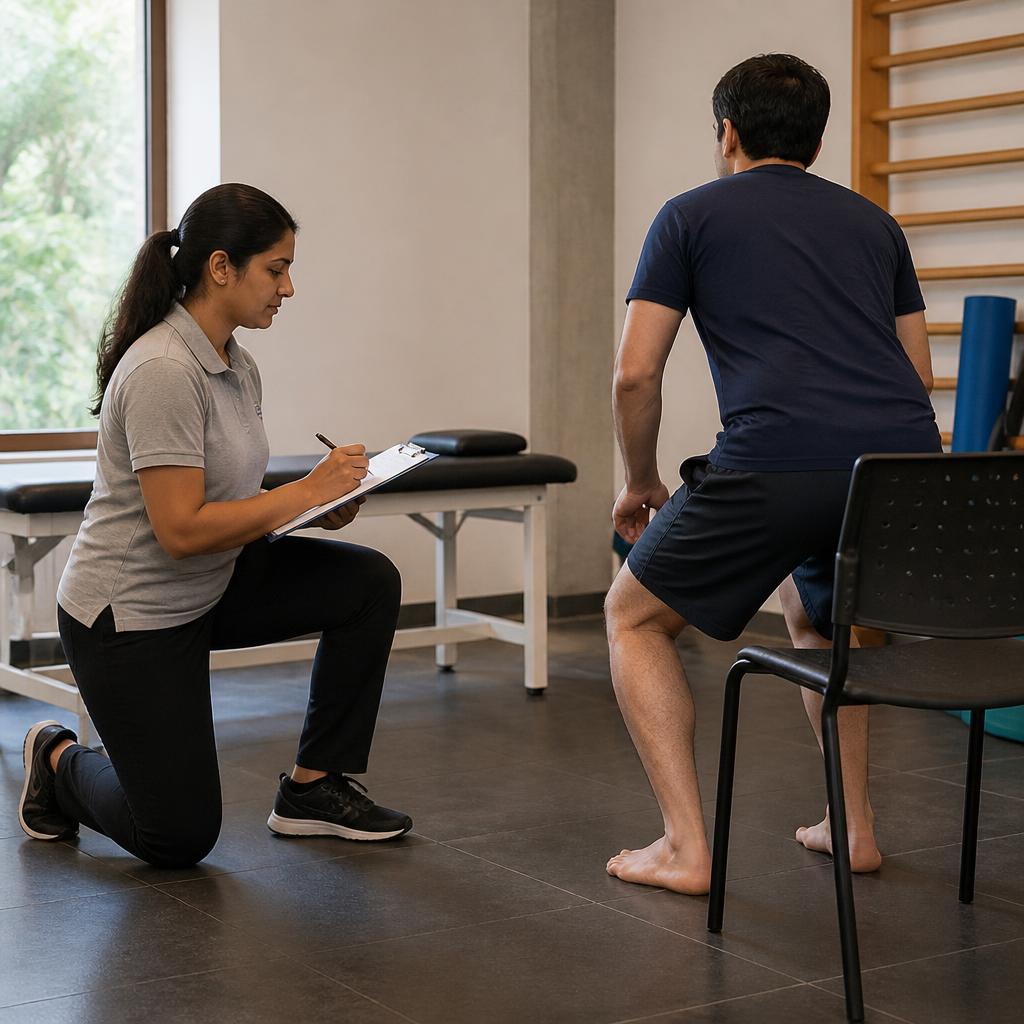
An exercise-focused assessment may review the medical history, recent procedures, medications, symptoms, balance, gait, strength, range, breathing, functional capacity, falls, fatigue, and the person’s goals. Depending on the condition, the medical team may need to determine whether further cardiac or pulmonary evaluation is required before progression. The therapist or exercise professional observes how the person responds during and after a task, rather than relying only on a resting measurement or an age-based formula.
How rehabilitation can progress
A plan can use different components for different goals: mobility and balance for safe daily movement, strengthening for task capacity, and appropriately selected aerobic work for endurance. Progression may change one variable at a time—support, duration, distance, complexity, resistance, or recovery—while watching the next-day response. A written activity log can record what was attempted, symptoms, rest, and function. Calendar time alone should not decide when to advance after surgery, stroke, or a cardiopulmonary event.
What to expect from a home physiotherapy session
At home, the professional may observe walking from the chair to the doorway, stepping, turning, transfers, or a short bout of activity that reflects the person’s real goal. They can check whether the floor, footwear, chair height, walking aid, oxygen or other equipment, and caregiver position are suitable. The session should leave the family with a clear stop rule and a review point. A remote review can help refine a previously assessed plan, but it should not be used to clear a new or unstable symptom without the appropriate medical pathway.
Do
- Begin with the assessed level, use the prescribed support, allow recovery, and record symptoms and function rather than chasing a generic number of steps or minutes.
- Keep a simple record of symptoms, activity, sleep, and the tasks that are becoming easier or harder.
- Share medical reports, medication changes, surgeon restrictions, and any recent change in symptoms before exercise is progressed.
Don’t
- Do not publish or follow universal heart-rate, oxygen-saturation, blood-pressure, repetition, or intensity cut-offs without condition-specific clinical context, and do not exercise through alarming symptoms.
- Do not copy an exercise from a video if it increases symptoms, requires equipment you cannot control, or conflicts with a medical restriction.
- Do not use pain, fatigue, or a single good day as the only measure of readiness for a harder task.
Safety and when to seek medical advice
Stop and seek urgent medical care for chest pain or pressure, fainting or near-fainting, severe unexpected breathlessness, blue lips, severe palpitations, or sudden neurological symptoms. Request clinical review for repeated falls, new swelling, a major change in exercise tolerance, rapidly worsening fatigue, or symptoms after a procedure. Exercise progression should wait for medical clearance when the treating team has identified an unstable cardiac, pulmonary, neurological, or postoperative concern.
Booking and follow-up
Home physiotherapy is arranged after the team understands the person’s condition, location, current precautions, and preferred care. Goswami Rehab offers home visits at ₹1,125–₹1,350 and online consultation at ₹742. Send the online booking request with the main concern, city, and preferred dates; the team confirms the appropriate next step within 24 hours. A teleconsultation can be useful when travel is difficult or when an exercise plan needs review, but it does not replace emergency or specialist medical care.
This article is educational information only. It does not diagnose a condition or replace advice from a doctor, surgeon, dietitian, speech and language therapist, or treating physiotherapist. Individual plans, timelines, and outcomes vary.
Related care: home physiotherapy coverage in Chandigarh.
Clinical sources & further reading
These public resources provide general clinical guidance. They do not replace an assessment or an individual treatment plan.
- Exercise testing and prescriptionAmerican College of Sports Medicine
- Guidelines and recommended strategies for physical activityCenters for Disease Control and Prevention
- Parkinson’s disease in adultsNICE
- Stroke rehabilitation in adultsNICE
- Physical activityWorld Health Organization
- Chandigarh administration: official informationChandigarh Administration
Continue exploring
Choose your next step
Keep exploring with a focused guide, a relevant care option, or a direct enquiry.
Need professional advice?
Book an assessment with our expert team.