Quick answer
Food can support health, not diagnose vasculitis
Skin inflammation has many possible causes. Eat enough, keep food varied, and check medicines or supplements with a clinician. Do not delay medical care while testing a diet.
How can lookalike conditions differ?
Eczema and contact dermatitis: itch, dryness, scaling, cracking, or oozing may follow an irritant or exposure.
Hives: raised itchy areas often move or fade, while painful or bruise-like changes need review.
Infection or medicine reaction: warmth, fever, rapid spread, blisters, peeling, mouth or eye involvement need medical attention.
Vasculitis: non-blanching spots, ulcers, pain, or organ symptoms require clinical assessment rather than a photo-based label.
What is a safer nutrition starting point?
Choose practical meals with protein, fibre, vegetables or fruit, and enough energy. Keep the pattern culturally familiar and compatible with kidney, liver, swallowing, medication, or allergy advice.
Record timing and symptoms if useful, but treat a food diary as a conversation aid—not proof that a food caused inflammation.
Ask about nutritional consultationSafety first
Do not wait for a food experiment
Seek urgent medical help for rapidly spreading purpura, dark or blistering skin, severe pain, fever with marked illness, breathing or eye symptoms, new weakness or confusion, severe abdominal pain, blood in stool or urine, or markedly reduced urine.
Do
Support the clinical plan
- Share all medicines, supplements, and herbal products.
- Keep meals adequate and varied unless your clinician advises otherwise.
- Ask which specialist should coordinate the next step.
Don’t
Self-treat a diagnosis
- Do not stop prescribed medicine or start megadose supplements.
- Do not use broad elimination diets without supervision.
- Do not book routine exercise care instead of urgent assessment.
Weakness after Guillain-Barré syndrome can make chewing, swallowing, sitting upright, and completing a meal unexpectedly tiring. Families need a way to describe the problem and ask for the right assessment. The safe message is not a fixed high-protein menu or a texture change from the internet; it is coordinated review of airway protection, intake, fatigue, and the person's medical plan.
The practical context in this city
Visakhapatnam's neurological and Guillain-Barré care profile provides the context. During or after hospital care, the home may involve a caregiver, modified assistance, medicines, a feeding plan, or a person who cannot communicate fatigue easily. Respiratory weakness, facial weakness, alertness, dentition, posture, and medical restrictions all change the appropriate nutrition pathway.
What a physiotherapist assesses
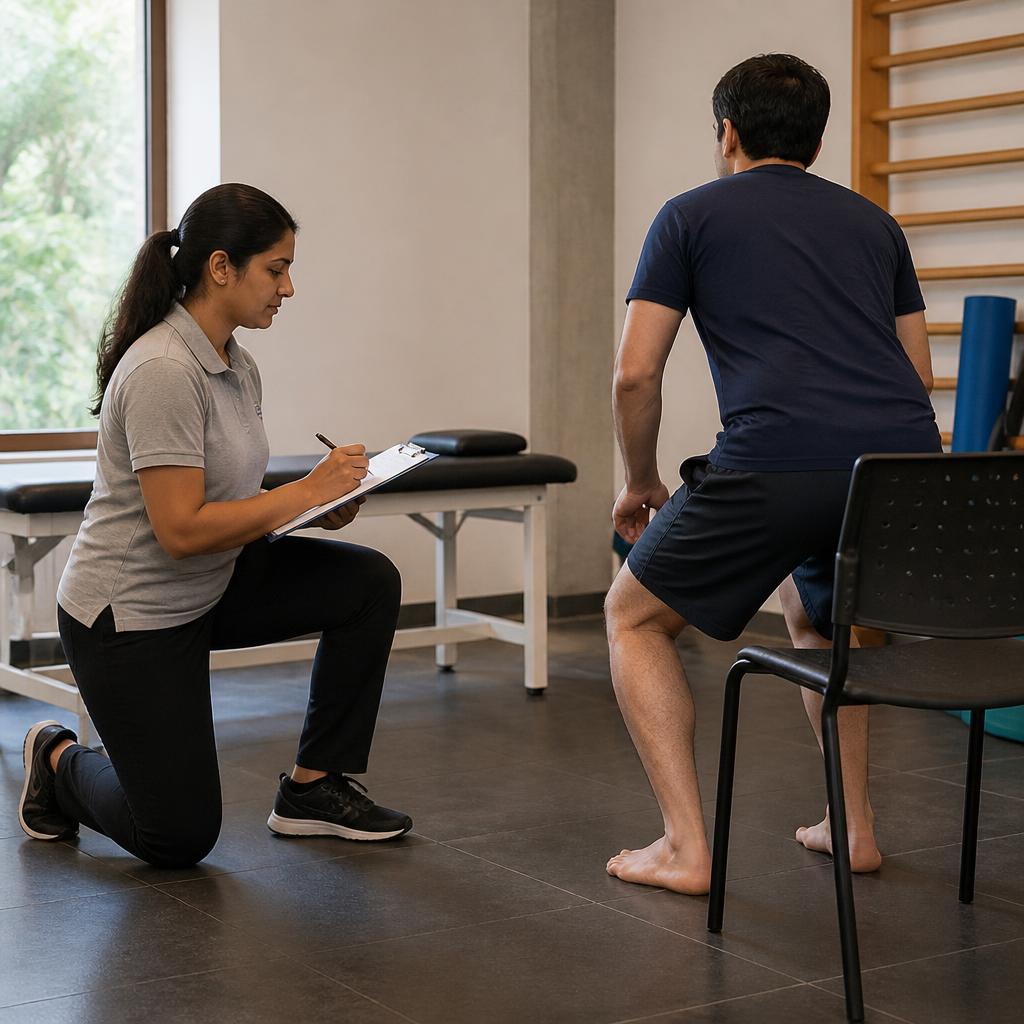
The team may ask about coughing or choking, wet voice, saliva, chewing, fatigue through a meal, breathlessness while eating, alertness, nausea, bowel function, weight or intake change, and the ability to sit safely. A swallowing screen is not the same as a full assessment, and a nutrition-risk concern is not a diagnosis. The doctor, dietitian, nurse, speech-language or swallowing clinician, and rehabilitation team may each contribute.
The assessment is not a formality before an exercise sheet. It is how the clinician separates a familiar rehabilitation problem from a new medical change, identifies the task that matters to the person, and decides what requires supervision or another professional. The person’s discharge records, medicines, precautions, equipment, fatigue pattern, and family observations are part of the clinical picture.
How rehabilitation can progress
The plan may progress by improving posture and assistance, arranging a formal swallowing review, coordinating the feeding route, reducing avoidable mealtime fatigue, or reviewing medicines and bowel concerns. Texture, fluid, supplement, calorie, protein, and feeding-route decisions must be individualized. The goal is safe participation and adequate clinical support, not a universal meal plan or a deadline for normal eating.
Progress is not the same as adding distance, repetitions, weight, or intensity on a calendar. It can mean better control, less assistance, safer decision-making, improved recovery, or greater confidence in one meaningful task. The clinician should explain what to watch during the activity and after it, and when a change means the plan needs review.
What to expect from a home physiotherapy session
A home physiotherapy visit may assess the chair, transfer, head and trunk support, fatigue, and the route to the dining area. The therapist can help the family make a clear referral note and identify which tasks need supervision. They should not change a tube-feeding plan, thicken fluids, recommend supplements, or override a prescribed restriction.
A home visit may include observation of a real route, chair, bed, bathroom, dining area, or family routine. It may also include education, coordination with the treating team, and a written plan for tasks that are independent, supervised, or not yet appropriate. A home session does not authorize changing medication, oxygen, food texture, weight-bearing restrictions, or a surgical precaution.
Do
- Record coughing, voice change, meal fatigue, intake concerns, alertness, and assistance needs, and share them promptly with the treating team.
- Keep a short record of the symptom, task, assistance, food or swallowing concern, and later response that the clinician asked you to observe.
- Share discharge summaries, medication changes, restrictions, equipment, and new symptoms before a programme is progressed.
Don’t
- Do not offer food or drink when the person is too drowsy to manage it, alter texture or tube feeding without review, or assume a cough is harmless because it happens only at the end of a meal.
- Do not copy another person's protocol or use one good day as proof that a larger workload is safe.
- Do not delay medical review for a new or rapidly changing symptom because it appears during rehabilitation.
Safety and when to seek medical advice
Any of these concerns needs prompt clinical and swallowing review: new choking, wet or gurgly voice, inability to swallow saliva, breathlessness during eating, recurrent chest symptoms, dehydration concern, rapidly reduced intake, or altered alertness. If the person cannot breathe, turns blue or grey, collapses, or has severe airway difficulty, seek emergency care.
Booking and follow-up
Home physiotherapy is arranged after the team understands the person's condition, location, current precautions, and preferred care. Goswami Rehab offers home visits at ₹1,125–₹1,350 and online consultation at ₹742. Send the online booking request with the main concern, city, and preferred dates; the team confirms the appropriate next step within 24 hours. A teleconsultation can be useful when travel is difficult or when an exercise plan needs review, but it does not replace emergency or specialist medical care.
The article is educational information only. It does not diagnose a condition or replace advice from a doctor, surgeon, neurologist, dietitian, speech-language clinician, or treating physiotherapist. Individual plans, timelines, and outcomes vary.
Related care: home physiotherapy coverage in Visakhapatnam.
Where physiotherapy fits
Rehabilitation comes after medical clearance
Once the medical team has clarified the condition and precautions, physiotherapy may support fatigue and deconditioning, weakness, reduced endurance, joint stiffness, walking, transfers, daily activity, pacing, and a gradual return to routine.
Physiotherapy does not diagnose or treat vasculitis and does not replace dermatology, rheumatology, nutrition, or urgent medical care. Stop and seek medical advice for systemic or urgent warning signs.
Clinical sources & further reading
These public resources provide general clinical guidance. They do not replace an assessment or an individual treatment plan.
- Guidelines for treatmentGBS/CIDP Foundation International
- Supportive care for patients with Guillain-Barré syndromeJAMA Neurology
- Respiratory involvement in Guillain-Barré syndromeNational Library of Medicine
- Swallowing screeningAmerican Speech-Language-Hearing Association
- Diet and nutrition, eating and swallowingNICE
Continue exploring
Choose your next step
Keep exploring with a focused guide, a relevant care option, or a direct enquiry.
Need professional advice?
Book an assessment with our expert team.