At a glance
What this guide can help you understand
What families can record when appetite, constipation, nausea, or mobility changes food intake during post-surgery recovery in Kanpur.
What should you bring to a consultation?
Share your main concern, when it started, what affects it, current medicines, and any reports or precautions you have been given.
See our clinical assessment approachWhen should you pause and seek medical advice?
Pause routine exercise and seek medical advice for sudden severe change, new neurological symptoms, breathing difficulty, chest pain, major injury, or feeling acutely unwell.
This guide is educational and does not replace diagnosis or urgent care.
After surgery, appetite and bowel changes can make a person eat less just when the family is trying to support recovery. Nausea, constipation, pain, medicines, reduced movement, chewing difficulty, and an unrelated medical restriction can all change the right next question. A Kanpur home review should document the pattern before anyone adds a supplement or removes familiar foods.
The practical context in this city
Kanpur's post-surgery rehabilitation setting is a reason to coordinate nutrition and function, not evidence for one recovery menu. Relevant details include the operation, discharge instructions, appetite, vomiting, bowel pattern, weight trend, hydration advice, medicines, wound status, mobility, and who prepares meals. A dietitian, surgeon, doctor, or physiotherapist may each answer a different part.
City context is used here only to make the home setting understandable. A Kanpur address does not establish local prevalence, neighbourhood risk, outcome, or confirmed service availability. The same clinical question can require a different plan for two people in the same city.
What a physiotherapist assesses
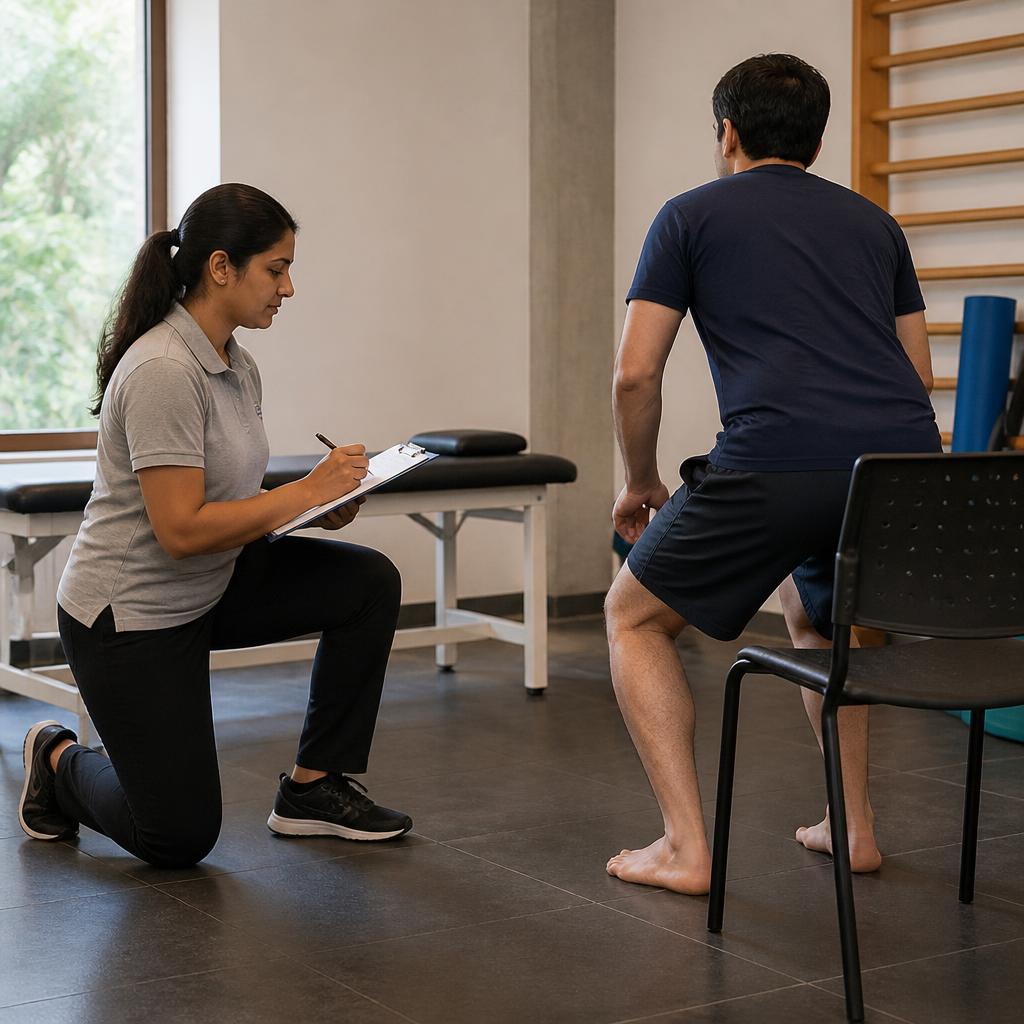
The team may ask what was eaten and left, how long meals take, whether nausea or constipation limits intake, whether swallowing or chewing is difficult, and whether pain prevents sitting or reaching the table. A dietitian may assess nutrition risk; the medical team manages medication, wound, bowel, diabetes, kidney, or fluid decisions; and physiotherapy may address transfers and meal preparation. No single symptom identifies the cause.
The assessment is not a formality before an exercise sheet. It separates a familiar rehabilitation problem from a new medical change, identifies the task that matters to the person, and decides what requires supervision or another professional. Discharge records, medicines, precautions, equipment, fatigue pattern, and family observations are part of the clinical picture. Nutrition-led articles may also require a dietitian or speech-language clinician; cardiopulmonary articles may require the treating medical team.
How rehabilitation can progress
The first step may be a short record of intake, symptoms, bowel pattern, posture, assistance, and later response. The clinical team may then change meal setup, timing, food choice, mobility around meals, constipation management, or referral. Progress can mean more reliable participation and less fatigue during the routine, not achieving a universal calorie, protein, or fluid number.
Progress is not the same as adding distance, repetitions, weight, or intensity on a calendar. It can mean better control, less assistance, safer decision-making, improved recovery, or greater confidence in one meaningful task. The clinician should explain what to watch during the activity and afterwards, and when a change means the plan needs review.
What to expect from a home physiotherapy session
A home session can examine the dining chair, kitchen route, standing tolerance, food storage, and the movement needed to prepare or carry a meal. The therapist can identify whether pain, weakness, dizziness, or equipment is the main functional barrier and coordinate questions for the surgical and nutrition teams. Families should bring discharge papers, medicines, weight history, and the intake record.
A home visit may include observation of a real route, chair, bed, bathroom, dining area, device, or family routine. It may also include education, coordination with the treating team, and a written plan for tasks that are independent, supervised, or not yet appropriate. A home session does not authorize changing medication, oxygen, food texture, weight-bearing restrictions, or a surgical precaution.
Do
- Report persistent poor intake, vomiting, constipation, or weight change early, keep the medical instructions accessible, and ask which professional should answer each restriction.
- Keep a plain-language record of the task, symptoms, assistance, and recovery that the team has asked you to observe.
- Share medical reports, medicine changes, surgeon restrictions, and any recent change in symptoms before the plan is progressed.
Don’t
- Do not start a supplement, use laxatives, change fluids, crush medicines, or alter a diabetes or kidney plan without the responsible clinical team.
- Do not copy an exercise from a video if it increases symptoms, requires equipment you cannot control, or conflicts with a medical restriction.
- Do not use pain, fatigue, or one good day as the only measure of readiness for a harder task.
Safety and when to seek medical advice
Any of these symptoms needs prompt clinical review: repeated vomiting, severe constipation or abdominal pain, inability to maintain prescribed intake, dehydration concern, fever with wound change, or rapidly falling weight. Any of these situations needs emergency help: collapse, severe breathing difficulty, chest pain, or an acute medical change.
Urgent symptoms take priority over a home programme. If the person has a sudden neurological change, severe breathing difficulty, chest pain, fainting, collapse, a serious fall, rapidly worsening weakness, or a new swallowing problem, contact the appropriate emergency or medical service. Do not wait for a routine physiotherapy review to decide whether an emergency is occurring.
Booking and follow-up
Home physiotherapy is arranged after the team understands the person's condition, location, current precautions, and preferred care. Goswami Rehab offers home visits at ₹1,125–₹1,350 and online consultation at ₹742. Send the online booking request with the main concern, city, and preferred dates; the team confirms the appropriate next step within 24 hours. A teleconsultation can be useful when travel is difficult or when an exercise plan needs review, but it does not replace emergency or specialist medical care.
The article is educational information only. It does not diagnose a condition or replace advice from a doctor, surgeon, neurologist, dietitian, speech-language clinician, respiratory team, or treating physiotherapist. Individual plans, timelines, and outcomes vary.
Related care: home physiotherapy coverage in Kanpur and post-surgery rehabilitation.
Where physiotherapy fits
Rehabilitation supports function alongside nutrition care
Once the medical team has clarified the condition and precautions, physiotherapy may support sitting balance, transfers, walking, strength, meal preparation, daily activity, pacing, and a gradual return to routine.
Physiotherapy does not prescribe food, fluid, supplements, or medicines and does not replace medical, nutrition, swallowing, or urgent care. Individual restrictions remain with the responsible clinical team.
Clinical sources & further reading
These public resources provide general clinical guidance. They do not replace an assessment or an individual treatment plan.
- Nutrition support for adultsNICE
- Screening for the risk of malnutritionNICE
- Post-operative careWorld Health Organization
- ESPEN practical guideline: clinical nutrition in surgeryEuropean Society for Clinical Nutrition and Metabolism
- Dietary Guidelines for Indians 2024National Institute of Nutrition, ICMR
- Kanpur Nagar DistrictGovernment of Uttar Pradesh
Continue exploring
Choose your next step
Keep exploring with a focused guide, a relevant care option, or a direct enquiry.
Need professional advice?
Book an assessment with our expert team.