Quick answer
Food can support health, not diagnose vasculitis
Skin inflammation has many possible causes. Eat enough, keep food varied, and check medicines or supplements with a clinician. Do not delay medical care while testing a diet.
How can lookalike conditions differ?
Eczema and contact dermatitis: itch, dryness, scaling, cracking, or oozing may follow an irritant or exposure.
Hives: raised itchy areas often move or fade, while painful or bruise-like changes need review.
Infection or medicine reaction: warmth, fever, rapid spread, blisters, peeling, mouth or eye involvement need medical attention.
Vasculitis: non-blanching spots, ulcers, pain, or organ symptoms require clinical assessment rather than a photo-based label.
What is a safer nutrition starting point?
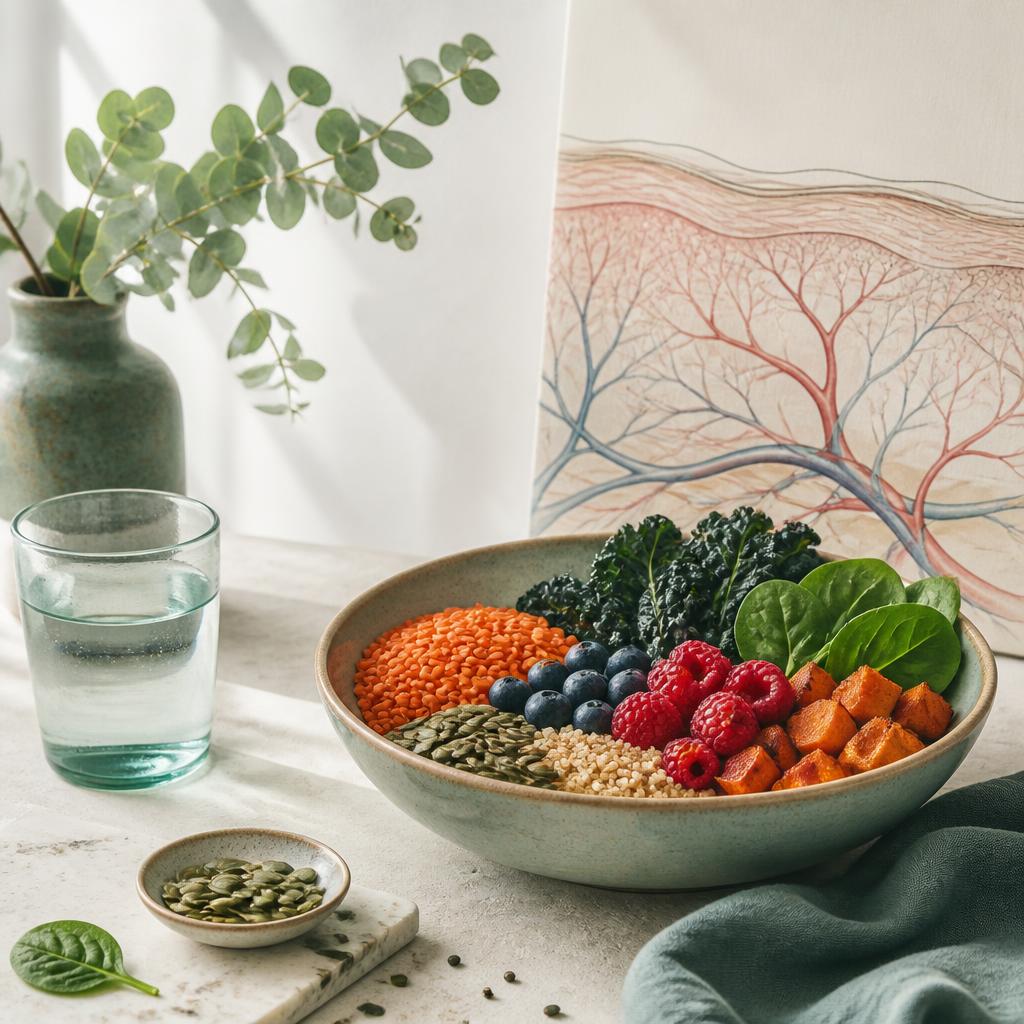
Choose practical meals with protein, fibre, vegetables or fruit, and enough energy. Keep the pattern culturally familiar and compatible with kidney, liver, swallowing, medication, or allergy advice.
Record timing and symptoms if useful, but treat a food diary as a conversation aid—not proof that a food caused inflammation.
Ask about nutritional consultationSafety first
Do not wait for a food experiment
Seek urgent medical help for rapidly spreading purpura, dark or blistering skin, severe pain, fever with marked illness, breathing or eye symptoms, new weakness or confusion, severe abdominal pain, blood in stool or urine, or markedly reduced urine.
Do
Support the clinical plan
- Share all medicines, supplements, and herbal products.
- Keep meals adequate and varied unless your clinician advises otherwise.
- Ask which specialist should coordinate the next step.
Don’t
Self-treat a diagnosis
- Do not stop prescribed medicine or start megadose supplements.
- Do not use broad elimination diets without supervision.
- Do not book routine exercise care instead of urgent assessment.
Skin spots, itching, bruising, redness, swelling, or ulcers can be frightening. People sometimes search for “blood-vessel inflammation” when they see purple marks or a rash, and then look for foods that might control it. The important first step is not a restrictive diet. It is finding out what the skin change represents.
Vasculitis means inflammation of blood-vessel walls. It is an umbrella term for several conditions, and it can affect the skin alone or occur with inflammation in organs such as the kidneys, lungs, eyes, nerves, joints, or digestive system. A rash or food association cannot diagnose vasculitis. Common skin conditions, infections, bruising, medicine reactions, and circulation problems can look similar.
Diet can support general health, energy, recovery, and medication safety. It has not been shown to replace diagnosis or prescribed treatment for vasculitis. This guide explains what can reasonably help, what should not be tried without supervision, and which symptoms need prompt or emergency medical care.
What blood-vessel inflammation means
Blood vessels carry blood through the body. When their walls become inflamed, they may leak, swell, thicken, narrow, or become blocked. The effects depend on the size and location of the vessels and which organs are involved. Some forms mainly affect small vessels in the skin; other forms can involve larger vessels or several body systems.
Cutaneous small-vessel vasculitis often appears on the lower legs as red, purple, or brown spots that do not fade when pressed. The spots may be flat or raised, and the skin may itch, burn, swell, blister, or become painful. Ulcers, nodules, net-like colour changes, and dark marks after healing can also occur. These descriptions are useful for explaining why a person needs assessment, not for making a diagnosis at home.
Some skin-limited episodes follow an infection, a medicine, or another immune trigger; sometimes no cause is found. A clinician may also need to consider autoimmune disease, blood disorders, infection, circulation problems, or another inflammatory condition. Do not stop a prescribed medicine on your own because you suspect it caused a rash. Contact the prescriber promptly, and seek emergency care if the reaction is severe.
Why a skin symptom is not enough to diagnose vasculitis
Purpura means that blood has leaked into the skin or mucosa. It is a finding, not a diagnosis. Purpura can be related to platelet or clotting problems, infection, medicines, fragile vessels, pressure, trauma, or vasculitis. A non-blanching spot should not be labelled “allergy” or “vasculitis” from a photograph.
Other inflammatory or irritated skin conditions may cause red or scaly patches, itch, swelling, blisters, or broken skin:
- Eczema or contact dermatitis can cause itch, dryness, scaling, cracking, or oozing after irritant or allergic exposure.
- Psoriasis can cause well-defined, scaly plaques and may occur with nail or joint symptoms.
- Hives usually produce raised, itchy wheals that come and go, but a painful or bruising-like eruption needs medical review.
- Infection may cause warmth, tenderness, swelling, fever, pus, rapidly spreading redness, or wound breakdown.
- Medicine reactions can range from mild rashes to severe skin injury involving blisters, peeling, mouth, eyes, or breathing.
- Venous or arterial circulation problems, pressure, neuropathy, trauma, and fragile skin can cause ulcers, colour changes, bruising, or delayed healing.
These categories overlap in real life. The safe approach is to describe when the change began, what it feels like, recent infections or new medicines, and any other symptoms rather than trying to match it to an online image.
Symptoms outside the skin that change the urgency
Skin findings deserve faster medical review when they occur with symptoms suggesting that more than the skin may be involved. Tell the clinician about:
- fever, marked fatigue, unexplained weight loss, or feeling acutely unwell;
- new joint or muscle pain, swelling, or difficulty walking because of pain;
- dark, bloody, foamy, or noticeably reduced urine;
- breathlessness, chest pain, persistent cough, or coughing blood;
- eye pain, a red eye, blurred vision, or sudden change in vision;
- severe or persistent abdominal pain, vomiting, or blood in the stool;
- new numbness, weakness, severe headache, confusion, or another neurological change;
- painful ulcers, black or grey skin, rapidly worsening pain, or loss of feeling around a wound.
These signs do not prove vasculitis. They are reasons not to manage the problem with food experiments or a routine online exercise appointment.
What clinical assessment may involve
A doctor or dermatologist may ask about the timeline, distribution, pain or itch, fever, recent infections, travel or exposures, new medicines, supplements, allergies, autoimmune symptoms, cancer history, and other illnesses. They may examine whether spots blanch, whether they are raised or tender, whether there are ulcers or blisters, and whether the skin pattern is limited to one area or more widespread.
Depending on the presentation, assessment may include blood pressure, a blood count, kidney and liver tests, inflammation markers, urinalysis, and other targeted tests. Chest imaging or organ-specific testing may be considered when the history or examination suggests lung, kidney, nerve, eye, or digestive involvement. The precise tests depend on the person; a generic online panel is not a safe substitute for care.
A skin biopsy can help identify the type and timing of inflammation when cutaneous vasculitis is suspected. A biopsy is not needed for every rash, and its usefulness depends on choosing the right lesion and timing. A remote photograph cannot provide palpation, blood pressure, urine testing, or a biopsy. Teleconsultation can help collect history, review existing reports, and decide the next contact, but urgent or diagnostically uncertain cases may need in-person examination.
What dietary changes can reasonably support
There is no established food plan that treats or reverses vasculitis. The most defensible nutrition advice is ordinary but important: eat enough, keep meals varied, include protein and fibre, and choose foods that are practical, affordable, culturally familiar, and compatible with your medical advice.
For many adults, a balanced pattern may include vegetables and fruit, pulses or other protein foods, whole grains or other carbohydrate sources, nuts or seeds when safe, and dairy or alternatives according to tolerance and clinical needs. Fish or other sources of unsaturated fats may fit some people’s eating pattern. This is general health support, not a prescription for lowering vessel inflammation.
Hydration should be guided by thirst and the treating team. People with kidney, heart, liver, or other conditions may have specific fluid, salt, potassium, or protein advice that differs from general guidance. Someone taking steroids may need medical advice about glucose, bone health, weight, and other risks. If appetite is low, weight is falling, swallowing is difficult, or food access is limited, ask for a clinician or registered dietitian rather than attempting a restrictive plan.
Food and symptom notes can be useful when they record timing, ingredients, medicines, infections, stress, sleep, and the skin change without assuming that one caused another. A diary is a prompt for clinical discussion, not proof of a food allergy or a way to diagnose vasculitis.
What diet cannot safely promise
Research on dietary patterns and general inflammatory markers does not establish that a particular food, spice, juice, supplement, or elimination diet controls vasculitis. Studies of elimination diets in atopic dermatitis are not studies of vasculitis, and any improvement reported in those studies is modest or uncertain. A food that is nutritious for one person may be unsuitable for another because of allergy, kidney disease, diabetes, pregnancy, medication, or another condition.
Do not describe turmeric, ginger, garlic, omega-3 capsules, vitamin D, probiotics, fasting, gluten avoidance, dairy avoidance, or a “detox” as a treatment for blood-vessel inflammation. Some foods can be part of a varied diet, but a food’s reputation on social media is not evidence that it changes a diagnosed vasculitis condition.
Don’t
- Do not start a broad elimination diet because a rash appeared. Removing several foods can reduce energy, protein, calcium, iron, or other nutrients and can make it harder to interpret what is happening.
- Do not treat a positive food-allergy test as proof that a food caused eczema, purpura, or vasculitis. Some tests have false positives and need to be interpreted with the history by an allergy clinician.
- Do not stop eating previously tolerated foods without a clear clinical reason. Unnecessary avoidance can create nutritional problems and, in some circumstances, may contribute to new food allergy.
- Do not start high-dose vitamins, fish-oil capsules, herbal mixtures, or immune “boosters” without checking with the treating doctor or pharmacist. Supplements can interact with medicines, cause toxicity, or contain undeclared ingredients.
- Do not stop steroids, immunosuppressants, antibiotics, blood thinners, or another prescribed medicine because you believe a food or supplement will control the condition.
- Do not fast through fever, poor intake, diarrhoea, vomiting, or a suspected serious skin reaction. The immediate priority is medical assessment and safe hydration or treatment advice.
- Do not apply strong, unknown, or borrowed creams to broken or infected-looking skin and do not cover an ulcer in a way that hides worsening colour, pain, discharge, or spreading redness.
- Do not wait for a diet experiment to finish if purpura is spreading, skin is blistering or turning dark, or you have breathing, eye, urine, abdominal, or neurological symptoms.
- Do not assume a home physiotherapy or teleconsultation appointment can assess internal-organ involvement. It cannot replace urgent medical, dermatology, or rheumatology care.
Safety and when to seek medical advice
Seek emergency help now for a rapidly spreading or rapidly worsening rash, painful blistering or peeling skin, mouth or eye involvement, wheezing, throat or chest tightness, difficulty breathing or talking, faintness, or severe illness after a new medicine. These symptoms can occur with severe drug reactions or other emergencies. They should not be labelled “vasculitis” at home.
Arrange prompt medical assessment for new non-blanching purpura, painful ulcers, black or grey skin, fever, marked illness, new eye symptoms, breathlessness, coughing blood, dark or bloody urine, noticeably reduced urine, severe abdominal pain, blood in stool, new numbness or weakness, or rapidly increasing pain. If you are unsure how urgent a skin change is, contact local emergency services or a medical service rather than relying on an online food or rash guide.
Take a clear list of medicines and supplements, the date the skin change began, recent infections or new products, and photographs showing how it has changed. Do not delay care to collect a perfect food diary.
How rehabilitation fits—and where it does not
Physiotherapy is not a treatment for vasculitis itself. It may be considered later when a medical team has clarified the diagnosis and the person needs help with fatigue and deconditioning management, joint or muscle function, safe walking, or return to daily activity. The plan should respect pain, skin integrity, fatigue, medication effects, bone health, and any organ precautions.
Do not exercise through fever, severe breathlessness, chest pain, faintness, rapidly worsening weakness, an open or infected wound, or unexplained severe pain. A physiotherapist should coordinate with the medical team when systemic inflammation, steroid treatment, significant fatigue, neuropathy, kidney disease, or a new diagnosis affects activity.
What to expect from a home physiotherapy or online session
If a doctor has cleared rehabilitation, a home session can focus on the person’s actual tasks: transfers, walking, stairs, pacing, gentle strength, joint movement, or a graded return to activity. The physiotherapist may ask about the medical diagnosis, current medicines, fatigue, dizziness, skin integrity, and activity response. Any open wound, dressing, line, or painful skin area should be protected and managed according to the treating team’s instructions.
An online session may be useful for education, reviewing an established exercise plan, discussing pacing, or deciding whether an in-person visit is appropriate. It is not suitable as the only assessment for a new widespread rash, suspected vasculitis, rapidly changing skin, or symptoms suggesting organ involvement. The correct next step may be a doctor, dermatologist, rheumatologist, emergency service, or registered dietitian rather than physiotherapy.
Further care and follow-up
Follow-up depends on the diagnosis and which organs, if any, are involved. Some people need dermatology review; others need rheumatology, nephrology, respiratory, ophthalmology, gastroenterology, neurology, allergy, or wound-care input. Ask who is coordinating the plan, which symptoms should trigger a same-day call, which medicines or supplements need review, and whether diet restrictions are actually necessary.
If a suspected medicine or supplement may be involved, do not make an independent stop-or-restart decision unless an urgent clinician tells you to. Keep the packaging or a photograph of the product and share the full list, including herbal and over-the-counter products.
Booking and follow-up
Goswami Rehab’s physiotherapy team can discuss mobility, fatigue, safe activity, and home function after the relevant medical assessment. Home visits are ₹1,125–₹1,350 and online consultation is ₹742. Send the booking request with the main concern, city, current medical guidance, and preferred dates. The team confirms the appropriate next step within 24 hours. For a new or worsening rash with systemic symptoms, contact medical or emergency services first.
This article is educational information only. It does not diagnose vasculitis, eczema, psoriasis, allergy, infection, or any other skin condition. It does not replace advice from a doctor, dermatologist, rheumatologist, pharmacist, registered dietitian, or treating physiotherapist. Individual dietary needs, treatment plans, and outcomes vary.
Further reading
The clinical sources below include dermatology and NIH guidance, peer-reviewed diagnostic research, diet and elimination-diet evidence, supplement safety information, and urgent severe-rash guidance. They are included so readers can review the evidence directly.
Where physiotherapy fits
Rehabilitation comes after medical clearance
Once the medical team has clarified the condition and precautions, physiotherapy may support fatigue and deconditioning, weakness, reduced endurance, joint stiffness, walking, transfers, daily activity, pacing, and a gradual return to routine.
Physiotherapy does not diagnose or treat vasculitis and does not replace dermatology, rheumatology, nutrition, or urgent medical care. Stop and seek medical advice for systemic or urgent warning signs.
Clinical sources & further reading
These public resources provide general clinical guidance. They do not replace an assessment or an individual treatment plan.
- Cutaneous vasculitisBritish Association of Dermatologists Patient Hub
- Vasculitis - SymptomsNational Heart, Lung, and Blood Institute (NIH)
- Cutaneous vasculitis: an algorithmic approach to diagnosisFrontiers in Medicine / PubMed Central
- Purpura: MedlinePlus Medical EncyclopediaU.S. National Library of Medicine
- Dietary Elimination for the Treatment of Atopic Dermatitis: A Systematic Review and Meta-AnalysisJournal of Allergy and Clinical Immunology / PubMed
- Controversies in allergy: food testing and dietary avoidance in atopic dermatitisJournal of Allergy and Clinical Immunology in Practice / PubMed Central
- Herb-Drug InteractionsNational Center for Complementary and Integrative Health (NIH)
- Stevens-Johnson syndromeNHS
- A Framework-Driven Systematic Review of the Barriers and Facilitators to Teledermatology ImplementationJMIR Dermatology / PubMed Central
Continue exploring
Choose your next step
Keep exploring with a focused guide, a relevant care option, or a direct enquiry.
For this topic, see the nutritional consultation for recovery support.
Need professional advice?
Book an assessment with our expert team.