At a glance
What this guide can help you understand
Physiotherapy guidance: Finger catching or locking can have several causes. Assessment helps determine whether splinting, injection, or surgery is appropriate.
What should you bring to a consultation?
Share your main concern, when it started, what affects it, current medicines, and any reports or precautions you have been given.
See our clinical assessment approachWhen should you pause and seek medical advice?
Pause routine exercise and seek medical advice for sudden severe change, new neurological symptoms, breathing difficulty, chest pain, major injury, or feeling acutely unwell.
This guide is educational and does not replace diagnosis or urgent care.
A practical starting point
Finger catching or locking can have several causes. Assessment helps determine whether splinting, injection, or surgery is appropriate.
How this concern can affect daily life
Trigger finger can cause clicking, catching, or locking when a finger bends and straightens. It may be more noticeable in the morning or after gripping, but joint arthritis and other tendon problems can look similar. Diabetes and other health factors may affect treatment choices and recovery.
What an assessment can clarify
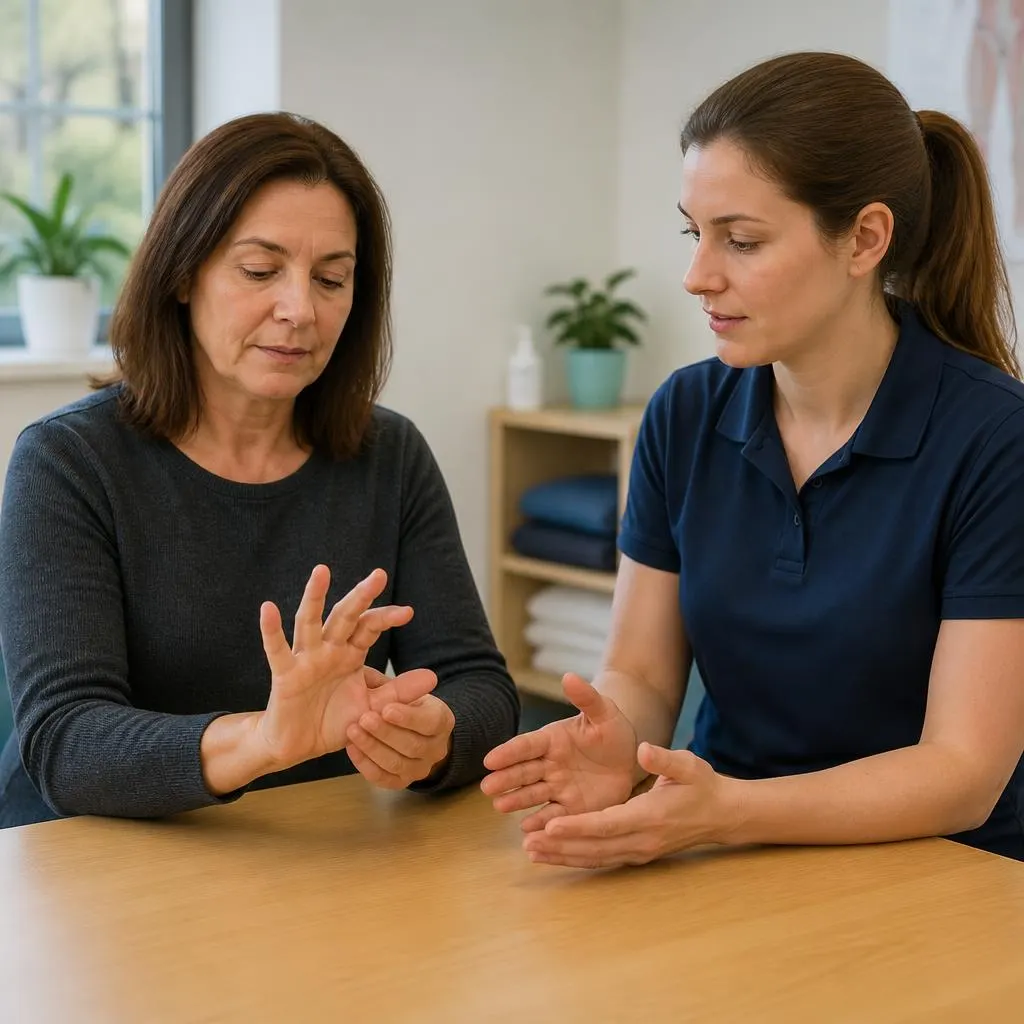
A clinician can ask which finger is affected, how often it locks, whether the person can straighten it, and what tasks are difficult. They may check tendon movement and tenderness. A finger that remains stuck, is severely swollen, or follows an injury needs medical review rather than repeated forceful straightening.
An assessment should start with the person's history, priorities, and current medical advice. A clinician may ask when symptoms began, what changes them, which activities matter most, and whether other diagnoses or treatments affect the plan. Depending on the concern, the visit can include observation of movement, function, balance, strength, breathing, or a relevant daily task. A home or video appointment cannot replace an examination or test that requires in-person medical care.
Planning care safely
Depending on severity, treatment options can include activity adjustment, a splint, injection, or a surgical opinion. Hand exercises should be gentle and selected for the current stage; repeated squeezing may irritate symptoms. A clinician can explain likely benefits and limits of each option rather than promising that a specific stretch will release the tendon.
Progress is not measured by pain or effort alone. A clinician can agree on a baseline, choose a small number of relevant tasks, and review how symptoms respond later that day and the following day. If symptoms increase sharply, linger, or change in character, pause the new activity and contact the treating team. The plan may need to be reduced, changed, or reviewed by another health professional before progression.
Making the plan workable at home
Use a light, comfortable grip for daily tasks and take breaks from repeated forceful grasping. If a splint is recommended, ask how long to wear it and how to protect the skin. Do not pull a locked finger straight or apply heat if sensation is reduced.
Home advice should fit the actual task, available space, footwear, supports, and the person's energy and confidence. A family member can help with setup if the person wants that support, but should not be asked to lift or move someone beyond their training. For online care, use a stable camera position and clear floor space only when the clinician says a movement check is appropriate.
Questions to take to a clinician
Ask whether the symptoms fit trigger finger, what non-surgical choices are reasonable, and when an injection or hand-surgery review is considered. Discuss how diabetes or medication may affect treatment.
It can help to bring a short symptom timeline, a current medication and treatment list, and one or two examples of activities that have become difficult. Ask which changes are expected, which are not, and how to contact the care team if the plan is not tolerated. Do not stop prescribed treatment, change medication, or delay a medical review because an exercise or nutrition article suggests a possible explanation.
When to pause and seek help
Seek prompt care for a finger that cannot be straightened, a hot red joint, fever, rapidly increasing swelling, or numbness and color change. A deep cut or crush injury needs urgent assessment.
Seek urgent medical help for severe or rapidly worsening symptoms, chest pain, fainting, new major weakness, a serious injury, or any other emergency. For new, persistent, or unexplained symptoms, speak with a qualified clinician before starting or increasing an exercise programme.
Follow-up and availability
Care should be reviewed against the person's goals and medical plan, not a fixed calendar or a promised outcome. Online consultation can be requested from Udaipur. A home visit is considered only where the service is active and after exact-locality and clinician availability are confirmed; the current introductory home-visit price is ₹1,125 – ₹1,350. The current introductory online consultation price is ₹742.
Local coverage: Home physiotherapy in Udaipur.
Clinical sources & further reading
These public resources provide general clinical guidance. They do not replace an assessment or an individual treatment plan.
Continue exploring
Choose your next step
Keep exploring with a focused guide, a relevant care option, or a direct enquiry.
Need professional advice?
Book an assessment with our expert team.