At a glance
What this guide can help you understand
A family-centred approach to goals for play, movement, daily routines, and participation when a child has a disability.
What should you bring to a consultation?
Share your main concern, when it started, what affects it, current medicines, and any reports or precautions you have been given.
See our clinical assessment approachWhen should you pause and seek medical advice?
Pause routine exercise and seek medical advice for sudden severe change, new neurological symptoms, breathing difficulty, chest pain, major injury, or feeling acutely unwell.
This guide is educational and does not replace diagnosis or urgent care.
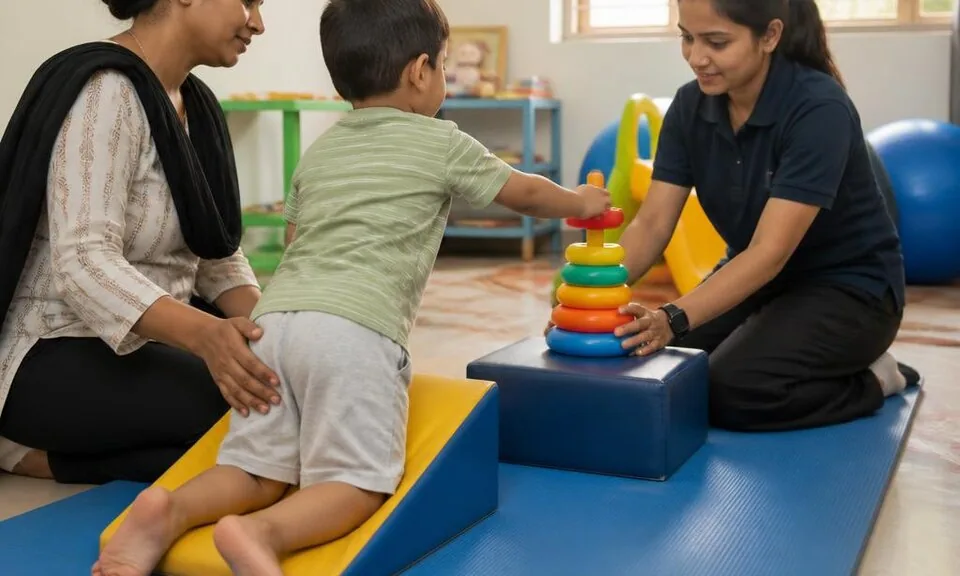
Child disability rehabilitation is more useful when goals connect with the child’s own play, routines, relationships, and participation. A family may want a child to move more comfortably, join a game, reach a toy, tolerate dressing, use a seat safely, or take part in a school or community routine. These are questions for shared planning, not promises of a particular milestone or independent outcome.
The practical context in this city
A Bengaluru home can include a bedroom, floor play, a chair, stairs, a lift, a school route, or a crowded shared space. The relevant task is the one the child and caregivers want to make more manageable; there is no single home programme for every disability. A pediatric disability rehabilitation enquiry can discuss goals and clinician matching, while suitability, scope, and coordination are reviewed before care is proposed. It does not imply local coverage or a confirmed home visit.
What a physiotherapist assesses
The clinician listens to the child and caregivers, asks about communication and consent, and observes movement in meaningful tasks when appropriate. Assessment may consider posture, strength, balance, range, coordination, fatigue, pain, sensory preferences, transfers, play, self-care, and the environment. The child’s existing medical advice, equipment, precautions, school context, and other professionals’ roles are important. The family should be able to say which tasks matter, what help is acceptable, and what a safe pause looks like.
How rehabilitation can progress
A goal can be made specific without making a prediction: for example, joining a two-minute turn-taking game with a chosen support, reaching a familiar object from a stable seat, or practising one part of dressing. The team and family decide the starting assistance, repetitions, rest, and signs that the task is too difficult. Progress may mean more choice, comfort, confidence, communication, endurance, or participation, not only a new motor skill. Goals should be reviewed when the child’s interests, health, equipment, school demands, or family routine changes.
What to expect from a home physiotherapy session
A home session may look at the exact play surface, chair, bed, bathroom route, toys, clothing, or transfer that the family identified. The clinician can demonstrate a task, invite the caregiver to practise, and agree how to support without taking over. Adaptations and equipment need individual assessment and safe fitting. Coordination with the child’s pediatric, medical, education, or other therapy team may be appropriate; this article does not establish a referral partnership or public-programme affiliation.
Do
- Choose a meaningful family goal, offer the child understandable choices, use the least help that keeps the task safe, celebrate communication and participation, and record what makes the activity easier or harder.
- Keep a simple record of symptoms, activity, sleep, and the tasks that are becoming easier or harder.
- Share medical reports, medication changes, surgeon restrictions, and any recent change in symptoms before exercise is progressed.
Don’t
- Do not claim a cure, independent walking, normal development, or a fixed milestone date, and do not force a movement, buy equipment without assessment, or compare one child’s progress with another’s.
- Do not copy an exercise from a video if it increases symptoms, requires equipment you cannot control, or conflicts with a medical restriction.
- Do not use pain, fatigue, or a single good day as the only measure of readiness for a harder task.
Safety and when to seek medical advice
Pause the activity and seek the appropriate medical or clinical advice for new pain, breathing difficulty, a seizure, a fall with injury, sudden weakness, a marked change in alertness, or a rapidly worsening symptom. Emergency concerns need local emergency care rather than a rehabilitation booking.
Booking and follow-up
Goswami Rehab offers home visits at ₹1,125 – ₹1,350 and online consultation at ₹742. Send the online booking request with the main concern, city, and preferred dates; the team confirms the appropriate next step within 24 hours. A teleconsultation can be useful when travel is difficult or when an exercise plan needs review, but it does not replace emergency or specialist medical care.
Local coverage: Home physiotherapy in Bengaluru.
Clinical sources & further reading
These public resources provide general clinical guidance. They do not replace an assessment or an individual treatment plan.
- Cerebral palsy in under 25s: assessment and managementNICE
- Improving early childhood development: WHO guidelineWorld Health Organization
- Early childhood intervention and inclusionUNICEF
- Family Centered Care in Early InterventionNational Library of Medicine
- Union Health Ministry Releases RBSK 2.0 Guidelines at National Summit on Best PracticesPress Information Bureau, Government of India
- Developmental MilestonesCenters for Disease Control and Prevention
Continue exploring
Choose your next step
Keep exploring with a focused guide, a relevant care option, or a direct enquiry.
Need professional advice?
Book an assessment with our expert team.