At a glance
What this guide can help you understand
How Kozhikode families can connect COPD rehabilitation with bathing, dressing, and household tasks without pushing through unsafe breathlessness.
What should you bring to a consultation?
Share your main concern, when it started, what affects it, current medicines, and any reports or precautions you have been given.
See our clinical assessment approachWhen should you pause and seek medical advice?
Pause routine exercise and seek medical advice for sudden severe change, new neurological symptoms, breathing difficulty, chest pain, major injury, or feeling acutely unwell.
This guide is educational and does not replace diagnosis or urgent care.
Bathing, dressing, cooking, and household movement can become difficult when COPD makes ordinary effort feel breathless. The physiotherapy question is not how to push through the symptom. It is how to observe the task, reduce avoidable effort, coordinate breathing and movement, use appropriate support, and recognise when a change needs respiratory review.
The practical context in this city
Kozhikode's authored profile includes COPD and pulmonary rehabilitation. The home setting may show a low bathroom seat, a long route to the kitchen, heat, stairs, carrying, or a family member who helps too quickly. Those are possible task factors, not claims about every Kozhikode home or a local COPD outcome. Diagnosis, medicines, oxygen instructions, comorbidities, and recent exacerbations determine the plan.
What a physiotherapist assesses
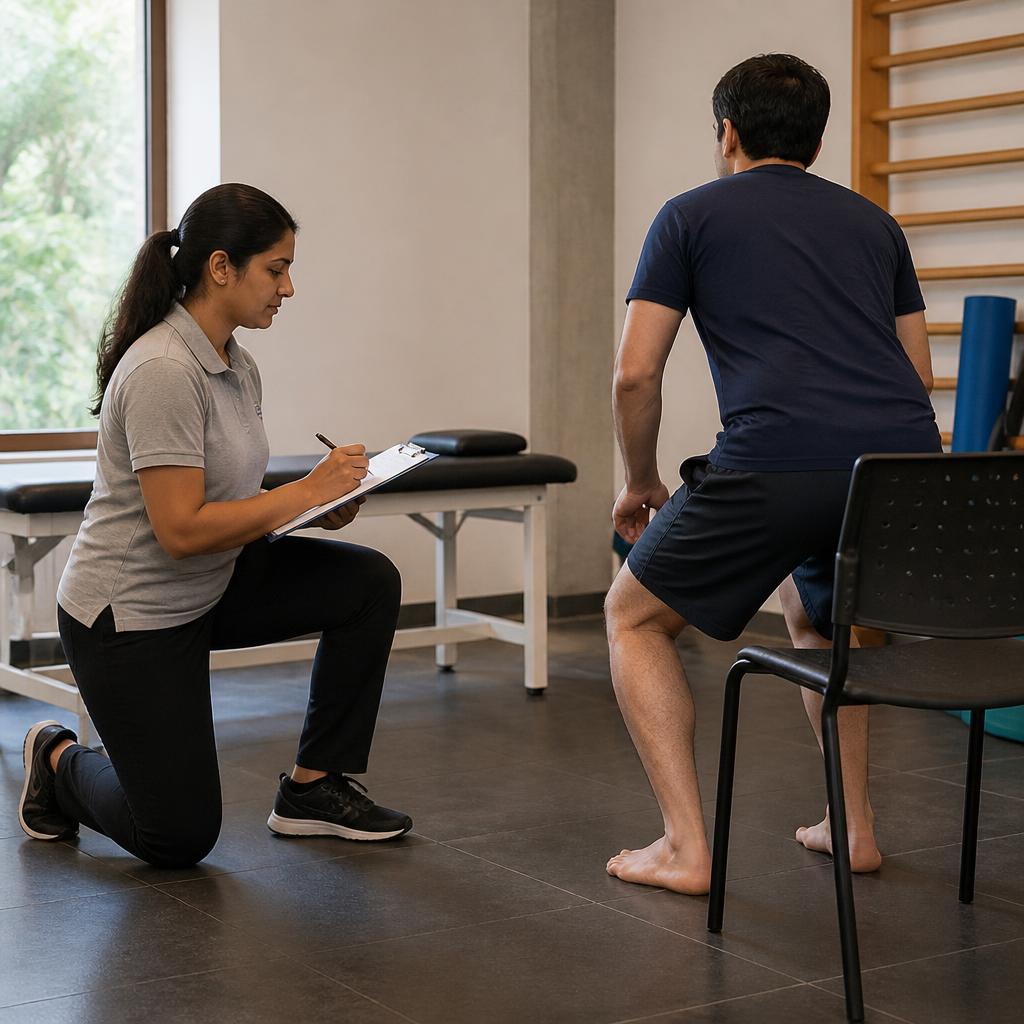
The therapist asks which part of bathing or dressing creates the largest demand, whether breathlessness settles as expected, and whether cough, sputum, pain, dizziness, fatigue, or anxiety changes the task. They may observe sitting, standing, reaching, turning, clothing management, a short route, and the person's use of inhalers or prescribed equipment. New or changed respiratory symptoms are referred rather than explained away as deconditioning.
The assessment is not a formality before an exercise sheet. It is how the clinician separates a familiar rehabilitation problem from a new medical change, identifies the task that matters to the person, and decides what requires supervision or another professional. The person’s discharge records, medicines, precautions, equipment, fatigue pattern, and family observations are part of the clinical picture.
How rehabilitation can progress
The clinician may change the order of a task, the height of a seat, the location of supplies, the amount carried, the pause pattern, or the assistance provided. Breathing coordination and energy conservation can be practised within a previously assessed activity. Progress means completing a meaningful task with better control and acceptable recovery, not meeting an online distance, oxygen, heart-rate, or repetition target.
Progress is not the same as adding distance, repetitions, weight, or intensity on a calendar. It can mean better control, less assistance, safer decision-making, improved recovery, or greater confidence in one meaningful task. The clinician should explain what to watch during the activity and after it, and when a change means the plan needs review.
What to expect from a home physiotherapy session
A home session can watch the bathroom route, clothing setup, kitchen counter, chair, stairs, and caregiver technique. The therapist may suggest a safer arrangement, practise a recovery position, and explain the stop rule already agreed with the respiratory team. A teleconsultation can review a stable plan, but it should not clear an acute flare, change oxygen, or replace a pulmonary rehabilitation assessment.
A home visit may include observation of a real route, chair, bed, bathroom, dining area, or family routine. It may also include education, coordination with the treating team, and a written plan for tasks that are independent, supervised, or not yet appropriate. A home session does not authorize changing medication, oxygen, food texture, weight-bearing restrictions, or a surgical precaution.
Do
- Prepare supplies before starting, sit for tasks when advised, use the prescribed respiratory support, pace the sequence, and report a changed response.
- Keep a short record of the symptom, task, assistance, food or swallowing concern, and later response that the clinician asked you to observe.
- Share discharge summaries, medication changes, restrictions, equipment, and new symptoms before a programme is progressed.
Don’t
- Do not hold the breath during effort, rush to finish a task, alter oxygen or inhaler instructions, or treat severe breathlessness as a normal training sensation.
- Do not copy another person's protocol or use one good day as proof that a larger workload is safe.
- Do not delay medical review for a new or rapidly changing symptom because it appears during rehabilitation.
Safety and when to seek medical advice
Stop and seek urgent care for severe or rapidly worsening breathlessness, chest pain or pressure, fainting, blue or grey lips, new confusion, inability to speak normally because of breathlessness, or a marked change in sputum and alertness. Seek prompt respiratory review for fever, coughing blood, repeated near-falls, a new symptom pattern, or activity intolerance that does not settle.
Booking and follow-up
Home physiotherapy is arranged after the team understands the person's condition, location, current precautions, and preferred care. Goswami Rehab offers home visits at ₹1,125–₹1,350 and online consultation at ₹742. Send the online booking request with the main concern, city, and preferred dates; the team confirms the appropriate next step within 24 hours. A teleconsultation can be useful when travel is difficult or when an exercise plan needs review, but it does not replace emergency or specialist medical care.
The article is educational information only. It does not diagnose a condition or replace advice from a doctor, surgeon, neurologist, dietitian, speech-language clinician, or treating physiotherapist. Individual plans, timelines, and outcomes vary.
Related care: home physiotherapy coverage in Kozhikode and cardiopulmonary service overview.
Clinical sources & further reading
These public resources provide general clinical guidance. They do not replace an assessment or an individual treatment plan.
- Pulmonary rehabilitationNational Heart, Lung, and Blood Institute
- Pulmonary rehabilitation for adults with chronic respiratory diseaseAmerican Thoracic Society
- Chronic obstructive pulmonary diseaseNHS
- Around the clock with chronic lung diseaseAmerican Lung Association
- Pulmonary rehabilitation clinical practice guidelineAmerican Thoracic Society
Continue exploring
Choose your next step
Keep exploring with a focused guide, a relevant care option, or a direct enquiry.
Need professional advice?
Book an assessment with our expert team.