At a glance
What this guide can help you understand
Homecare cardiopulmonary rehabilitation brings specialised respiratory and cardiac physiotherapy to people across India who may find repeated clinic travel difficult.
What should you bring to a consultation?
Share your main concern, when it started, what affects it, current medicines, and any reports or precautions you have been given.
See our clinical assessment approachWhen should you pause and seek medical advice?
Pause routine exercise and seek medical advice for sudden severe change, new neurological symptoms, breathing difficulty, chest pain, major injury, or feeling acutely unwell.
This guide is educational and does not replace diagnosis or urgent care.
Cardiopulmonary rehabilitation is a structured program of exercise, breathing retraining, and education for people with heart and lung conditions. Access can be difficult when someone is short of breath or recovering from cardiac surgery, especially if the program requires repeated trips to a hospital or clinic.
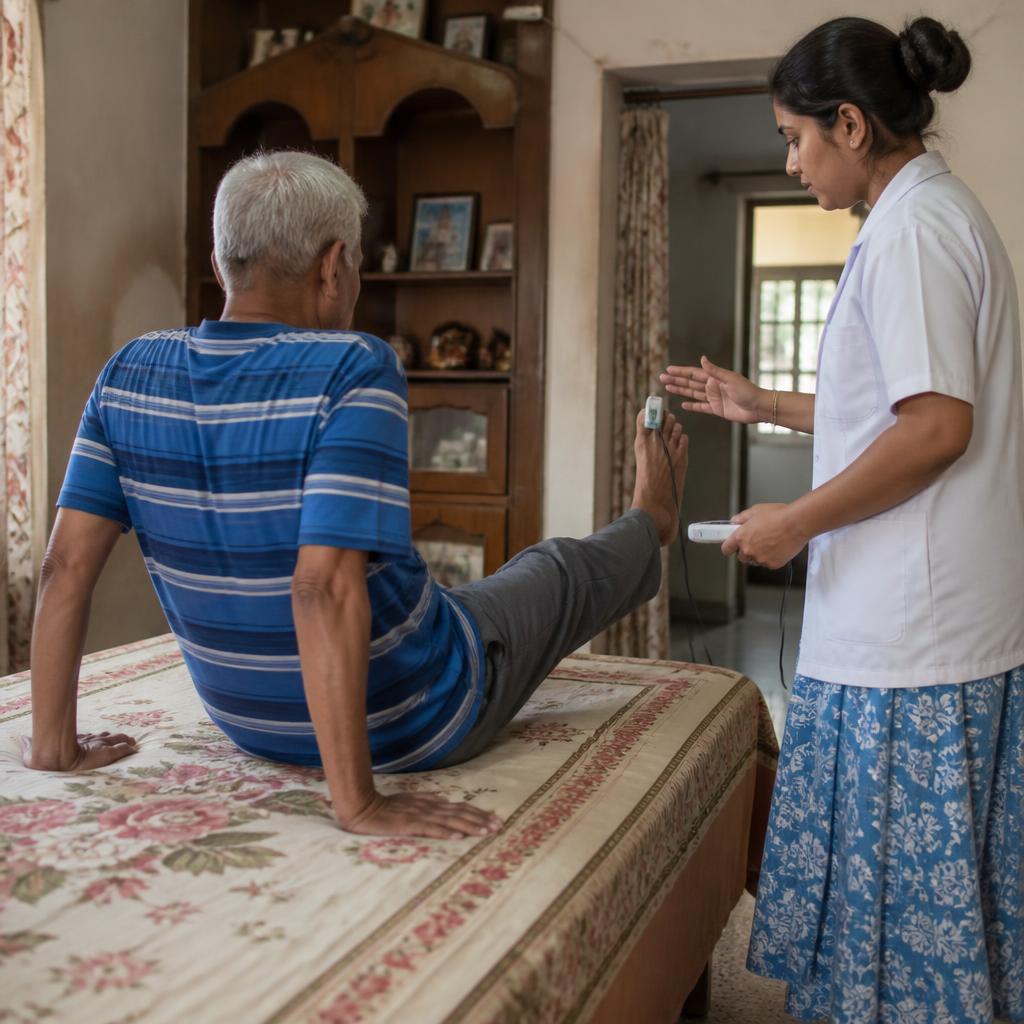
Homecare cardiopulmonary rehabilitation may make some parts of a program more accessible. Our physiotherapists can adapt exercise, breathing practice, and education to the person's symptoms, medical advice, and home environment.
Who May Be Suitable?
COPD (Chronic Obstructive Pulmonary Disease) COPD can involve persistent breathlessness, reduced exercise capacity, and exacerbations. Structured pulmonary rehabilitation may improve exercise tolerance and breathlessness for some people; the suitability and expected benefit should be reviewed with a clinician.
Post-Cardiac Bypass Surgery After coronary artery bypass grafting (CABG), patients may face a long recovery involving sternal wound healing, deconditioning, respiratory symptoms, and fear of exertion. Cardiac rehabilitation can include breathing exercises, progressive walking, and guidance on returning to activity under the surgical or cardiac team's advice.
Heart Failure Some people with stable heart failure may be suitable for carefully graded exercise, but the program must be cleared and monitored according to the cardiac team's advice. Goals can include activity tolerance, symptom management, and daily function.
Post-Cardiac Event Recovery After myocardial infarction or another acute cardiac event, supervised rehabilitation may support a gradual return to activity and daily function. Timing and intensity must be determined with the treating cardiac team.
What Can a Session Include?
Breathing Retraining — Pursed-lip breathing, diaphragmatic breathing, and paced breathing techniques reduce breathlessness and improve breathing efficiency. Particularly valuable for COPD patients during exertion and for post-bypass patients managing sternal discomfort.
Airway Clearance — Active cycle of breathing, huffing, and postural drainage help clear secretions — common in COPD, bronchiectasis, and post-operative states.
Graded Exercise — Starting from the patient's current baseline and progressively increasing intensity. Walking programs, cycling, and functional movement tasks chosen based on goals and home environment.
Respiratory Muscle Training — Specific exercises to strengthen the diaphragm and accessory breathing muscles.
Energy Conservation and Pacing — Teaching patients to organise daily tasks, use rest breaks effectively, and sequence activities to reduce breathlessness.
The Evidence
Clinical reviews support pulmonary rehabilitation as an option for improving exercise capacity, breathlessness, and quality of life for many people with COPD. Cardiac rehabilitation may also support safe activity and daily function, but individual results vary.
Access to cardiopulmonary rehabilitation can be limited. Homecare is one delivery option for people who cannot easily travel, but it is not suitable for every condition or stage of recovery and should be coordinated with medical care.
Goswami Rehab provides homecare cardiopulmonary rehabilitation across 15 Indian states. Contact us to discuss whether our programme is right for your condition.
Clinical sources & further reading
These public resources provide general clinical guidance. They do not replace an assessment or an individual treatment plan.
Continue exploring
Choose your next step
Keep exploring with a focused guide, a relevant care option, or a direct enquiry.
Need professional advice?
Book an assessment with our expert team.