At a glance
What this guide can help you understand
A practical physiotherapy guide to grip fatigue, repetitive hand loading, wrist movement, work modification, and a safe return to tool-based tasks in Faridabad.
What should you bring to a consultation?
Share your main concern, when it started, what affects it, current medicines, and any reports or precautions you have been given.
See our clinical assessment approachWhen should you pause and seek medical advice?
Pause routine exercise and seek medical advice for sudden severe change, new neurological symptoms, breathing difficulty, chest pain, major injury, or feeling acutely unwell.
This guide is educational and does not replace diagnosis or urgent care.
Tool use can load the fingers, thumb, wrist, elbow, and shoulder together. A worker may notice aching after a shift, reduced grip endurance, tingling, stiffness in the morning, or difficulty turning a key at home. These symptoms can have different causes, so rehabilitation starts with an examination rather than assuming that every hand problem is repetitive strain.
The practical context in this city
Faridabad includes homes and workplaces where practical, hands-on tasks may be part of the day. A useful plan must therefore connect a clinic-style exercise with the actual handle size, wrist position, work height, breaks, protective equipment, and shift pattern. The district setting is a reason to make the plan functional; it is not evidence that every worker has the same injury.
What a physiotherapist assesses
The physiotherapist asks which task brings symptoms on, how quickly they settle, whether the symptoms are on the palm or back of the hand, and whether there is numbness, weakness, swelling, or loss of dexterity. The assessment may include finger and wrist range, grip and pinch in more than one position, tendon or nerve provocation, elbow and shoulder contribution, skin condition, and the ability to perform a light version of the work task. Recent trauma, diabetes, inflammatory disease, and neck symptoms can change the pathway.
How rehabilitation can progress
Early care may use relative rest, gentle movement, symptom education, and a temporary reduction in forceful gripping rather than complete inactivity. Later work can include isometric gripping, controlled wrist and forearm strengthening, dexterity tasks, and a graded exposure to tool duration. The goal is not to prove toughness in one session; it is to build capacity with enough recovery between loads. Tool changes, two-handed technique, task rotation, and scheduled micro-breaks can reduce a repeated peak without stopping useful work altogether.
What to expect from a home physiotherapy session
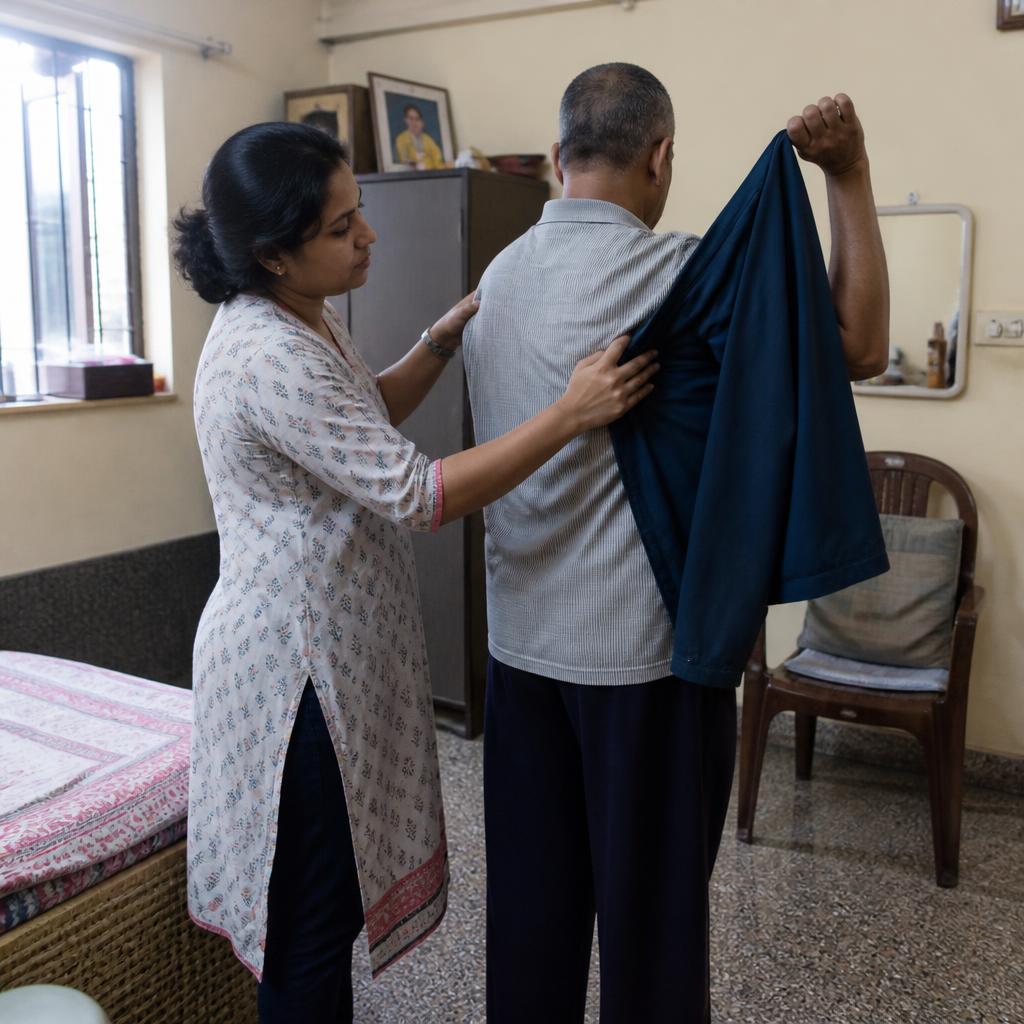
The therapist can observe a safe version of a grip, lift, twist, or reach in the home and ask the person to demonstrate the work sequence without a live production task. The session may include movement testing, a short symptom-calming routine, tendon or nerve mobility when appropriate, and a written strengthening dose. The therapist also checks whether a family member is helping with chores and whether the plan is realistic around the next shift.
Do
- Use a neutral wrist where the task allows, vary the hand position, loosen an unnecessarily tight grip, and take short movement breaks before fatigue becomes severe.
- Keep a simple record of symptoms, activity, sleep, and the tasks that are becoming easier or harder.
- Share medical reports, medication changes, surgeon restrictions, and any recent change in symptoms before exercise is progressed.
Don’t
- Do not work through new numbness, dropping objects, rapidly increasing swelling, or sharp pain simply because the task is familiar.
- Do not copy an exercise from a video if it increases symptoms, requires equipment you cannot control, or conflicts with a medical restriction.
- Do not use pain, fatigue, or a single good day as the only measure of readiness for a harder task.
Safety and when to seek medical advice
Urgent review is appropriate after a crush injury, deformity, severe loss of movement, a cold or pale hand, or sudden major weakness. Medical assessment is also important for persistent night numbness, progressive loss of grip, marked swelling, fever, or symptoms that travel from the neck into the arm.
Booking and follow-up
Home physiotherapy is arranged after the team understands the person’s condition, location, current precautions, and preferred care. Goswami Rehab offers home visits at ₹1,125–₹1,350 and online consultation at ₹742. Send the online booking request with the main concern, city, and preferred dates; the team confirms the appropriate next step within 24 hours. A teleconsultation can be useful when travel is difficult or when an exercise plan needs review, but it does not replace emergency or specialist medical care.
The article is educational information only. It does not diagnose a condition or replace advice from a doctor, surgeon, obstetrician, cancer team, or treating physiotherapist. Individual plans, timelines, and outcomes vary.
Clinical sources & further reading
These public resources provide general clinical guidance. They do not replace an assessment or an individual treatment plan.
- Repetitive strain injury (RSI)NHS
- Musculoskeletal disorders at workHealth and Safety Executive
- PhysiotherapyNHS
- Faridabad District: official district informationDistrict Administration, Faridabad
- RehabilitationMedlinePlus, U.S. National Library of Medicine
- Orthopedic conditionsNational Institute of Arthritis and Musculoskeletal and Skin Diseases
Continue exploring
Choose your next step
Keep exploring with a focused guide, a relevant care option, or a direct enquiry.
Need professional advice?
Book an assessment with our expert team.