At a glance
What this guide can help you understand
A homecare physiotherapy guide to transfers, walking progression, confidence, fall prevention, and caregiver support after hip fracture in Bengaluru.
What should you bring to a consultation?
Share your main concern, when it started, what affects it, current medicines, and any reports or precautions you have been given.
See our clinical assessment approachWhen should you pause and seek medical advice?
Pause routine exercise and seek medical advice for sudden severe change, new neurological symptoms, breathing difficulty, chest pain, major injury, or feeling acutely unwell.
This guide is educational and does not replace diagnosis or urgent care.
After a hip fracture, the immediate goals are safe medical recovery, movement, nutrition, pain management, and getting up again when the orthopaedic team allows it. Rehabilitation then supports transfers, walking, strength, confidence, and participation. Age, surgery, other conditions, cognition, vision, and the home environment all affect the plan.
The practical context in this city
A Bengaluru home may involve a lift, stairs, a bathroom with limited turning space, or a long route from bedroom to the building entrance. The therapist can practise the most important route and identify whether a temporary commode, rail, chair, or caregiver change is needed. The goal is not to rush the person through a building; it is to make the next safe step clear.
What a physiotherapist assesses
The therapist confirms weight-bearing and hip precautions, checks pain, swelling, alertness, breathing, blood pressure, leg strength, transfers, walking aid fit, and the person’s ability to follow instructions. They also ask about falls risk, bone health, nutrition, vision, and the support available after the visit.
How rehabilitation can progress
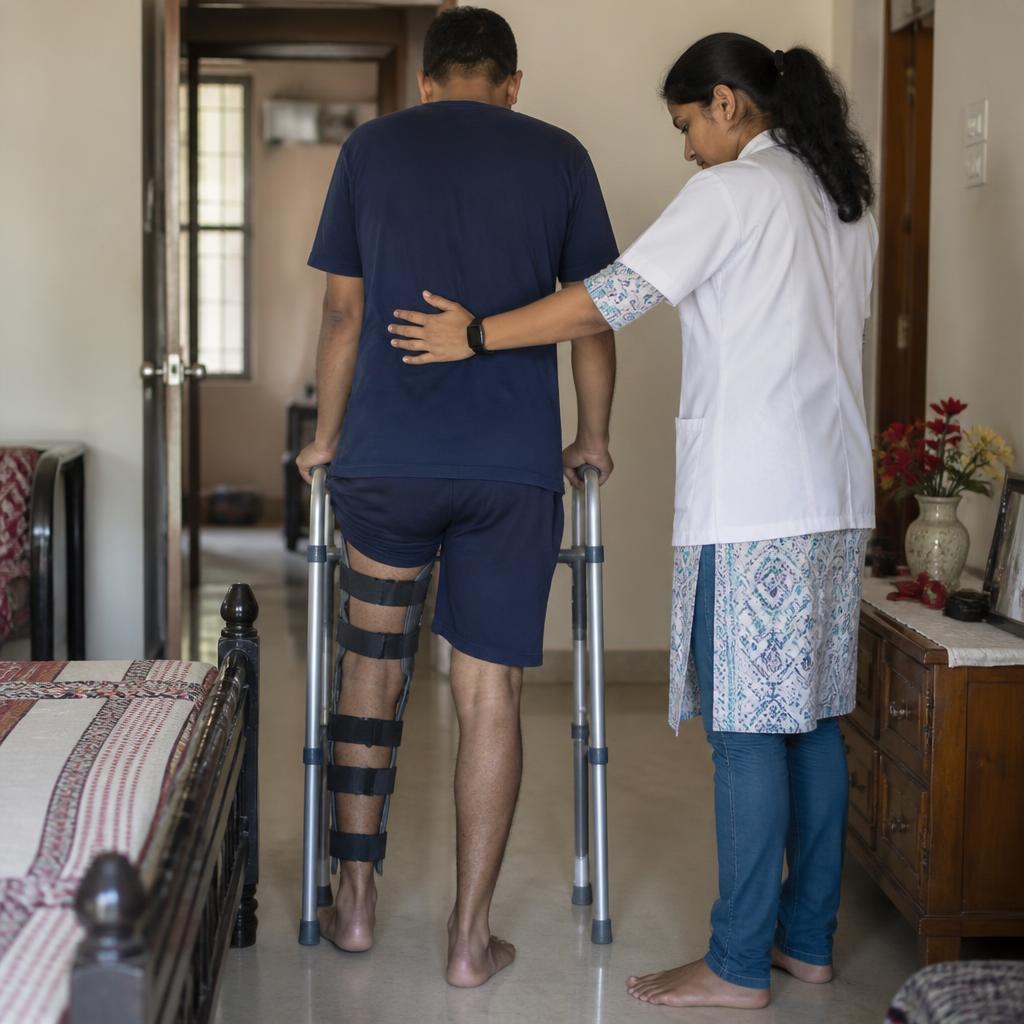
Early work may include bed mobility, ankle movement, breathing, sitting, standing, and short assisted walks. Strength and distance progress in small steps, with attention to gait quality and recovery. Later goals include stairs, outdoor surfaces, carrying a light item, and rebuilding confidence. A prevention plan addresses the reason for the fall where possible.
What to expect from a home physiotherapy session
The therapist checks the bed and chair heights, practises a transfer, adjusts the walking aid, and observes the route to the bathroom or doorway. Exercises are kept short and repeated with rest. The caregiver learns how to supervise without pulling and how to notice pain, dizziness, confusion, or a change in walking. Families can use the Bengaluru home physiotherapy service for post-surgery recovery to share the locality and recovery needs before requesting a visit.
Do
- Follow the surgeon’s loading instructions, keep the walking route clear, use the prescribed aid, practise little and often, and report a change in pain or function.
- Keep a simple record of symptoms, activity, sleep, and the tasks that are becoming easier or harder.
- Share medical reports, medication changes, surgeon restrictions, and any recent change in symptoms before exercise is progressed.
Don’t
- Do not sit on an unsafe low surface, twist or cross the legs against a surgical restriction, or leave a person to walk alone before the team says the level of help is safe.
- Do not copy an exercise from a video if it increases symptoms, requires equipment you cannot control, or conflicts with a medical restriction.
- Do not use pain, fatigue, or a single good day as the only measure of readiness for a harder task.
Safety and when to seek medical advice
Any of these symptoms—sudden chest pain, breathlessness, confusion, fainting, severe new hip pain, a shortened or turned leg, calf swelling, fever, wound changes, or inability to bear weight—needs urgent medical review.
Booking and follow-up
Home physiotherapy is arranged after the team understands the person’s condition, location, current precautions, and preferred care. Goswami Rehab offers home visits at ₹1,125–₹1,350 and online consultation at ₹742. Send the online booking request with the main concern, city, and preferred dates; the team confirms the appropriate next step within 24 hours. A teleconsultation can be useful when travel is difficult or when an exercise plan needs review, but it does not replace emergency or specialist medical care.
The article is educational information only. It does not diagnose a condition or replace advice from a doctor, surgeon, obstetrician, cancer team, or treating physiotherapist. Individual plans, timelines, and outcomes vary.
Clinical sources & further reading
These public resources provide general clinical guidance. They do not replace an assessment or an individual treatment plan.
- Hip fracture: managementNICE
- Broken hipNHS
- STEADI: Stopping Elderly Accidents, Deaths & InjuriesCenters for Disease Control and Prevention
- Government of KarnatakaGovernment of Karnataka
- RehabilitationMedlinePlus, U.S. National Library of Medicine
- Orthopedic conditionsNational Institute of Arthritis and Musculoskeletal and Skin Diseases
Continue exploring
Choose your next step
Keep exploring with a focused guide, a relevant care option, or a direct enquiry.
Need professional advice?
Book an assessment with our expert team.