At a glance
What this guide can help you understand
A clear guide to strengthening, walking, pacing, and function-focused physiotherapy for knee osteoarthritis.
What should you bring to a consultation?
Share your main concern, when it started, what affects it, current medicines, and any reports or precautions you have been given.
See our clinical assessment approachWhen should you pause and seek medical advice?
Pause routine exercise and seek medical advice for sudden severe change, new neurological symptoms, breathing difficulty, chest pain, major injury, or feeling acutely unwell.
This guide is educational and does not replace diagnosis or urgent care.
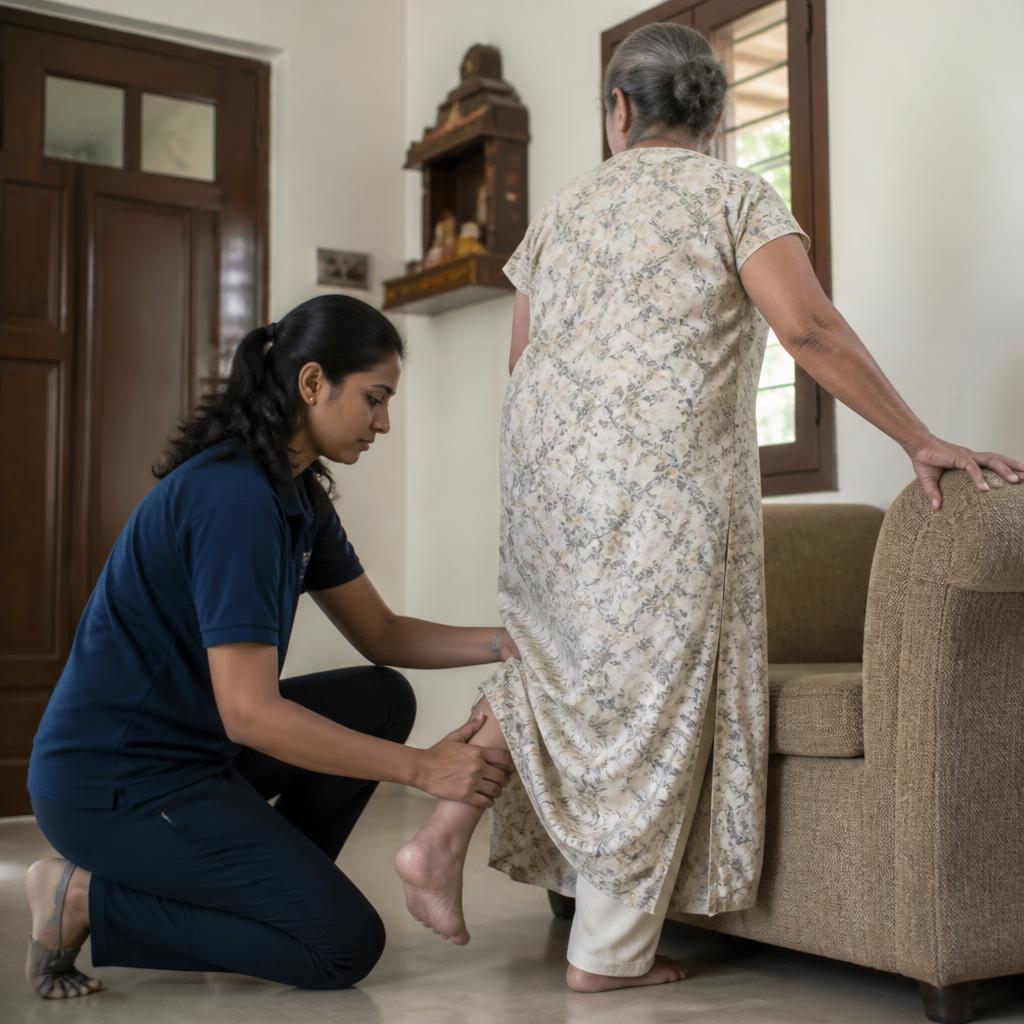
Knee osteoarthritis can cause pain, stiffness, swelling, and reduced confidence with stairs or walking. Physiotherapy focuses on improving what you can do, not only on the appearance of an X-ray.
What Is Assessed?
The physiotherapist checks pain and swelling, knee movement, quadriceps and hip strength, walking, balance, stairs, footwear, activity levels, and barriers in your home. Goals might include walking to the bathroom safely, climbing stairs, or returning to a valued activity.
Why Exercise Matters
Progressive strengthening helps the muscles support daily tasks. Programs commonly use quadriceps and hip strengthening, mobility work, balance practice, and graded walking or cycling. The starting level may be seated or assisted; resistance and repetitions increase as control improves.
Some discomfort during exercise can be acceptable, but marked swelling, sharp pain, or a clear worsening that does not settle should be reported. Weight management, sleep, pacing, and suitable walking aids may also support treatment. Surgery is not the only treatment option, but medical review is appropriate when pain or function continues to deteriorate.
Textbook basis: Principles are synthesised from Kisner & Colby’s Therapeutic Exercise, O’Sullivan’s Physical Rehabilitation, and Goodman & Fuller’s Pathology for the Physical Therapist.
Clinical sources & further reading
These public resources provide general clinical guidance. They do not replace an assessment or an individual treatment plan.
Continue exploring
Choose your next step
Keep exploring with a focused guide, a relevant care option, or a direct enquiry.
Need professional advice?
Book an assessment with our expert team.