At a glance
What this guide can help you understand
Learn how physiotherapy assesses neck pain, builds movement and strength, and adapts treatment for work and daily activities.
What should you bring to a consultation?
Share your main concern, when it started, what affects it, current medicines, and any reports or precautions you have been given.
See our clinical assessment approachWhen should you pause and seek medical advice?
Pause routine exercise and seek medical advice for sudden severe change, new neurological symptoms, breathing difficulty, chest pain, major injury, or feeling acutely unwell.
This guide is educational and does not replace diagnosis or urgent care.
Neck pain may be related to muscle loading, joint stiffness, sustained positions, headache disorders, nerve irritation, or injury. The same exercise is not suitable for every cause, which is why assessment comes before a home program.
Physiotherapy Assessment
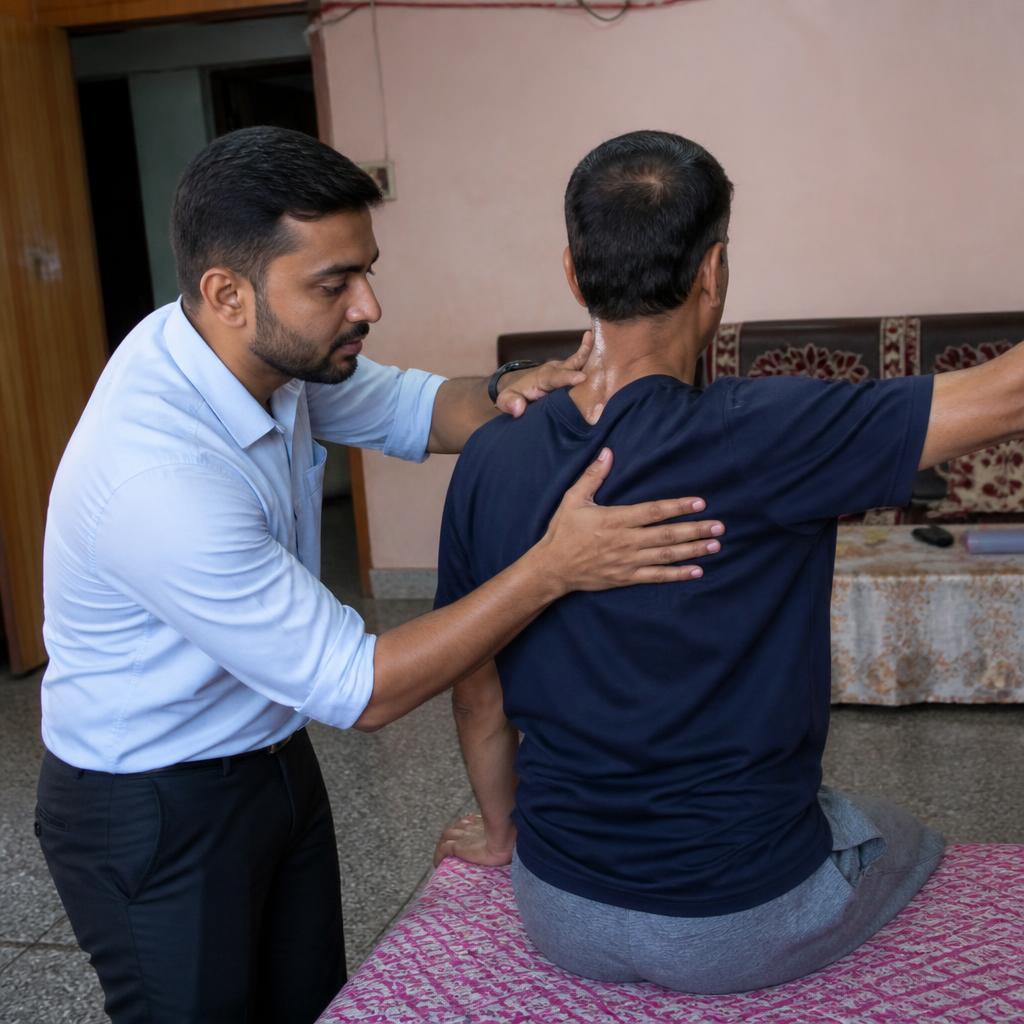
Your physiotherapist may review pain behaviour, headaches, arm symptoms, posture during real tasks, neck and upper-back movement, shoulder function, strength, sensation, and reflexes. They also screen for signs that require medical referral.
Treatment and Home Practice
A plan may combine comfortable range-of-motion work, deep neck and shoulder-blade strengthening, upper-back mobility, breathing and relaxation strategies, manual treatment when appropriate, and gradual exposure to work or household tasks. Short movement breaks are usually more useful than trying to hold one “perfect” posture all day.
Avoid forceful self-manipulation and exercises that cause spreading arm pain, increasing numbness, or new weakness. Seek urgent care after significant trauma or with severe headache, dizziness, visual or speech changes, difficulty walking, fever, or progressive arm weakness.
Textbook basis: Principles are synthesised from Kisner & Colby’s Therapeutic Exercise, Magee’s Orthopedic Physical Assessment, and Goodman & Fuller’s Pathology for the Physical Therapist.
Clinical sources & further reading
These public resources provide general clinical guidance. They do not replace an assessment or an individual treatment plan.
Continue exploring
Choose your next step
Keep exploring with a focused guide, a relevant care option, or a direct enquiry.
Need professional advice?
Book an assessment with our expert team.