At a glance
What this guide can help you understand
How Nagpur families can assess and practise daily function when an older adult comes home weaker or less steady after hospitalisation.
What should you bring to a consultation?
Share your main concern, when it started, what affects it, current medicines, and any reports or precautions you have been given.
See our clinical assessment approachWhen should you pause and seek medical advice?
Pause routine exercise and seek medical advice for sudden severe change, new neurological symptoms, breathing difficulty, chest pain, major injury, or feeling acutely unwell.
This guide is educational and does not replace diagnosis or urgent care.
An older person may return home from hospital weaker, slower, less steady, or less confident without one single injury explaining every difficulty. Home physiotherapy can identify what changed, assess the real daily tasks, and coordinate a safe rebuilding plan. It should not assume that every post-hospital decline is simple deconditioning or that a generic exercise sheet is appropriate.
The practical context in this city
Nagpur's authored profile includes geriatric physiotherapy and post-surgery rehabilitation. The home may reveal a low bed, a difficult toilet route, a new walking aid, stairs, caregiver strain, or medication-related dizziness. These are assessment questions, not claims about local hospital outcomes. The discharge diagnosis, weight-bearing status, wounds, cognition, infection risk, heart and lung conditions, and family support guide the plan.
What a physiotherapist assesses
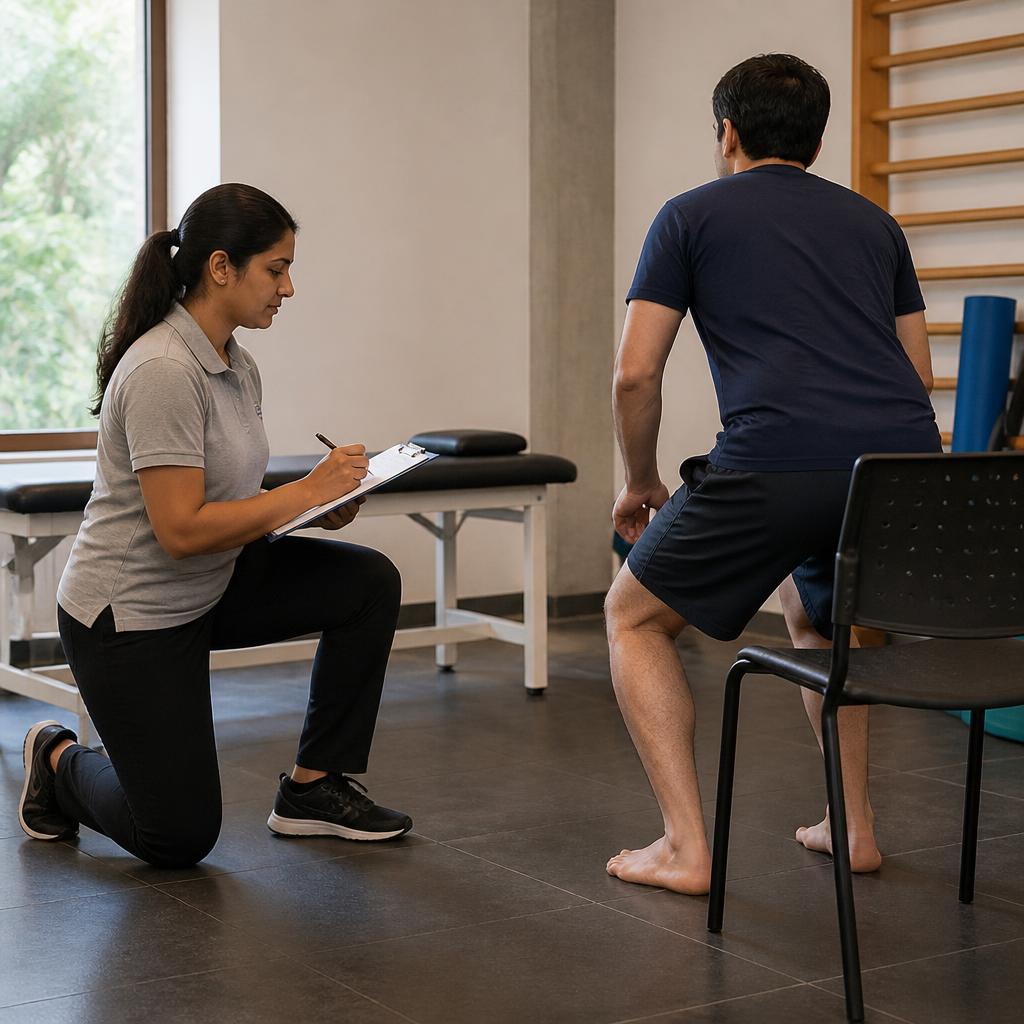
The therapist reviews the hospital course and observes alertness, bed mobility, transfers, standing, walking, turning, toileting, stairs, pain, breathlessness, fatigue, cognition, balance, skin, equipment, and caregiver technique when safe. They ask what was possible before admission and what is now different. Fever, acute confusion, new weakness, chest symptoms, or a sudden decline requires medical assessment rather than a harder rehabilitation session.
The assessment is not a formality before an exercise sheet. It is how the clinician separates a familiar rehabilitation problem from a new medical change, identifies the task that matters to the person, and decides what requires supervision or another professional. The person’s discharge records, medicines, precautions, equipment, fatigue pattern, and family observations are part of the clinical picture.
How rehabilitation can progress
A plan may rebuild one meaningful transition, route, or self-care task with support matched to risk. Surface, assistance, walking aid, distance, task order, and recovery can change one at a time. The team can coordinate with the discharging service and review whether function later that day or the next morning is stable. Improvement is not promised on a fixed timeline, and a plateau can signal a new problem.
Progress is not the same as adding distance, repetitions, weight, or intensity on a calendar. It can mean better control, less assistance, safer decision-making, improved recovery, or greater confidence in one meaningful task. The clinician should explain what to watch during the activity and after it, and when a change means the plan needs review.
What to expect from a home physiotherapy session
A home visit can practise the bed-to-chair transfer, bathroom route, chair rise, doorway, lift, or short walk that the person actually needs. The therapist can label independent, supervised, and deferred tasks, show a caregiver where to stand, and check that equipment is being used as assessed. They may recommend medical, occupational, nursing, or dietetic review when the barrier is not primarily movement.
A home visit may include observation of a real route, chair, bed, bathroom, dining area, or family routine. It may also include education, coordination with the treating team, and a written plan for tasks that are independent, supervised, or not yet appropriate. A home session does not authorize changing medication, oxygen, food texture, weight-bearing restrictions, or a surgical precaution.
Do
- Keep discharge instructions visible, clear the route, use the assessed aid, allow recovery, and tell the team when function is worse than the person's recent baseline.
- Keep a short record of the symptom, task, assistance, food or swallowing concern, and later response that the clinician asked you to observe.
- Share discharge summaries, medication changes, restrictions, equipment, and new symptoms before a programme is progressed.
Don’t
- Do not pull a person by the arms, remove a prescribed restriction, practise stairs alone after a new admission, or call sudden deterioration ordinary weakness.
- Do not copy another person's protocol or use one good day as proof that a larger workload is safe.
- Do not delay medical review for a new or rapidly changing symptom because it appears during rehabilitation.
Safety and when to seek medical advice
Seek urgent assessment for chest pain, severe breathlessness, fainting, new confusion, new focal weakness, sudden inability to stand or walk, fever with rapid decline, or a fall with injury. Contact the treating team promptly for worsening wound symptoms, new pain, repeated near-falls, persistent dizziness, or functional decline that does not settle.
Booking and follow-up
Home physiotherapy is arranged after the team understands the person's condition, location, current precautions, and preferred care. Goswami Rehab offers home visits at ₹1,125–₹1,350 and online consultation at ₹742. Send the online booking request with the main concern, city, and preferred dates; the team confirms the appropriate next step within 24 hours. A teleconsultation can be useful when travel is difficult or when an exercise plan needs review, but it does not replace emergency or specialist medical care.
The article is educational information only. It does not diagnose a condition or replace advice from a doctor, surgeon, neurologist, dietitian, speech-language clinician, or treating physiotherapist. Individual plans, timelines, and outcomes vary.
Related care: home physiotherapy coverage in Nagpur.
Clinical sources & further reading
These public resources provide general clinical guidance. They do not replace an assessment or an individual treatment plan.
- Towards a common definition of acquired deconditioning in hospitalBMJ Open
- Best practices for identifying and managing deconditioningAgency for Healthcare Research and Quality
- Rehabilitation after critical illness in adultsNICE
- RehabilitationWorld Health Organization
- The evidence to help end deconditioning in hospitalBritish Geriatrics Society
Continue exploring
Choose your next step
Keep exploring with a focused guide, a relevant care option, or a direct enquiry.
Need professional advice?
Book an assessment with our expert team.