At a glance
What this guide can help you understand
Home and clinic physiotherapy can both support rehabilitation. The useful choice depends on the person’s goals, safety, travel, home environment and available equipment.
What should you bring to a consultation?
Share your main concern, when it started, what affects it, current medicines, and any reports or precautions you have been given.
See our clinical assessment approachWhen should you pause and seek medical advice?
Pause routine exercise and seek medical advice for sudden severe change, new neurological symptoms, breathing difficulty, chest pain, major injury, or feeling acutely unwell.
This guide is educational and does not replace diagnosis or urgent care.
Short answer: Home physiotherapy may be a practical fit when travel is difficult or when daily tasks and the home environment are central to the goals. A clinic may suit someone who can travel safely and needs equipment or facilities that are not available at home. Neither setting is automatically better; match the setting to the assessment and the person’s priorities.
Published: October 13, 2026. Prices checked: October 13, 2026, against Goswami Rehab’s current pricing configuration. Clinic fees vary by provider and location; this guide does not present an unsupported national average. No named clinical reviewer is claimed for this general guide.
Home and clinic physiotherapy compared
| Consideration | Home physiotherapy | Clinic physiotherapy |
|---|---|---|
| Cost per session | Check the visit fee, travel coverage and what the appointment includes. | Ask for the current local fee and confirm any facility, equipment or other charges. |
| Session length | Length depends on the provider, appointment type and assessment needs; confirm before booking. | Length depends on the clinic and appointment; compare like-for-like assessment and follow-up time. |
| Travel | The therapist travels to the person; this can reduce the need to arrange transport. | The person travels to the clinic. Consider the route, transfers, waiting time and return journey. |
| Practice environment | Tasks can be considered in the actual home layout, such as a bed-to-chair transfer or navigating a step. | Practice takes place in a treatment space with the equipment that clinic provides. |
| Equipment | Available equipment is limited to what can be brought or safely used in the home. | A clinic may offer larger or specialist equipment, depending on the facility and appointment. |
| Supervision | In-person supervision happens during the visit; between-visit support varies by service and plan. | In-person supervision happens during the appointment; between-visit support varies by service and plan. |
| Who it may suit | May be worth discussing when transport, fatigue, stairs or home routines affect participation. | May be worth discussing when the person can travel and the required equipment or setting is available there. |
| When it may not suit | May not fit if the home cannot safely support the session or necessary equipment is unavailable. | May not fit if the person cannot travel safely or the required care is unavailable at that clinic. |
| Waiting time | Depends on clinician and locality availability; ask when a visit can be confirmed. | Depends on the clinic and appointment type; ask about the next suitable slot. |
| Guideline context | Guidance recognizes rehabilitation in home settings; it does not establish home care as best for everyone. | Rehabilitation is delivered across settings; the appropriate setting depends on individual needs and local services. |
These are setting differences, not a ranking of therapist skill or likely recovery. The American Physical Therapy Association describes home-health physical therapy as care provided in a home setting; the World Health Organization describes rehabilitation as something delivered across different levels and settings of care. Neither source establishes that one setting is superior for all patients. The right plan still depends on clinical needs, professional scope and local availability.
For a separate comparison of video-based care and home visits—including evidence, safety, and India-specific costs—read the online and home physiotherapy guide.
Choose home physiotherapy when the home context matters
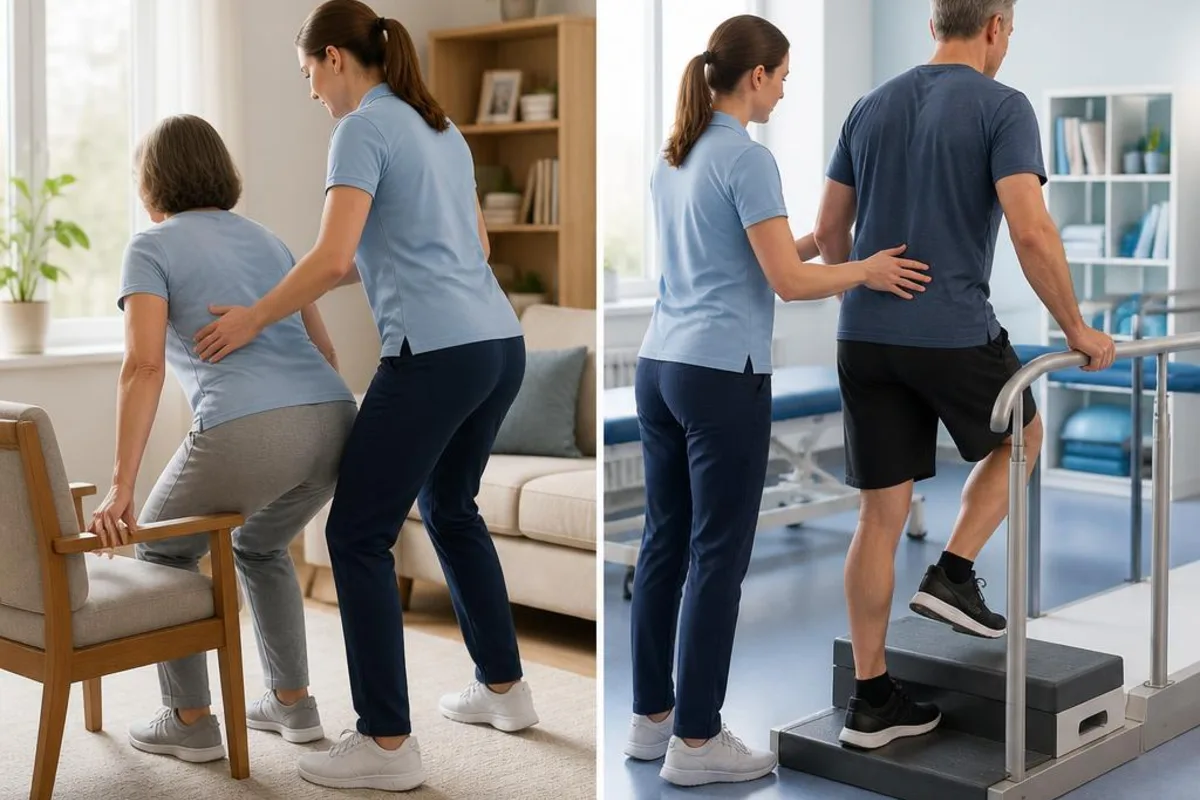
A home visit lets a clinician see the space where everyday movement happens. That can make it easier to discuss a real doorway, chair height, walking route or transfer rather than relying only on a description. It may also reduce the transport burden for someone whose mobility, energy or support arrangements make a clinic journey difficult.
Home care has limits. A therapist cannot assume a home has the same equipment, staffing or emergency support as a clinic or hospital. If a goal depends on equipment that is unavailable at home, ask whether a clinic, hospital service or another setting is more appropriate.
Choose a clinic when travel is manageable and its facilities fit
A clinic appointment may be practical when the person can get there safely and the available facilities match the agreed plan. Ask what equipment is actually used, whether it is needed for the person’s goals, and how the exercises will transfer to daily life outside the clinic.
Clinic-based care is not automatically more effective because a facility has more equipment. Home-based care is not automatically more convenient if the home is difficult to access or the required support cannot be provided there.
Compare the full cost, not just the session fee
For a fair comparison, request the current fee and confirm the session length, assessment included, travel charges, follow-up rate, cancellation terms and any equipment costs. Include the cost and time of getting to a clinic, such as transport and help from a family member. Ask each provider what is included before comparing totals.
Goswami Rehab’s current introductory home-visit price is ₹1,125 – ₹1,350. Availability depends on the exact locality and is confirmed before a visit. This is the provider’s published fee, not an estimate of the wider clinic market. Check the booking page for current details.
When neither setting is the right first step
Routine physiotherapy is not a substitute for urgent medical assessment. Seek emergency help for a medical emergency, sudden severe symptoms or a rapid change that may need immediate investigation. If a person’s condition is unstable, or the treating team has set precautions, contact that team before arranging a session.
Home physiotherapy may not be suitable if the home environment cannot safely support the session or required equipment is unavailable. Clinic care may not be suitable if the person cannot travel safely and no appropriate transport or transfer support is available. Ask the clinician or treating team about another care setting rather than forcing a choice between these two.
Questions to ask before booking
- What goals will the first assessment cover, and how will progress be reviewed?
- Which setting has the equipment and support needed for those goals?
- Can the person travel to and from the appointment safely?
- What is included in the total fee, and are there travel or equipment charges?
- How will the plan involve family or caregivers, if the person wants that support?
Frequently asked questions
Is home physiotherapy better than clinic physiotherapy?
Neither is best for everyone. The choice depends on the assessment, safety, goals, transport, home environment and facilities needed. Ask the treating clinician to explain why a setting fits the person’s plan.
Does home physiotherapy include specialist equipment?
Not necessarily. Equipment varies by provider and appointment. Ask what can be brought to the home and whether the plan requires facilities that are only available elsewhere.
Is clinic physiotherapy cheaper?
There is no reliable single answer without comparing current local fees and what each appointment includes. Include travel time and expenses, any home-visit travel charge, session length and equipment costs in the comparison.
Can someone switch settings during rehabilitation?
The care setting can be discussed again as goals, mobility, medical guidance and access change. Coordinate any change with the treating team so the plan and precautions remain clear.
What if travel is difficult after surgery or illness?
Tell the treating team what makes travel difficult and ask which settings are safe and available. A home visit may be one option to discuss, but it is not suitable for every condition or goal.
Sources
The links below describe home-based physical therapy and rehabilitation across care settings. They do not replace an individual assessment or establish that one setting is superior for every patient.
Local coverage: Browse all 44 city pages for home physiotherapy.
Clinical sources & further reading
These public resources provide general clinical guidance. They do not replace an assessment or an individual treatment plan.
Continue exploring
Choose your next step
Keep exploring with a focused guide, a relevant care option, or a direct enquiry.
Need professional advice?
Book an assessment with our expert team.