Quick answer
Food can support health, not diagnose vasculitis
Skin inflammation has many possible causes. Eat enough, keep food varied, and check medicines or supplements with a clinician. Do not delay medical care while testing a diet.
How can lookalike conditions differ?
Eczema and contact dermatitis: itch, dryness, scaling, cracking, or oozing may follow an irritant or exposure.
Hives: raised itchy areas often move or fade, while painful or bruise-like changes need review.
Infection or medicine reaction: warmth, fever, rapid spread, blisters, peeling, mouth or eye involvement need medical attention.
Vasculitis: non-blanching spots, ulcers, pain, or organ symptoms require clinical assessment rather than a photo-based label.
What is a safer nutrition starting point?
Choose practical meals with protein, fibre, vegetables or fruit, and enough energy. Keep the pattern culturally familiar and compatible with kidney, liver, swallowing, medication, or allergy advice.
Record timing and symptoms if useful, but treat a food diary as a conversation aid—not proof that a food caused inflammation.
Ask about nutritional consultationSafety first
Do not wait for a food experiment
Seek urgent medical help for rapidly spreading purpura, dark or blistering skin, severe pain, fever with marked illness, breathing or eye symptoms, new weakness or confusion, severe abdominal pain, blood in stool or urine, or markedly reduced urine.
Do
Support the clinical plan
- Share all medicines, supplements, and herbal products.
- Keep meals adequate and varied unless your clinician advises otherwise.
- Ask which specialist should coordinate the next step.
Don’t
Self-treat a diagnosis
- Do not stop prescribed medicine or start megadose supplements.
- Do not use broad elimination diets without supervision.
- Do not book routine exercise care instead of urgent assessment.
Parkinson's rehabilitation can raise nutrition questions that are easy to oversimplify. Appetite may change, constipation may become troublesome, swallowing may be less safe, and the timing or composition of meals may interact with a prescribed medicine plan. The useful question is not which universal diet to follow; it is which changes need a dietitian, swallowing clinician, neurologist, doctor, or pharmacist to review.
The practical context in this city
A Thiruvananthapuram family may be helping with shopping, cooking, eating, medicines, and therapy in the same home. Parkinson's disease, other medical conditions, dentition, alertness, movement difficulty, and the person's preferences all affect the appropriate plan. No city profile can establish an individual calorie, protein, fluid, texture, supplement, or medication-timing prescription.
What a physiotherapist assesses
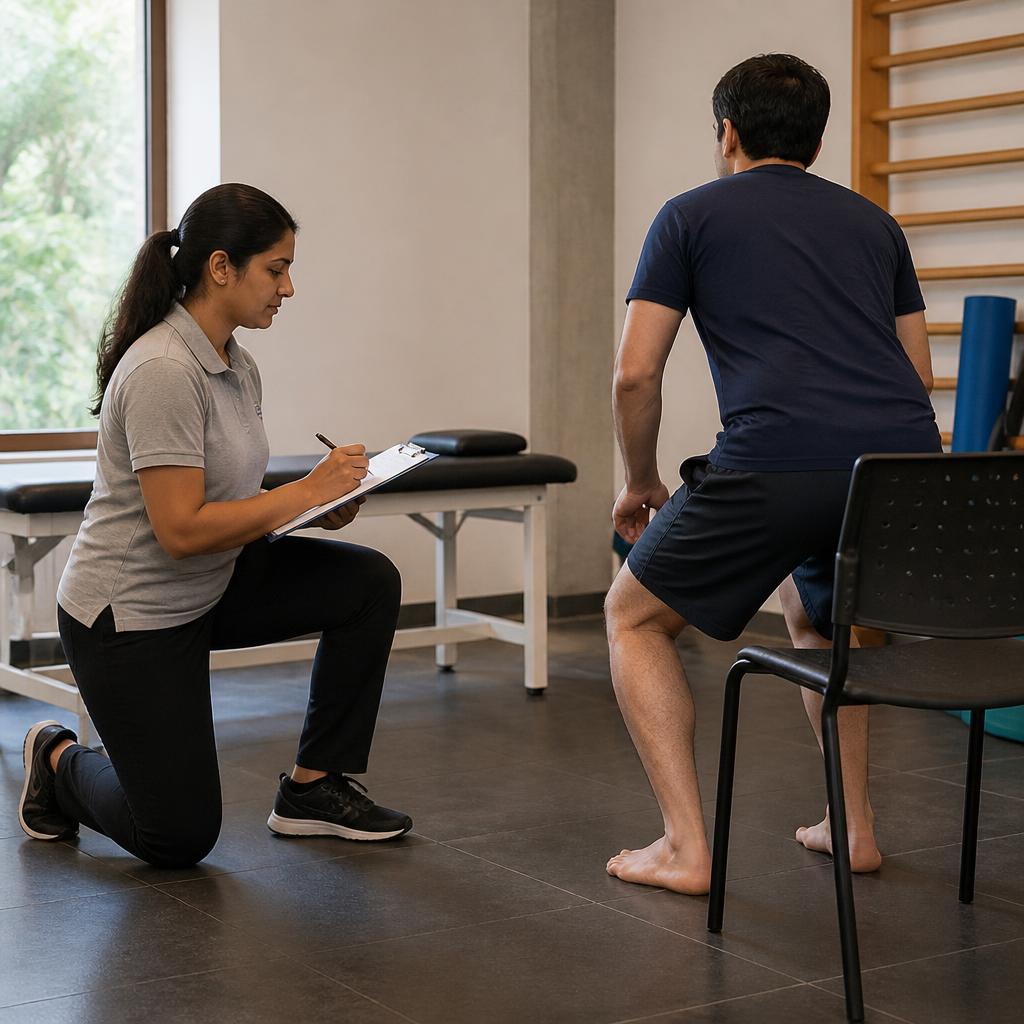
The clinical conversation may cover appetite, unintentional weight change, constipation, nausea, chewing, coughing, wet voice, fatigue during meals, ability to sit upright, food access, medicines, and whether symptoms fluctuate through the day. A swallowing assessment may be needed when airway protection is uncertain. The treating team should also know about kidney, heart, diabetes, or fluid restrictions before any nutrition change is suggested.
The assessment is not a formality before an exercise sheet. It is how the clinician separates a familiar rehabilitation problem from a new medical change, identifies the task that matters to the person, and decides what requires supervision or another professional. The person’s discharge records, medicines, precautions, equipment, fatigue pattern, and family observations are part of the clinical picture.
How rehabilitation can progress
Nutrition support can progress by clarifying one unanswered question at a time: making the meal environment safer, reducing avoidable fatigue, coordinating a medicine and food review, or arranging a formal swallowing assessment. Texture, fluid, protein distribution, supplements, and bowel treatments are options only when the responsible professionals have considered the whole person. Review is needed when symptoms, weight, intake, alertness, or medicines change.
Progress is not the same as adding distance, repetitions, weight, or intensity on a calendar. It can mean better control, less assistance, safer decision-making, improved recovery, or greater confidence in one meaningful task. The clinician should explain what to watch during the activity and after it, and when a change means the plan needs review.
What to expect from a home physiotherapy session
A home physiotherapy session may identify whether the dining chair, transfer, posture, tremor, or fatigue makes eating harder. The therapist can help the family write down questions and coordinate them with the dietitian, speech-language or swallowing clinician, prescriber, and caregiver. The visit does not authorize thickening fluids, changing levodopa timing, starting supplements, or altering a prescribed diet.
A home visit may include observation of a real route, chair, bed, bathroom, dining area, or family routine. It may also include education, coordination with the treating team, and a written plan for tasks that are independent, supervised, or not yet appropriate. A home session does not authorize changing medication, oxygen, food texture, weight-bearing restrictions, or a surgical precaution.
Do
- Record meaningful changes in appetite, weight, bowel pattern, coughing, voice, meal duration, and assistance, then bring the record and medicine list to the clinical team.
- Keep a short record of the symptom, task, assistance, food or swallowing concern, and later response that the clinician asked you to observe.
- Share discharge summaries, medication changes, restrictions, equipment, and new symptoms before a programme is progressed.
Don’t
- Do not change food texture, restrict or increase fluids, rearrange protein, start supplements, or change a Parkinson's medicine schedule from an online suggestion.
- Do not copy another person's protocol or use one good day as proof that a larger workload is safe.
- Do not delay medical review for a new or rapidly changing symptom because it appears during rehabilitation.
Safety and when to seek medical advice
Any of these concerns needs prompt medical, dietetic, and swallowing review: coughing or choking, a wet or gurgly voice, recurrent chest infections, unexplained weight loss, dehydration concern, inability to maintain intake, or suspected aspiration. If the person cannot breathe, handle secretions, or remain responsive, or has severe breathing difficulty, seek emergency care.
Booking and follow-up
Home physiotherapy is arranged after the team understands the person's condition, location, current precautions, and preferred care. Goswami Rehab offers home visits at ₹1,125–₹1,350 and online consultation at ₹742. Send the online booking request with the main concern, city, and preferred dates; the team confirms the appropriate next step within 24 hours. A teleconsultation can be useful when travel is difficult or when an exercise plan needs review, but it does not replace emergency or specialist medical care.
The article is educational information only. It does not diagnose a condition or replace advice from a doctor, surgeon, neurologist, dietitian, speech-language clinician, or treating physiotherapist. Individual plans, timelines, and outcomes vary.
Related care: home physiotherapy coverage in Thiruvananthapuram and stroke and neurological rehabilitation.
Where physiotherapy fits
Rehabilitation comes after medical clearance
Once the medical team has clarified the condition and precautions, physiotherapy may support fatigue and deconditioning, weakness, reduced endurance, joint stiffness, walking, transfers, daily activity, pacing, and a gradual return to routine.
Physiotherapy does not diagnose or treat vasculitis and does not replace dermatology, rheumatology, nutrition, or urgent medical care. Stop and seek medical advice for systemic or urgent warning signs.
Clinical sources & further reading
These public resources provide general clinical guidance. They do not replace an assessment or an individual treatment plan.
Continue exploring
Choose your next step
Keep exploring with a focused guide, a relevant care option, or a direct enquiry.
Need professional advice?
Book an assessment with our expert team.