At a glance
What this guide can help you understand
How shoulder assessment can connect pain or weakness with an actual household reaching task without assuming the cause.
What should you bring to a consultation?
Share your main concern, when it started, what affects it, current medicines, and any reports or precautions you have been given.
See our clinical assessment approachWhen should you pause and seek medical advice?
Pause routine exercise and seek medical advice for sudden severe change, new neurological symptoms, breathing difficulty, chest pain, major injury, or feeling acutely unwell.
This guide is educational and does not replace diagnosis or urgent care.
Reaching into a cupboard or lifting an arm to arrange clothing can be limited by pain, weakness, stiffness, nerve symptoms, or a recent injury. Shoulder pain alone does not identify the cause, and repeatedly forcing overhead movement can make an uncertain problem harder to interpret. A Chandigarh physiotherapy assessment can connect the symptom with the exact household task and the person's medical history.
The practical context in this city
The setting may include shelf height, wall support, chair position, the weight of the object, the affected side, sleep position, work demands, and whether the task is repeated. A city profile does not establish a shared shoulder condition or prove that a movement is safe. The plan should respect surgery, fracture, neurological, cardiac, and inflammatory precautions when any are present.
City context is used here only to make the care setting understandable. An Chandigarh address does not establish local prevalence, neighbourhood risk, outcome, or confirmed service availability. Two people in the same city may need different plans because their diagnoses, precautions, home layouts, support, and recovery responses differ.
What a physiotherapist assesses
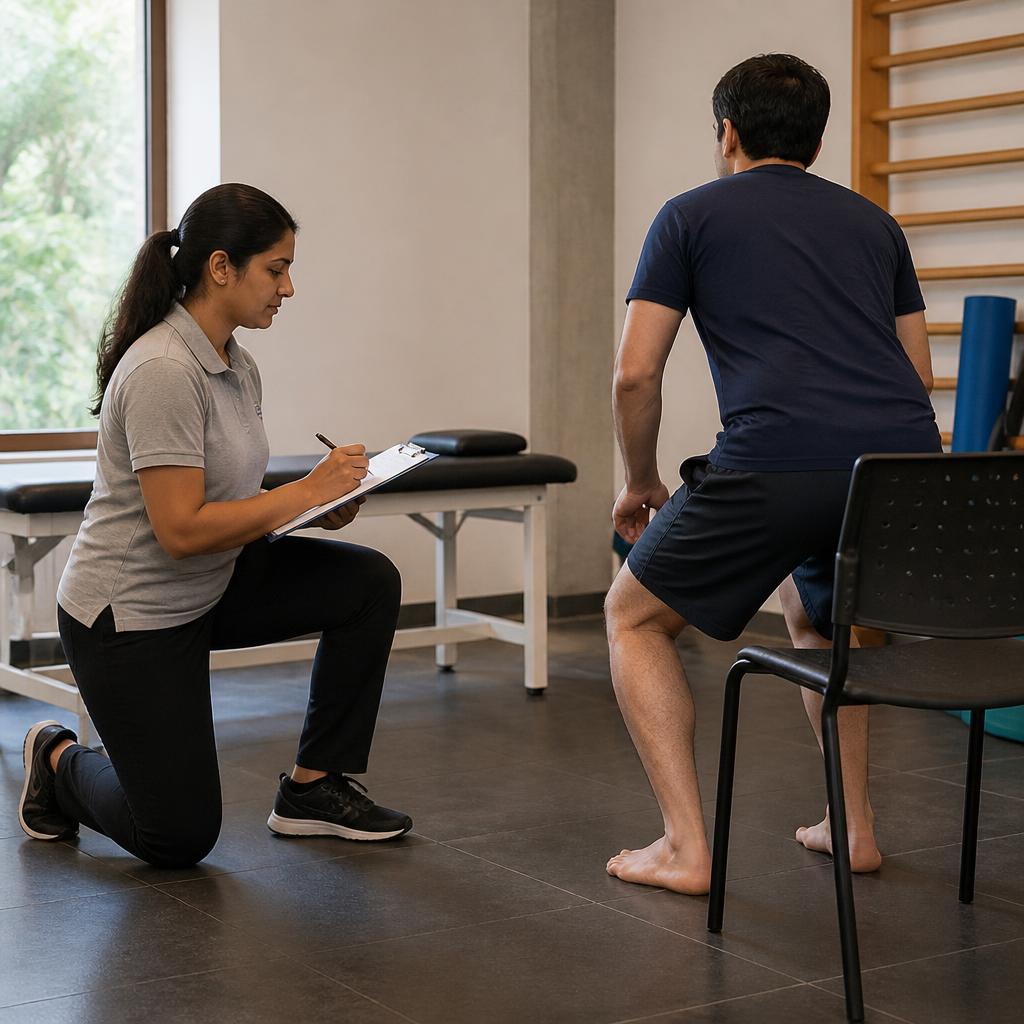
The therapist may ask about onset, trauma, neck symptoms, numbness, night pain, weakness, swelling, clicking, and what happens after the arm is used. They may examine shoulder and neck movement, strength, sensation, trunk control, scapular movement, and a light version of the reaching task when appropriate. A sudden loss of power, deformity, severe trauma, fever, or chest-related arm pain requires medical assessment rather than strengthening.
The assessment is not a formality before an exercise sheet. It separates a familiar rehabilitation problem from a new medical change, identifies the task that matters to the person, and decides what requires supervision or another professional. Reports, medicines, precautions, equipment, fatigue pattern, family observations, and the person's own priorities are part of the clinical picture. Nutrition-led articles may require a dietitian or speech-language clinician; cardiopulmonary articles may require the treating medical team.
How rehabilitation can progress
Practice may begin below shoulder height with a light object, a supported reach, or a change in storage position while the diagnosis and precautions are clear. The clinician can then alter height, distance, load, repetitions, or speed one at a time. Progress might mean smoother control, less compensation, better recovery, or completing a useful reach without a delayed flare. It does not mean repeatedly reaching into pain to measure improvement.
Progress is not the same as adding distance, repetitions, weight, or intensity on a calendar. It can mean better control, less assistance, improved recovery, safer decision-making, or greater participation in one meaningful task. The clinician should explain what to watch during the activity and afterwards, and when a change means that the plan needs review. A plan may become easier, slower, more supported, or temporarily paused when the response suggests a medical change.
What to expect from a home physiotherapy session
A home review can inspect the shelf, wardrobe, chair, wall, and objects that the person actually needs to handle. The therapist can suggest temporary placement changes and teach an assessed movement or strengthening routine. The session can also identify when an orthopaedic, neurological, or medical opinion is needed before the home plan changes.
A home visit may include observation of a real route, chair, bed, doorway, kitchen, dining area, device, or family routine. It may also include education, coordination with the treating team, and a written plan for tasks that are independent, supervised, or not yet appropriate. A home session does not authorize changing medication, oxygen, food texture, weight-bearing restrictions, fluid advice, or a surgical precaution.
Questions to take to the care team
Ask what range and load are allowed, whether sleep or work positions matter, which symptom suggests nerve or joint review, how often to practise, and what delayed response means the dose was too high.
The most useful record is usually specific and plain-language: what task was attempted, what support was used, what symptoms appeared, how long recovery took, and what happened later that day or the next morning. A record should help the team decide what to examine. It should not become a home diagnostic test or a reason to delay urgent medical care.
Do
- Move frequently within the assessed range, store essential items at a manageable height during early recovery, and record the next-day response to a changed task.
- Keep a simple record of the task, symptoms, assistance, pause, and recovery that the team has asked you to observe.
- Share medical reports, medicine changes, surgeon restrictions, and any recent change in symptoms before the plan is progressed.
Don’t
- Do not force a painful overhead stretch, repeatedly lift a heavy object to test the shoulder, ignore night weakness, or borrow a resistance band plan without assessment.
- Do not copy an exercise from a video if it increases symptoms, requires equipment you cannot control, or conflicts with a medical restriction.
- Do not use pain, fatigue, or one good day as the only measure of readiness for a harder task.
Safety and when to seek medical advice
Any of these symptoms needs prompt clinical review: persistent night pain, increasing weakness, numbness, swelling, fever, or pain after a change in load. Any of these situations needs emergency help: severe trauma, deformity, chest pain, sudden neurological symptoms, or collapse.
Urgent symptoms take priority over a home programme. If the person has a sudden neurological change, severe breathing difficulty, chest pain, fainting, collapse, a serious fall, rapidly worsening weakness, or a new swallowing problem, contact the appropriate emergency or medical service. Do not wait for a routine physiotherapy review to decide whether an emergency is occurring.
Booking and follow-up
Home physiotherapy is arranged after the team understands the person's condition, location, current precautions, and preferred care. Goswami Rehab offers home visits at ₹1,125–₹1,350 and online consultation at ₹742. Send the online booking request with the main concern, city, and preferred dates; the team confirms the appropriate next step within 24 hours. A teleconsultation can be useful when travel is difficult or when a plan needs review, but it does not replace emergency or specialist medical care.
The article is educational information only. It does not diagnose a condition or replace advice from a doctor, surgeon, neurologist, respiratory team, dietitian, speech-language clinician, or treating physiotherapist. Individual plans, timelines, and outcomes vary.
Related care: home physiotherapy coverage in Chandigarh and knee pain physiotherapy.
Clinical sources & further reading
These public resources provide general clinical guidance. They do not replace an assessment or an individual treatment plan.
Continue exploring
Choose your next step
Keep exploring with a focused guide, a relevant care option, or a direct enquiry.
Need professional advice?
Book an assessment with our expert team.