At a glance
What this guide can help you understand
A step-by-step physiotherapy guide for swelling, walking, strength, balance, and return to activity after an ankle sprain.
What should you bring to a consultation?
Share your main concern, when it started, what affects it, current medicines, and any reports or precautions you have been given.
See our clinical assessment approachWhen should you pause and seek medical advice?
Pause routine exercise and seek medical advice for sudden severe change, new neurological symptoms, breathing difficulty, chest pain, major injury, or feeling acutely unwell.
This guide is educational and does not replace diagnosis or urgent care.
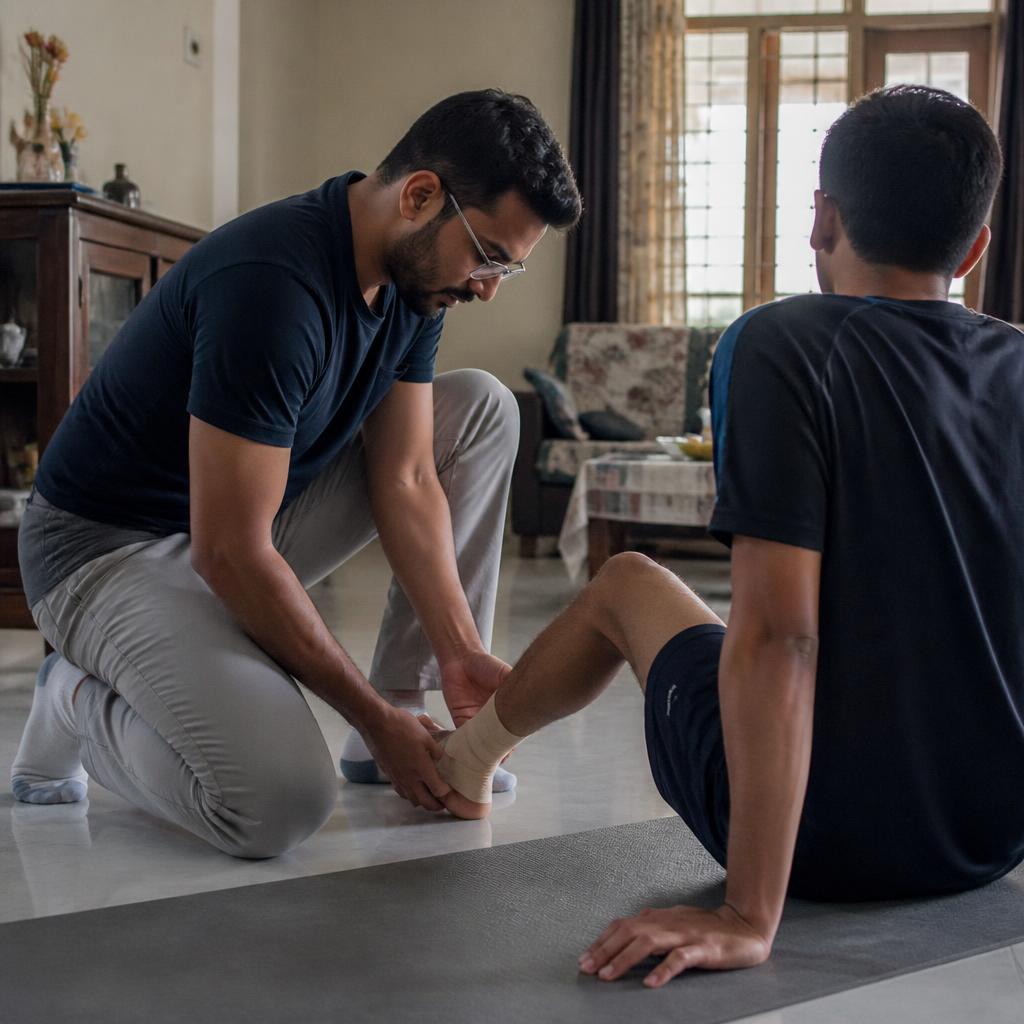
An ankle sprain damages one or more ligaments, often after the foot rolls inward. Severity varies from a mild stretch to a significant tear. Early treatment aims to protect the injury while avoiding unnecessary loss of movement and strength.
Early Rehabilitation
Your physiotherapist checks weight-bearing, swelling, bruising, ankle movement, tenderness, and whether a fracture or more serious injury needs medical assessment. Depending on severity, support such as a brace or crutches may be used temporarily. Gentle movement and walking within the advised limits help prevent stiffness.
Progressing Treatment
As walking becomes easier, treatment usually progresses to calf and ankle strengthening, controlled single-leg loading, balance, and task-specific drills. Returning to running or sport should follow strength, movement, balance, and symptom criteria rather than a calendar date alone.
Seek medical assessment if you cannot take four steps, pain is directly over a bone, swelling or pain is severe, the foot is numb or cold, or recovery is not progressing. Repeated sprains may need a longer balance and strength program.
Textbook basis: Principles are synthesised from Magee’s Orthopedic Physical Assessment, Kisner & Colby’s Therapeutic Exercise, and O’Sullivan’s Physical Rehabilitation.
Clinical sources & further reading
These public resources provide general clinical guidance. They do not replace an assessment or an individual treatment plan.
Continue exploring
Choose your next step
Keep exploring with a focused guide, a relevant care option, or a direct enquiry.
For this topic, see the clinical assessment for ankle recovery.
Need professional advice?
Book an assessment with our expert team.