At a glance
What this guide can help you understand
Post-ICU syndrome, multi-system conditions, and complex neurological cases demand a different level of rehabilitation expertise. Here's how advanced homecare physiotherapy addresses the hardest cases.
What should you bring to a consultation?
Share your main concern, when it started, what affects it, current medicines, and any reports or precautions you have been given.
See our clinical assessment approachWhen should you pause and seek medical advice?
Pause routine exercise and seek medical advice for sudden severe change, new neurological symptoms, breathing difficulty, chest pain, major injury, or feeling acutely unwell.
This guide is educational and does not replace diagnosis or urgent care.
Some patients have needs that span more than one area of rehabilitation. They may have spent weeks in the ICU or have neurological, cardiac, or respiratory complications. Recovery is non-linear, needs can change, and a standard post-discharge pathway may need to be adapted to the individual.
These are complex cases. And they are what Goswami Rehab's advanced recovery team is built for.
What Can Complex Rehabilitation Involve?
A complex case typically involves one or more of the following:
- ICU-acquired weakness — the profound muscle weakness that develops during prolonged intensive care admission
- Post-ICU syndrome — a cluster of physical, cognitive, and psychological problems persisting after ICU discharge
- Multi-system involvement — neurological deficits alongside cardiac, respiratory, or metabolic complications
- Traumatic brain injury (TBI) with associated physical impairments
- Guillain-Barré syndrome (GBS) requiring intensive, prolonged rehabilitation
- Post-sepsis rehabilitation — addressing widespread muscle and organ damage from severe infection
- Complex stroke with severe deficits affecting multiple systems
Why These Cases Require a Specialist Approach
Standard physiotherapy protocols are designed for single-system conditions. A post-TKR patient follows a well-mapped 12-week pathway. A complex neurological case does not.
Complex cases require:
Comprehensive Assessment — Before any treatment, a full evaluation across motor function, sensation, cognition, respiratory capacity, swallowing, skin integrity, and functional independence. This assessment informs what to prioritise, what to defer, and what to monitor.
Dynamic Goal-Setting — Goals should be realistic, regularly reviewed, and adjusted as the patient's condition evolves. A patient recovering from GBS may progress from severe weakness toward improved mobility, but the rate is unpredictable. The program should be reviewed as symptoms, fatigue, and function change.
Multi-Domain Treatment — A post-ICU patient may need respiratory physiotherapy alongside limb strengthening and cognitive retraining. Our physiotherapists hold expertise across these domains.
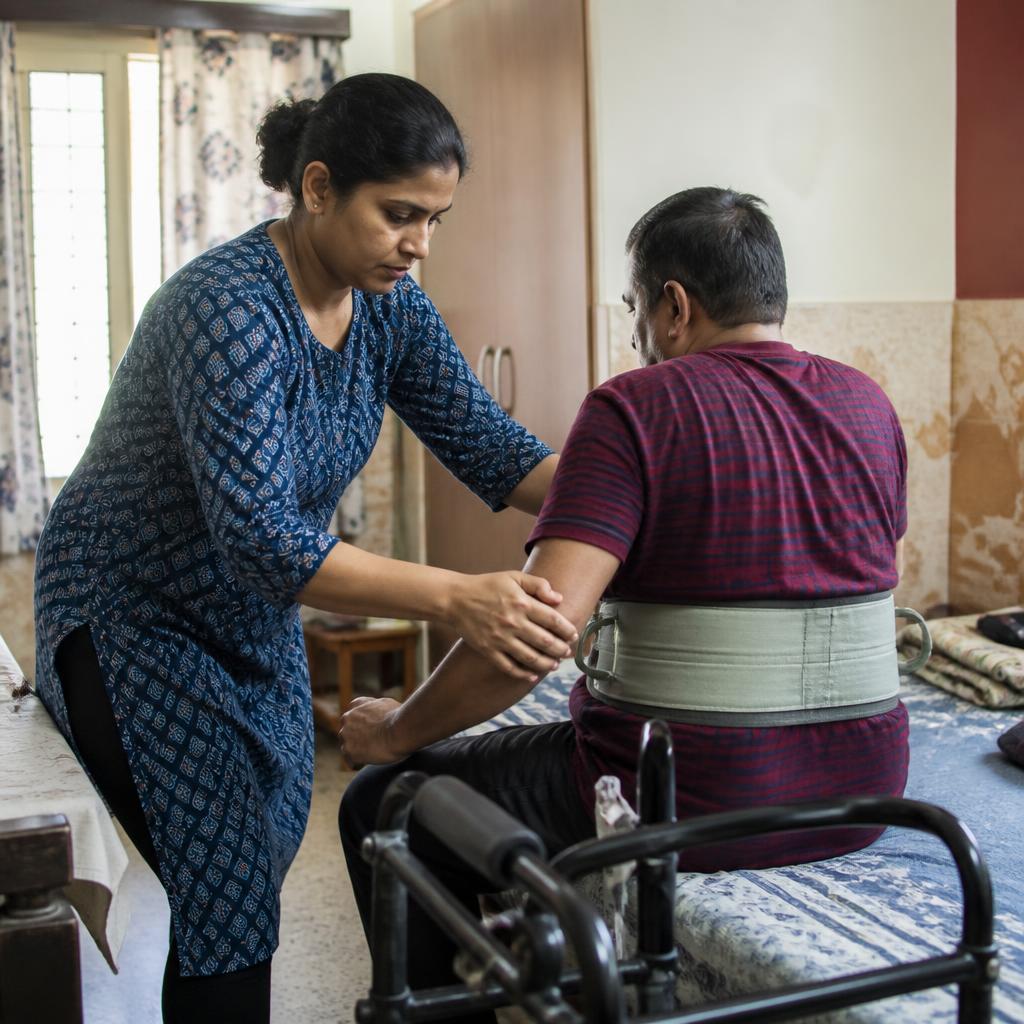
Family and Carer Training — Complex patients require support between sessions. Training family members in safe positioning, passive movements, transfers, and skin care extends therapy into every day, not just session days.
Post-ICU Syndrome: Common Rehabilitation Needs
Post-ICU syndrome (PICS) is one of the most underrecognised conditions in Indian healthcare. Patients who survive prolonged ICU admissions face:
- ICU-acquired weakness — muscle wasting so severe that some patients cannot lift their limbs against gravity on discharge
- Respiratory compromise — impaired lung function, respiratory muscle weakness
- Cognitive impairment — memory, concentration, and processing speed deficits
- Psychological effects — PTSD, depression, and anxiety relating to the ICU experience
Rehabilitation after ICU may address several of these domains, progress at the patient's pace, and be delivered at home when that setting is safe and appropriate.
Advanced Neurological Rehabilitation
For patients with TBI, GBS, or severe stroke, neurological recovery takes place over months and years. Neuroplasticity — the brain's ability to rewire itself — is maximised by intensive, task-specific, repetitive practice.
Key principles:
- High-repetition, task-specific training targeting personal goals
- Constraint-induced movement therapy (CIMT) principles in the home environment
- Progressive difficulty with appropriate challenge to drive neuroplasticity
- Regular reassessment using standardised outcome measures (Barthel Index, BERG Balance Scale, MRC Scale)
- Close coordination with the treating neurologist and medical team
Goswami Rehab accepts complex case referrals from families, medical teams, and discharge coordinators across India. Contact us to discuss your case.
Clinical sources & further reading
These public resources provide general clinical guidance. They do not replace an assessment or an individual treatment plan.
Continue exploring
Choose your next step
Keep exploring with a focused guide, a relevant care option, or a direct enquiry.
Need professional advice?
Book an assessment with our expert team.