At a glance
What this guide can help you understand
How to plan rehabilitation sessions around heat, hydration, exertion, and warning signs when exercising at home in Jaipur.
What should you bring to a consultation?
Share your main concern, when it started, what affects it, current medicines, and any reports or precautions you have been given.
See our clinical assessment approachWhen should you pause and seek medical advice?
Pause routine exercise and seek medical advice for sudden severe change, new neurological symptoms, breathing difficulty, chest pain, major injury, or feeling acutely unwell.
This guide is educational and does not replace diagnosis or urgent care.
Heat can change how hard an exercise feels and how quickly fatigue appears. Someone recovering from surgery, illness, a cardiac event, or reduced mobility may need a different time, room, clothing, hydration, and rest plan during hot weather. Heat-aware rehabilitation is about reducing avoidable stress, not avoiding movement altogether.
The practical context in this city
Jaipur’s hot periods make the timing and location of a home session practical clinical considerations. A cooler indoor space, ventilation, accessible fluids, and a plan for travel can make a prescribed exercise more manageable. People with heart, kidney, lung, endocrine, or medication-related risks need individual advice rather than a universal hydration rule.
What a physiotherapist assesses
The therapist asks about the person’s diagnosis, medicines, fluid restrictions, sweating, sleep, appetite, dizziness, blood pressure, and usual activity. They assess exertion, breathing, mobility, balance, and how quickly the person recovers. The plan may need coordination with the doctor if heat intolerance, fainting, swelling, or unusual fatigue has appeared.
How rehabilitation can progress
Start with the minimum effective dose in the coolest safe part of the day. Strength, walking, breathing, and functional practice can be split into shorter blocks with recovery. Intensity should be guided by symptoms and the prescribed monitoring method; the person should not chase a target heart rate or sweat level without clinical advice.
What to expect from a home physiotherapy session
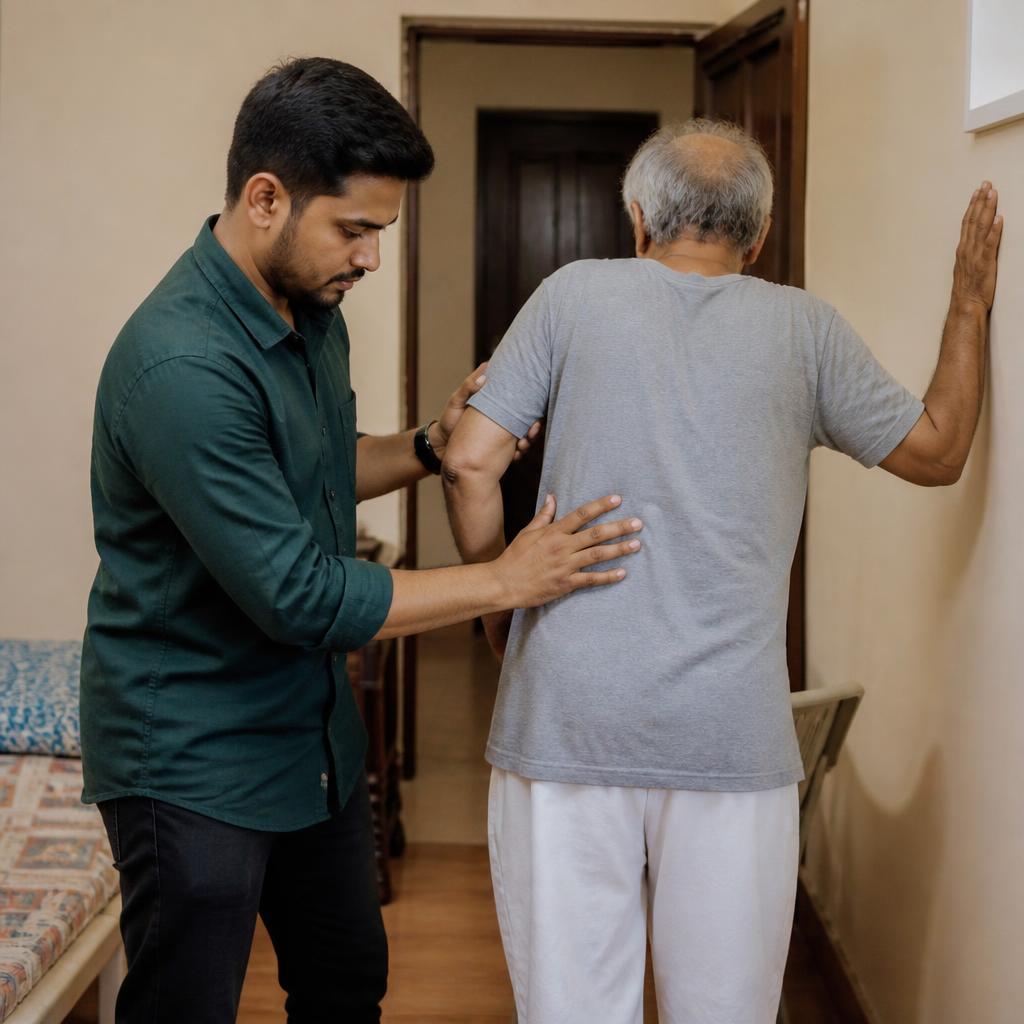
The therapist checks the room, footwear, walking route, chair height, and access to water or rest. They may teach a warm-up, pacing scale, seated alternative, and stop rule, then observe the recovery after a short task. The written plan identifies which exercises are essential and which can wait when the environment is unsafe.
Do
- Choose a cooler session time, keep the room and clothing comfortable, take the prescribed fluids or restrictions seriously, and stop early when heat symptoms begin.
- Keep a simple record of symptoms, activity, sleep, and the tasks that are becoming easier or harder.
- Share medical reports, medication changes, surgeon restrictions, and any recent change in symptoms before exercise is progressed.
Don’t
- Do not exercise through confusion, faintness, chills, severe headache, nausea, or unusual breathlessness, and do not assume sweating is a reliable measure of a productive session.
- Do not copy an exercise from a video if it increases symptoms, requires equipment you cannot control, or conflicts with a medical restriction.
- Do not use pain, fatigue, or a single good day as the only measure of readiness for a harder task.
Safety and when to seek medical advice
Any of these symptoms—confusion, fainting, seizure, hot dry skin, severe weakness, chest pain, or severe breathlessness—is an emergency. Dizziness, headache, nausea, muscle cramps, or unusual fatigue should prompt cooling, rest, and medical advice if they do not settle promptly.
Booking and follow-up
Home physiotherapy is arranged after the team understands the person’s condition, location, current precautions, and preferred care. Goswami Rehab offers home visits at ₹1,125–₹1,350 and online consultation at ₹742. Send the online booking request with the main concern, city, and preferred dates; the team confirms the appropriate next step within 24 hours. A teleconsultation can be useful when travel is difficult or when an exercise plan needs review, but it does not replace emergency or specialist medical care.
The article is educational information only. It does not diagnose a condition or replace advice from a doctor, surgeon, obstetrician, cancer team, or treating physiotherapist. Individual plans, timelines, and outcomes vary.
Clinical sources & further reading
These public resources provide general clinical guidance. They do not replace an assessment or an individual treatment plan.
- About Heat and Your HealthCenters for Disease Control and Prevention
- Climate change, heat and healthWorld Health Organization
- Physical Activity BasicsCenters for Disease Control and Prevention
- Government of RajasthanGovernment of Rajasthan
- RehabilitationMedlinePlus, U.S. National Library of Medicine
- Rehabilitation after critical illness in adultsNICE
Continue exploring
Choose your next step
Keep exploring with a focused guide, a relevant care option, or a direct enquiry.
Need professional advice?
Book an assessment with our expert team.