At a glance
What this guide can help you understand
How Visakhapatnam families can rebuild movement after Guillain-Barré syndrome while watching for overwork weakness and changing neurological symptoms.
What should you bring to a consultation?
Share your main concern, when it started, what affects it, current medicines, and any reports or precautions you have been given.
See our clinical assessment approachWhen should you pause and seek medical advice?
Pause routine exercise and seek medical advice for sudden severe change, new neurological symptoms, breathing difficulty, chest pain, major injury, or feeling acutely unwell.
This guide is educational and does not replace diagnosis or urgent care.
After Guillain-Barré syndrome, a person may be able to complete a movement by borrowing effort from stronger muscles while the weaker muscles remain vulnerable. More exercise is not automatically better. Physiotherapy should reassess strength, fatigue, sensation, breathing, posture, and function so that practice rebuilds useful movement without treating exhaustion or compensation as progress.
The practical context in this city
Visakhapatnam's authored profile includes Guillain-Barré and neurological rehabilitation. The city is the home setting for this focused question, not evidence of local prevalence, outcome, or service availability. The person's course, respiratory history, hospital records, sensation, pain, autonomic symptoms, and current medical advice matter more than a generic recovery timetable.
What a physiotherapist assesses
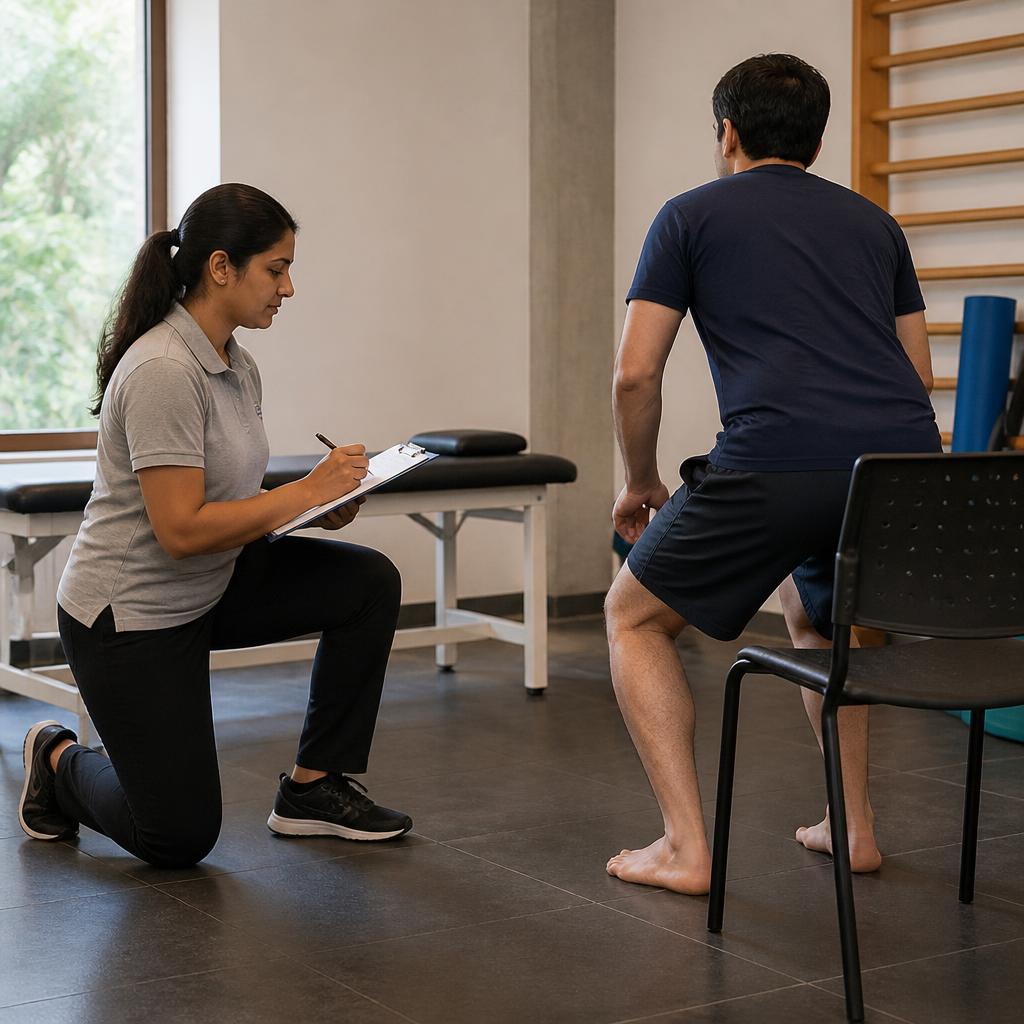
The therapist reviews the onset and course of weakness, recent medical changes, breathing and swallowing history, fatigue after tasks, pain, sensation, joint range, skin, posture, transfers, walking, and the quality of motor control. They look for substitution, tremor, breath-holding, loss of form, and delayed deterioration. A new or progressive neurological symptom is not labelled ordinary post-GBS weakness without medical review.
The assessment is not a formality before an exercise sheet. It is how the clinician separates a familiar rehabilitation problem from a new medical change, identifies the task that matters to the person, and decides what requires supervision or another professional. The person’s discharge records, medicines, precautions, equipment, fatigue pattern, and family observations are part of the clinical picture.
How rehabilitation can progress
Practice may start with positioning, supported movement, a functional transition, or a short task in which the person can keep control. Assistance, leverage, surface, task complexity, and recovery can change one at a time. The team may use later and next-day response as information, while avoiding universal repetitions, intensity, or a promised recovery timeline. A plateau or decline is a reason to reassess.
Progress is not the same as adding distance, repetitions, weight, or intensity on a calendar. It can mean better control, less assistance, safer decision-making, improved recovery, or greater confidence in one meaningful task. The clinician should explain what to watch during the activity and after it, and when a change means the plan needs review.
What to expect from a home physiotherapy session
A home visit can identify the safest bed exit, chair transfer, bathroom route, walking aid, and caregiver position. The therapist can teach the family to support without pulling a weak limb, watch for quality loss, and record what happens after practice. Respiratory, swallowing, pain, skin, or autonomic concerns are coordinated with the medical team rather than managed by exercise alone.
A home visit may include observation of a real route, chair, bed, bathroom, dining area, or family routine. It may also include education, coordination with the treating team, and a written plan for tasks that are independent, supervised, or not yet appropriate. A home session does not authorize changing medication, oxygen, food texture, weight-bearing restrictions, or a surgical precaution.
Do
- Use the assessed support, stop before control deteriorates, allow the agreed recovery, and report delayed fatigue or a new weakness pattern.
- Keep a short record of the symptom, task, assistance, food or swallowing concern, and later response that the clinician asked you to observe.
- Share discharge summaries, medication changes, restrictions, equipment, and new symptoms before a programme is progressed.
Don’t
- Do not train to exhaustion, repeatedly test maximum strength, stretch a numb limb aggressively, or treat a stronger muscle's compensation as recovery of the affected one.
- Do not copy another person's protocol or use one good day as proof that a larger workload is safe.
- Do not delay medical review for a new or rapidly changing symptom because it appears during rehabilitation.
Safety and when to seek medical advice
Any of these urgent signs requires medical assessment: new or worsening weakness, breathing difficulty, inability to handle secretions, new swallowing change, fainting, chest pain, collapse, or rapidly changing neurological function. If exhaustion is unusual or prolonged, falls repeat, severe pain is new, function is lost, or rehabilitation clearly deteriorates after stability, arrange prompt review.
Booking and follow-up
Home physiotherapy is arranged after the team understands the person's condition, location, current precautions, and preferred care. Goswami Rehab offers home visits at ₹1,125–₹1,350 and online consultation at ₹742. Send the online booking request with the main concern, city, and preferred dates; the team confirms the appropriate next step within 24 hours. A teleconsultation can be useful when travel is difficult or when an exercise plan needs review, but it does not replace emergency or specialist medical care.
The article is educational information only. It does not diagnose a condition or replace advice from a doctor, surgeon, neurologist, dietitian, speech-language clinician, or treating physiotherapist. Individual plans, timelines, and outcomes vary.
Related care: home physiotherapy coverage in Visakhapatnam and stroke and neurological rehabilitation.
Clinical sources & further reading
These public resources provide general clinical guidance. They do not replace an assessment or an individual treatment plan.
- Guidelines for physical and occupational therapyGBS/CIDP Foundation International
- Physical exercise in Guillain-Barré syndromeJournal of Clinical Medicine
- Guillain-Barré syndrome clinical summaryAmerican Physical Therapy Association
- Treatment guidelines for Guillain-Barré syndromeNational Library of Medicine
- Guillain-Barré syndrome: diagnosis and treatmentMayo Clinic
Continue exploring
Choose your next step
Keep exploring with a focused guide, a relevant care option, or a direct enquiry.
Need professional advice?
Book an assessment with our expert team.