At a glance
What this guide can help you understand
How Mumbai families can plan meaningful household tasks around neurological fatigue without treating exhaustion as a test of willpower.
What should you bring to a consultation?
Share your main concern, when it started, what affects it, current medicines, and any reports or precautions you have been given.
See our clinical assessment approachWhen should you pause and seek medical advice?
Pause routine exercise and seek medical advice for sudden severe change, new neurological symptoms, breathing difficulty, chest pain, major injury, or feeling acutely unwell.
This guide is educational and does not replace diagnosis or urgent care.
Neurological fatigue can make an ordinary Mumbai household route feel unpredictable. A person may manage a shower one morning and struggle with the same task after a poor night, a long appointment, pain, medication changes, or too many decisions. Rehabilitation is not about avoiding all activity. It is about understanding the pattern, protecting essential tasks, and building capacity without treating exhaustion as a test of willpower.
The practical context in this city
Mumbai is the setting for this article, not a reason to claim a local fatigue rate or an assured service pathway. A home assessment can account for the person’s actual room layout, lift or stairs, bathroom route, work demands, family support, and the energy cost of leaving home for follow-up. The same neurological diagnosis can create different practical problems, so a plan should begin with the task that matters rather than a generic daily exercise list.
What a physiotherapist assesses
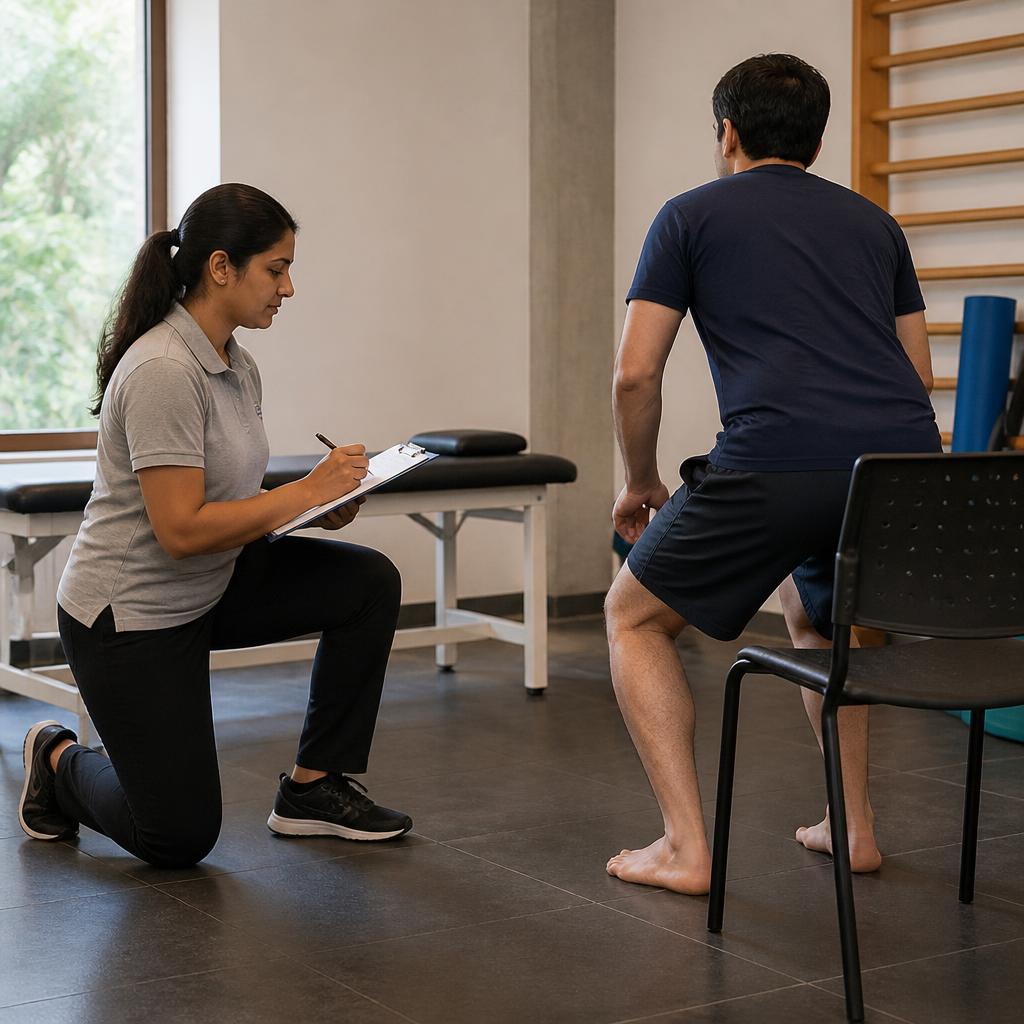
The clinician asks when fatigue appears, what happens later that day or the next day, how sleep and pain affect it, and whether weakness, dizziness, breathlessness, mood, cognition, or medication changes are contributing. They may observe a short household sequence such as washing, dressing, preparing tea, walking to the doorway, or moving between a chair and bed. Assessment also includes the difference between effort-related tiredness and a new loss of strength or function. A neurologist or physician review may be needed when the pattern changes.
How rehabilitation can progress
A useful plan separates essential, optional, and recovery activities. The person may practise one meaningful task when alert, alternate demanding and lighter activities, sit for parts of a routine, gather equipment before starting, and stop before control deteriorates. Progress can mean completing the same task with fewer pauses, better quality, or less next-day disruption; it does not have to mean adding more minutes every week. Energy-conservation education can support independence while strength and endurance are being assessed.
What to expect from a home physiotherapy session
A home session may map the energy cost of a morning routine and identify where a chair, grab point, trolley, rest area, or change in task order would help. The therapist can observe transfers, walking, reaching, and the person’s ability to follow a two-step task without rushing. Family members learn when to supervise and when to let the person complete a task independently. The written plan should include a review trigger for worsening fatigue rather than only a target for doing more.
Do
- Plan the priority task for the person’s better period, use seated preparation where it is safe, build in rest before exhaustion, and review the next-day response with the clinician.
- Keep a short record of symptoms, sleep, activity, and the daily task that is becoming easier or harder.
- Share discharge summaries, medication changes, restrictions, and new symptoms before a programme is progressed.
Don’t
- Do not label every episode of exhaustion as deconditioning, push through new weakness, or reduce all movement for weeks without an assessment of what remains safe and useful.
- Do not copy a protocol from another person or use a good day as proof that a larger workload is safe.
- Do not delay medical review for a new or rapidly changing symptom because it appears during rehabilitation.
Safety and when to seek medical advice
Seek urgent medical help for sudden one-sided weakness, new facial drooping, sudden speech or vision change, collapse, severe chest symptoms, or severe unexpected breathlessness. Any of these changes need urgent assessment rather than pacing advice. If a neurological deficit worsens, falls repeat, swallowing changes, confusion appears, alertness changes, or fatigue comes with a loss of function, arrange prompt clinical review rather than treating it as the established pattern.
Booking and follow-up
Home physiotherapy is arranged after the team understands the person’s condition, location, current precautions, and preferred care. Goswami Rehab offers home visits at ₹1,125–₹1,350 and online consultation at ₹742. Send the online booking request with the main concern, city, and preferred dates; the team confirms the appropriate next step within 24 hours. A teleconsultation can help review a previously assessed plan, but it does not replace emergency or specialist medical care.
This article is educational information only. It does not diagnose a condition or replace advice from a doctor, surgeon, cardiologist, neurologist, dietitian, or treating physiotherapist. Individual plans, timelines, and outcomes vary.
Related care: home physiotherapy coverage in Mumbai and stroke and neurological rehabilitation.
Clinical sources & further reading
These public resources provide general clinical guidance. They do not replace an assessment or an individual treatment plan.
- Rehabilitation to maintain, improve or support functionNICE
- Multiple sclerosis in adults: recommendationsNICE
- Energy conservation strategies in motor neuron diseaseNational Library of Medicine
- Mumbai City district: official informationDistrict Administration, Mumbai City
- Physical activityWorld Health Organization
Continue exploring
Choose your next step
Keep exploring with a focused guide, a relevant care option, or a direct enquiry.
Need professional advice?
Book an assessment with our expert team.