At a glance
What this guide can help you understand
Occupational therapy bridges the gap between clinical recovery and real life. Here's how homecare OT helps neurological and orthopaedic patients regain the skills of daily living.
What should you bring to a consultation?
Share your main concern, when it started, what affects it, current medicines, and any reports or precautions you have been given.
See our clinical assessment approachWhen should you pause and seek medical advice?
Pause routine exercise and seek medical advice for sudden severe change, new neurological symptoms, breathing difficulty, chest pain, major injury, or feeling acutely unwell.
This guide is educational and does not replace diagnosis or urgent care.
When a patient leaves hospital after a stroke, brain injury, or major orthopaedic surgery, the clinical team often declares them "medically stable." But medically stable is not the same as functionally independent. The patient may still be unable to dress themselves, prepare a cup of tea, manage their medication, or use the toilet without help.
This is precisely the gap that occupational therapy (OT) fills.
Occupational therapy focuses on restoring the ability to perform the meaningful activities of daily life — not just isolated movement, but purposeful function in context. Homecare OT is uniquely powerful because it works within the actual environment where the patient lives, using their real objects, their real kitchen, their real bathroom.
What Occupational Therapy Addresses
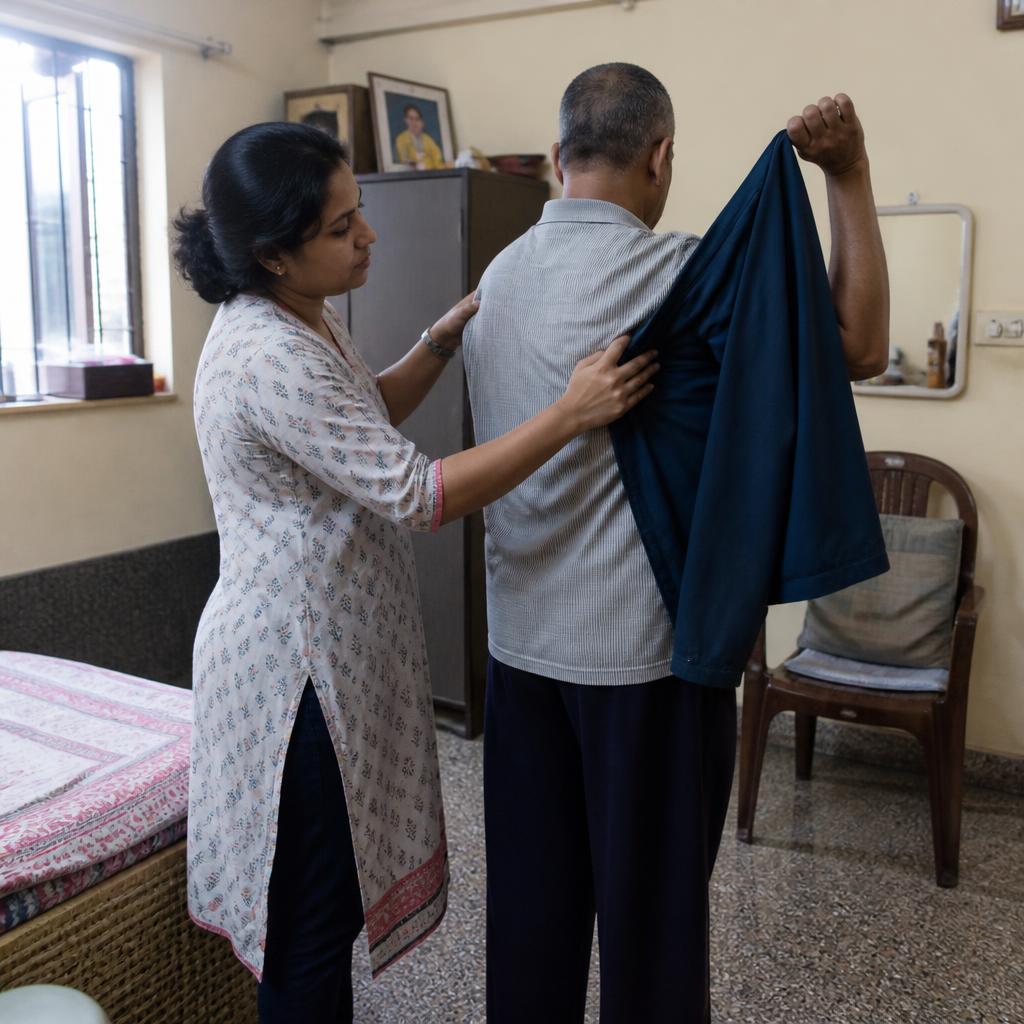
Activities of Daily Living (ADL) The foundational OT goal is independence in basic self-care: bathing, dressing, grooming, eating, and toileting. After neurological events like stroke or brain injury, these tasks are often the most immediately impaired and the most important to restore.
Instrumental Activities of Daily Living (IADL) Higher-level tasks — cooking, managing finances, using a phone, shopping, driving — are addressed once basic ADL are established. Returning to these activities represents true reintegration into life.
Cognitive Rehabilitation After stroke or brain injury, cognitive impairments (memory, attention, planning, problem-solving) can be as disabling as physical ones. OT uses structured, real-world tasks to rehabilitate these functions — cooking a meal exercises planning and sequencing; managing a shopping list exercises memory and attention.
Home Modification and Assistive Equipment Our OT team assesses the home environment and recommends practical modifications:
- Grab rails in bathroom and beside the toilet
- Raised toilet seats and shower chairs
- Non-slip mats and threshold ramps
- Adapted cutlery, dressing aids, and long-handled tools
- Appropriate wheelchair or walking aid specification
OT After Stroke
Stroke often affects one side of the body disproportionately, creating a pattern of weakness and sensory loss that impacts virtually every daily task. OT after stroke focuses heavily on:
- Re-learning one-handed techniques for dressing, cooking, and personal care
- Restoring bilateral hand use through task-specific upper limb training
- Addressing neglect (a condition where the patient ignores one side of their environment)
- Compensatory strategies for vision and cognitive changes
OT After Orthopaedic Surgery
Following hip or knee replacement, joint precautions create immediate practical challenges. Patients cannot bend past 90 degrees, cannot cross their legs, and must not use low furniture. OT ensures:
- The patient can perform all daily activities within their precautions
- The home is modified appropriately before discharge
- The patient and family understand safe techniques for every relevant task
- Return to driving is assessed and planned
The OT-Physiotherapy Partnership
Occupational therapy and physiotherapy work best together. Physiotherapy rebuilds the underlying movement capacity. Occupational therapy ensures that capacity translates into functional independence. At Goswami Rehab, our homecare programs integrate both disciplines — each session is purposeful, coordinated, and building toward the patient's specific life goals.
Clinical sources & further reading
These public resources provide general clinical guidance. They do not replace an assessment or an individual treatment plan.
Continue exploring
Choose your next step
Keep exploring with a focused guide, a relevant care option, or a direct enquiry.
Need professional advice?
Book an assessment with our expert team.