At a glance
What this guide can help you understand
A respectful guide to early postnatal movement, pelvic-floor symptoms, breathing, gradual activity, and when to seek obstetric or physiotherapy advice in Delhi.
What should you bring to a consultation?
Share your main concern, when it started, what affects it, current medicines, and any reports or precautions you have been given.
See our clinical assessment approachWhen should you pause and seek medical advice?
Pause routine exercise and seek medical advice for sudden severe change, new neurological symptoms, breathing difficulty, chest pain, major injury, or feeling acutely unwell.
This guide is educational and does not replace diagnosis or urgent care.
Recovery after childbirth is individual. Pelvic heaviness, leakage, pain, abdominal wall changes, back discomfort, or difficulty returning to walking and lifting are common reasons to ask for help, but symptoms should not be dismissed as something a person must simply tolerate. Delivery type, tearing, complications, feeding, sleep, and medical advice all influence the plan.
The practical context in this city
A Delhi home session can be arranged around a newborn’s routine, limited sleep, family support, and the practical need to lift, feed, climb stairs, or travel to follow-up care. The home setting supports education and graded function; it does not replace an obstetric review for bleeding, infection, wound concerns, or severe pain.
What a physiotherapist assesses
The physiotherapist asks consent before discussing or examining intimate symptoms. Assessment may cover breathing and pressure management, posture, abdominal wall function, bladder and bowel symptoms, pelvic heaviness, pain, walking, lifting, and the person’s goals. A pelvic-floor examination is not automatic and should happen only with informed consent and appropriate clinical scope.
How rehabilitation can progress
Early work may focus on comfortable breathing, circulation, gentle mobility, position changes, and finding a manageable way to contract and relax the pelvic-floor muscles if advised. Later goals can include lifting, carrying, walking, impact, and return to exercise. The progression is based on symptoms and medical clearance rather than a fixed week-by-week promise.
What to expect from a home physiotherapy session
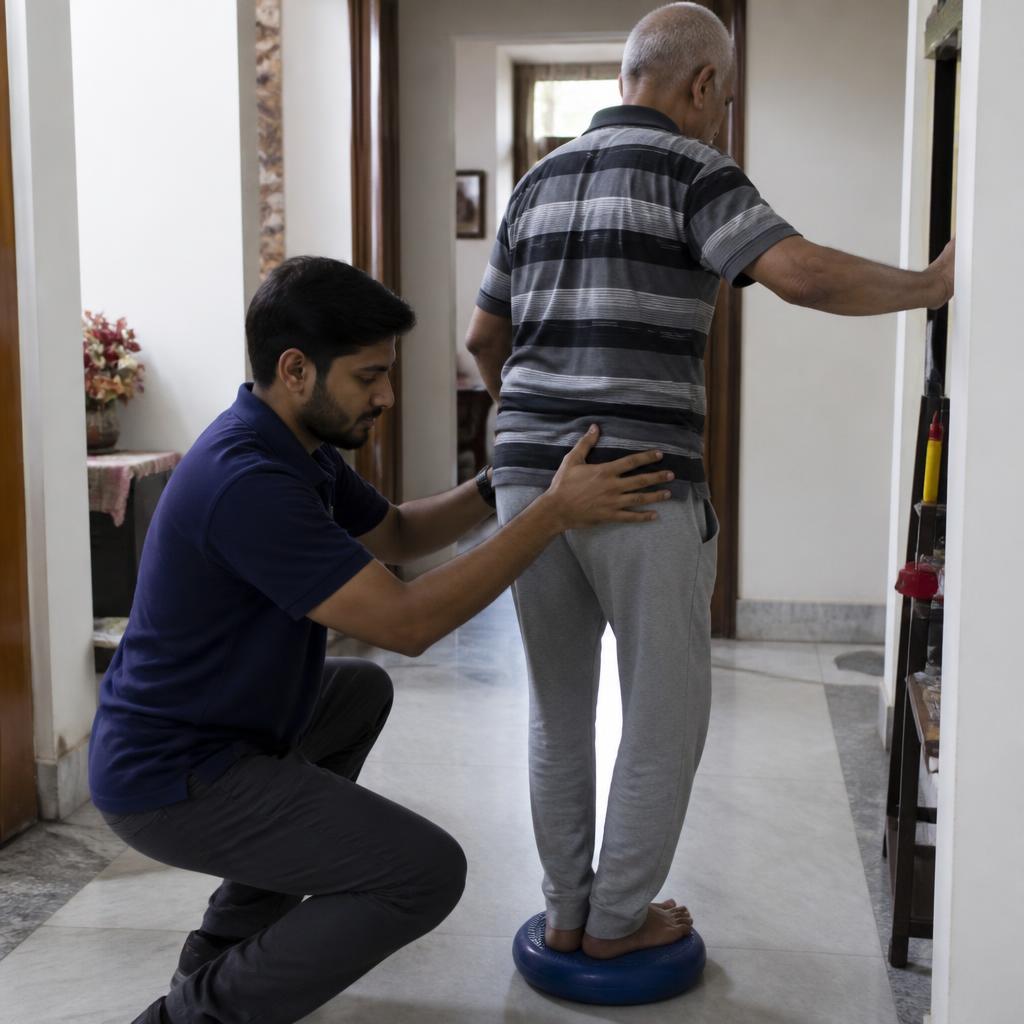
The therapist reviews birth and medical history, watches a safe movement such as rolling, standing, or lifting a light object, and teaches a short routine that fits around the baby. They may discuss toileting habits, constipation, rest, and how to modify feeding or carrying positions. Follow-up checks whether symptoms, confidence, and daily function are changing.
Do
- Use the breathing and movement plan prescribed for you, exhale during effort when appropriate, protect rest, and report pelvic pain, heaviness, leakage, or bowel symptoms honestly.
- Keep a simple record of symptoms, activity, sleep, and the tasks that are becoming easier or harder.
- Share medical reports, medication changes, surgeon restrictions, and any recent change in symptoms before exercise is progressed.
Don’t
- Do not begin high-impact exercise because an external wound looks healed, hold your breath to lift repeatedly, or feel pressured to accept leakage or pelvic pain without support.
- Do not copy an exercise from a video if it increases symptoms, requires equipment you cannot control, or conflicts with a medical restriction.
- Do not use pain, fatigue, or a single good day as the only measure of readiness for a harder task.
Safety and when to seek medical advice
Any of these symptoms—heavy bleeding, fever, foul-smelling discharge, severe headache or visual symptoms, calf swelling or pain, chest pain, shortness of breath, wound separation, or severe abdominal or pelvic pain—needs urgent medical advice. Contact the obstetric team for new or worsening postnatal concerns.
Booking and follow-up
Home physiotherapy is arranged after the team understands the person’s condition, location, current precautions, and preferred care. Goswami Rehab offers home visits at ₹1,125–₹1,350 and online consultation at ₹742. Send the online booking request with the main concern, city, and preferred dates; the team confirms the appropriate next step within 24 hours. A teleconsultation can be useful when travel is difficult or when an exercise plan needs review, but it does not replace emergency or specialist medical care.
The article is educational information only. It does not diagnose a condition or replace advice from a doctor, surgeon, obstetrician, cancer team, or treating physiotherapist. Individual plans, timelines, and outcomes vary.
Clinical sources & further reading
These public resources provide general clinical guidance. They do not replace an assessment or an individual treatment plan.
- Postnatal careNICE
- Pelvic floor dysfunction: prevention and non-surgical managementNICE
- Urinary incontinenceNHS
- Government of National Capital Territory of DelhiDelhi Government
- RehabilitationMedlinePlus, U.S. National Library of Medicine
- Orthopedic conditionsNational Institute of Arthritis and Musculoskeletal and Skin Diseases
Continue exploring
Choose your next step
Keep exploring with a focused guide, a relevant care option, or a direct enquiry.
Need professional advice?
Book an assessment with our expert team.