At a glance
What this guide can help you understand
How Ludhiana patients can protect shoulder function while practising wheelchair propulsion, transfers, pressure relief, and daily tasks after spinal cord injury.
What should you bring to a consultation?
Share your main concern, when it started, what affects it, current medicines, and any reports or precautions you have been given.
See our clinical assessment approachWhen should you pause and seek medical advice?
Pause routine exercise and seek medical advice for sudden severe change, new neurological symptoms, breathing difficulty, chest pain, major injury, or feeling acutely unwell.
This guide is educational and does not replace diagnosis or urgent care.
For a person with spinal cord injury who uses a wheelchair or repeated assisted transfers, the shoulder can become the link between mobility and independence. Pain during propulsion, pressure relief, reaching, or transfers should not be treated as an unavoidable price of function. Physiotherapy can protect the upper limb while preserving the tasks the person actually needs.
The practical context in this city
Ludhiana is the setting for a shoulder-preservation question, not a claim about local spinal cord injury outcomes. A home assessment can examine the chair, bed, bathroom, transfer board or support, floor surface, and the route used each day. Injury level, trunk control, hand function, sensation, skin status, equipment fit, and the amount of caregiver help shape the plan.
What a physiotherapist assesses
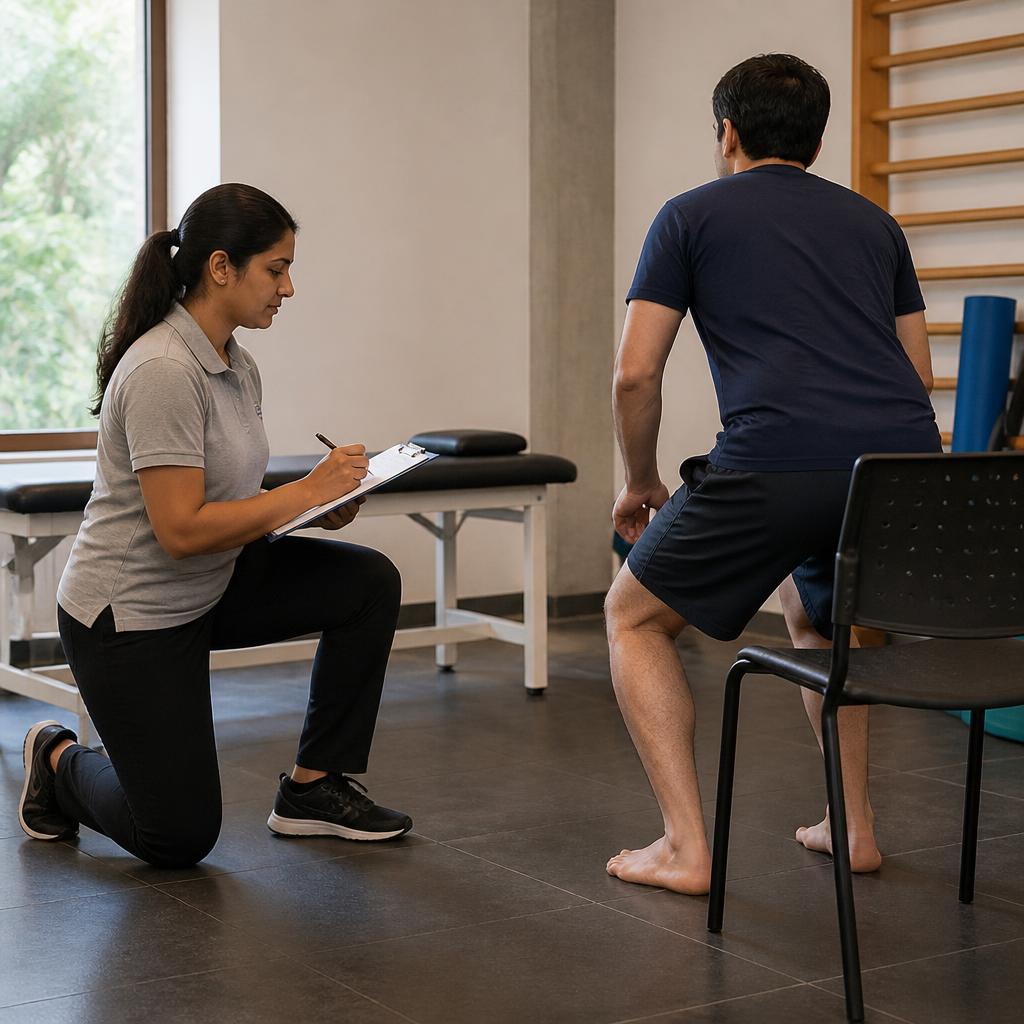
The therapist asks when pain occurs, whether it is one-sided, what happens after propulsion or transfers, and whether strength, range, sensation, or daily reach has changed. They observe propulsion, brake use, pressure relief, bed-to-chair movement, and a functional reach when safe. Neck symptoms, new weakness, swelling, trauma, or a change in neurological status may require medical review.
How rehabilitation can progress
The plan may alter the setup, technique, support, task order, or recovery before adding strengthening. Transfers and propulsion can be practised with attention to shoulder position and the smallest safe assistance. A task is progressed when control and recovery remain acceptable, not because pain has been ignored or because a universal chair configuration has been copied.
What to expect from a home physiotherapy session
A visit can recreate the bed, chair, toilet, doorway, or surface that produces the highest load. The therapist may teach a caregiver how to assist without lifting under the arms and identify a safer route or equipment question for review. The written plan should distinguish independent, assisted, and deferred tasks.
Do
- Report shoulder pain early, keep the chair and transfer setup under review, use the assessed technique, and protect recovery between repeated upper-limb loads.
- Keep a short record of symptoms, sleep, activity, food or bowel changes where relevant, and the task that is becoming easier or harder.
- Share discharge summaries, medication changes, restrictions, equipment, and new symptoms before a programme is progressed.
Don’t
- Do not normalize worsening shoulder pain, pull through an arm during transfer, test maximum pushing repeatedly, or change equipment without a fit and task assessment.
- Do not copy another person’s protocol or use one good day as proof that a larger workload is safe.
- Do not delay medical review for a new or rapidly changing symptom because it appears during rehabilitation.
Safety and when to seek medical advice
Seek prompt medical or rehabilitation review for new marked weakness, deformity, acute injury, severe loss of movement, rapidly worsening pain, swelling, or a new neurological change. Stop and seek urgent help for collapse, chest symptoms, or a fall with suspected injury.
Booking and follow-up
Home physiotherapy is arranged after the team understands the person’s condition, location, current precautions, and preferred care. Goswami Rehab offers home visits at ₹1,125–₹1,350 and online consultation at ₹742. Send the online booking request with the main concern, city, and preferred dates; the team confirms the appropriate next step within 24 hours. A teleconsultation can help review a previously assessed plan, but it does not replace emergency or specialist medical care.
This article is educational information only. It does not diagnose a condition or replace advice from a doctor, surgeon, neurologist, pulmonologist, dietitian, or treating physiotherapist. Individual plans, timelines, and outcomes vary.
Related care: home physiotherapy coverage in Ludhiana and stroke and neurological rehabilitation.
Clinical sources & further reading
These public resources provide general clinical guidance. They do not replace an assessment or an individual treatment plan.
- Conservative shoulder treatment in spinal cord injuryNational Library of Medicine
- Models of care for musculoskeletal shoulder pain in spinal cord injuryNational Library of Medicine
- Rehabilitation after traumatic injuryNICE
- Spinal cord injuryWorld Health Organization
- Ludhiana district: official informationDistrict Administration, Ludhiana
Continue exploring
Choose your next step
Keep exploring with a focused guide, a relevant care option, or a direct enquiry.
Need professional advice?
Book an assessment with our expert team.