At a glance
What this guide can help you understand
A practical guide to choosing, fitting, and using common walking aids during physiotherapy and recovery at home.
What should you bring to a consultation?
Share your main concern, when it started, what affects it, current medicines, and any reports or precautions you have been given.
See our clinical assessment approachWhen should you pause and seek medical advice?
Pause routine exercise and seek medical advice for sudden severe change, new neurological symptoms, breathing difficulty, chest pain, major injury, or feeling acutely unwell.
This guide is educational and does not replace diagnosis or urgent care.
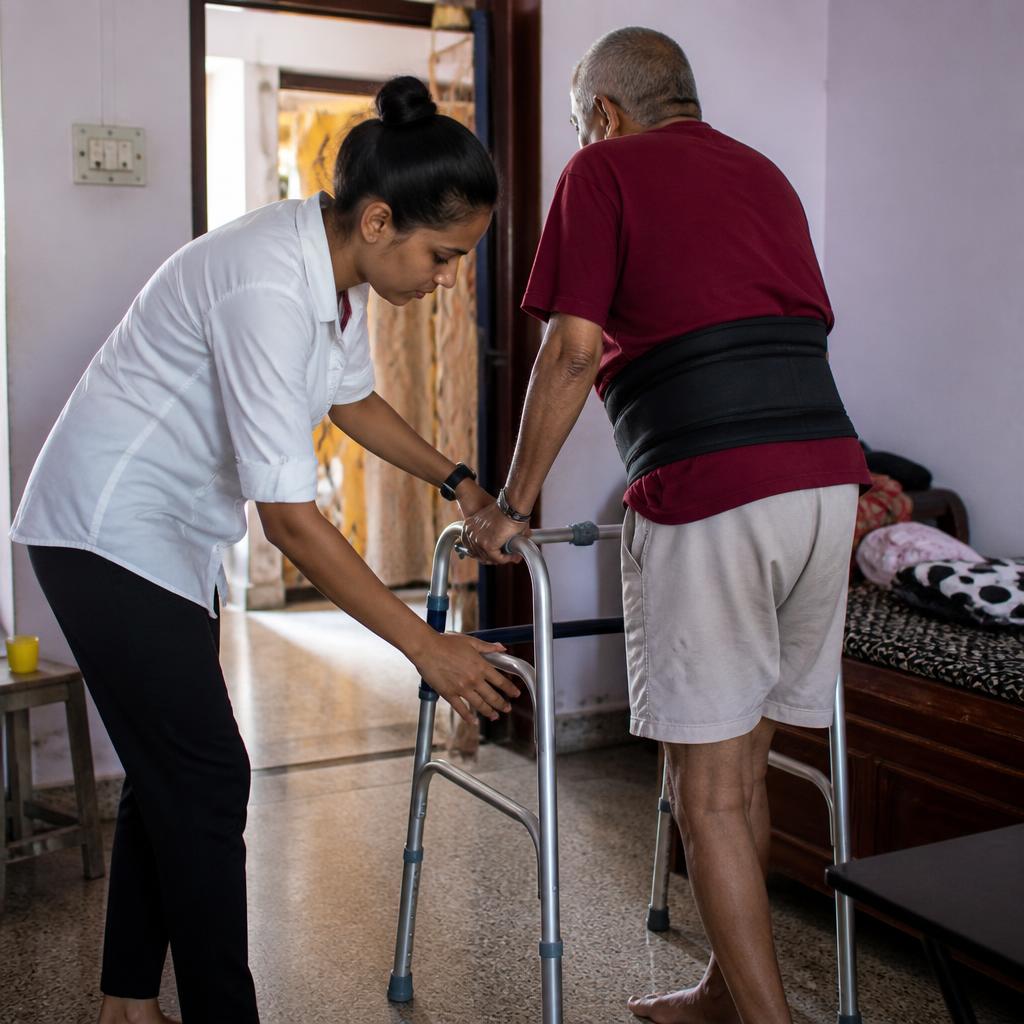
Walking aids reduce load, improve balance, or provide confidence while strength and control return. The correct aid depends on your weight-bearing restriction, balance, arm strength, home layout, and the task you need to perform.
Fitting and Safety
Handles are generally positioned so the elbow is slightly bent when you stand upright, but a physiotherapist should fit the aid to you. Check rubber tips, locks, wheels, and height regularly. Wear supportive footwear, keep floors clear, and avoid carrying objects in your hands while using a walker or crutches.
Basic Principles
Use the sequence taught by your physiotherapist. A cane is commonly held on the side opposite a painful or weak leg, while a walker or crutches may be needed when more support or reduced weight-bearing is required. Stairs require specific instruction; never guess the sequence after surgery or fracture.
Increasing pain, repeated near-falls, numbness, shoulder or wrist pain, or a device that feels unstable means the aid or technique needs review. The goal is safe independence, not using the aid for longer than necessary.
Textbook basis: Principles are synthesised from O’Sullivan’s Physical Rehabilitation, Kisner & Colby’s Therapeutic Exercise, and Magee’s Orthopedic Physical Assessment.
Clinical sources & further reading
These public resources provide general clinical guidance. They do not replace an assessment or an individual treatment plan.
Continue exploring
Choose your next step
Keep exploring with a focused guide, a relevant care option, or a direct enquiry.
Need professional advice?
Book an assessment with our expert team.