At a glance
What this guide can help you understand
How Pune athletes and active adults can preserve suitable conditioning after injury without using cross-training to bypass recovery restrictions.
What should you bring to a consultation?
Share your main concern, when it started, what affects it, current medicines, and any reports or precautions you have been given.
See our clinical assessment approachWhen should you pause and seek medical advice?
Pause routine exercise and seek medical advice for sudden severe change, new neurological symptoms, breathing difficulty, chest pain, major injury, or feeling acutely unwell.
This guide is educational and does not replace diagnosis or urgent care.
Cross-training after a sports injury is not a loophole for ignoring the injured structure. It is a way to preserve a suitable part of conditioning while the tissue, joint, or movement pattern is being assessed. The alternative activity must fit the injury, the sport, the person’s symptoms, and the clinician’s restrictions. The safest choice may change as recovery changes.
The practical context in this city
Pune’s sports and active-work setting can include training, commuting, recreational play, or a return to a specific job task. This article does not assume a particular sport, local injury rate, or return date. Running, cycling, swimming, strength work, and other alternatives place different demands on the recovering area and on the rest of the body; an approved option for one person can be unsuitable for another.
What a physiotherapist assesses
The clinician identifies the injured structure, irritability, swelling, range, strength, balance, coordination, load already tolerated, and the demands of the desired sport. They ask about sleep, stress, illness, training history, and the response later that day or the next day. Readiness is broader than pain during one drill: it includes control, confidence, repeatability, sport-specific tasks, and the ability to recover. A medical review may be required when the injury mechanism or symptoms are unclear.
How rehabilitation can progress
An alternative activity can be selected to maintain a useful component of fitness without reproducing the movement or load that is currently restricted. The team may adjust support, surface, duration, resistance, range, speed, or decision-making one at a time. A training log can record the activity, symptoms, swelling, fatigue, sleep, and next-day function. Cross-training is reduced or changed when the injured area reacts or the person develops a whole-body response that was not expected.
What to expect from a home physiotherapy session
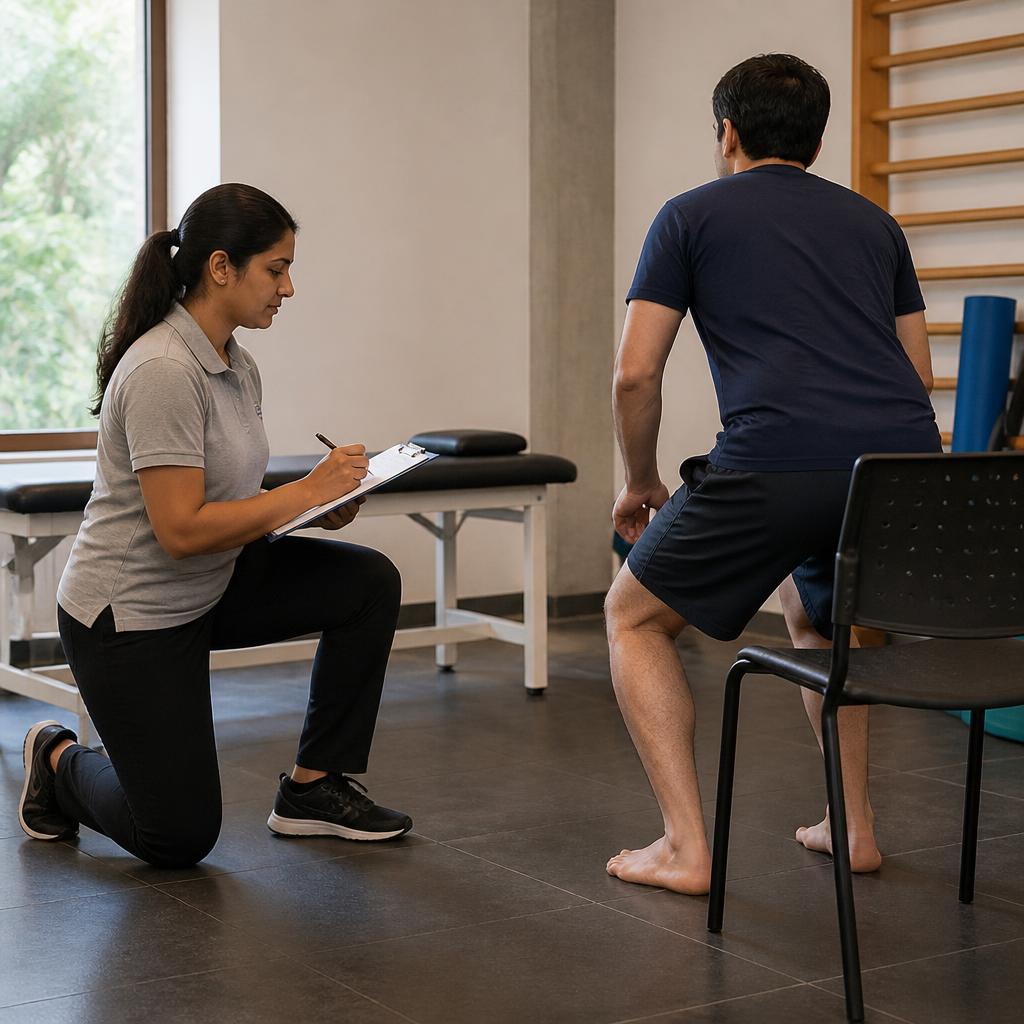
A home session may examine a squat, step, controlled landing, balance task, or equipment setup that connects to the person’s sport, but only after the relevant injury restrictions are clear. The therapist can help distinguish conditioning work from a test of return-to-sport readiness. A plan should say what can be done, what needs supervision, which response ends the session, and what assessment is required before sport-specific loading returns.
Do
- Choose an alternative approved by the clinician, record local and whole-body responses, protect recovery and sleep, and change only one training variable at a time.
- Keep a short record of symptoms, sleep, activity, and the daily task that is becoming easier or harder.
- Share discharge summaries, medication changes, restrictions, and new symptoms before a programme is progressed.
Don’t
- Do not use cross-training to hide swelling or instability, chase a pre-injury workload, apply a universal load ratio, or treat one pain-free drill as clearance for competition.
- Do not copy a protocol from another person or use a good day as proof that a larger workload is safe.
- Do not delay medical review for a new or rapidly changing symptom because it appears during rehabilitation.
Safety and when to seek medical advice
Stop and seek medical assessment for a new deformity, sudden loss of strength, a locked joint, rapidly increasing swelling, severe pain, chest pain, fainting, severe breathlessness, or a new neurological symptom. Review is needed when the injury is worsening, recovery is not behaving as expected, or an alternative activity produces a lasting decline in function.
Booking and follow-up
Home physiotherapy is arranged after the team understands the person’s condition, location, current precautions, and preferred care. Goswami Rehab offers home visits at ₹1,125–₹1,350 and online consultation at ₹742. Send the online booking request with the main concern, city, and preferred dates; the team confirms the appropriate next step within 24 hours. A teleconsultation can help review a previously assessed plan, but it does not replace emergency or specialist medical care.
This article is educational information only. It does not diagnose a condition or replace advice from a doctor, surgeon, cardiologist, neurologist, dietitian, or treating physiotherapist. Individual plans, timelines, and outcomes vary.
Related care: home physiotherapy coverage in Pune and pain-management physiotherapy.
Clinical sources & further reading
These public resources provide general clinical guidance. They do not replace an assessment or an individual treatment plan.
- Consensus statement on return to sport from the First World Congress in Sports Physical TherapyBritish Journal of Sports Medicine
- How much is too much? Load in sport and risk of injuryBritish Journal of Sports Medicine / International Olympic Committee
- Acute respiratory infections and return to sportBritish Journal of Sports Medicine / International Olympic Committee
- Physical activityWorld Health Organization
- Pune district: official informationDistrict Administration, Pune
Continue exploring
Choose your next step
Keep exploring with a focused guide, a relevant care option, or a direct enquiry.
Need professional advice?
Book an assessment with our expert team.