At a glance
What this guide can help you understand
A practical physiotherapy guide to outer-elbow pain, grip loading, exercise progression, and returning to racquet or gym training in Gurugram.
What should you bring to a consultation?
Share your main concern, when it started, what affects it, current medicines, and any reports or precautions you have been given.
See our clinical assessment approachWhen should you pause and seek medical advice?
Pause routine exercise and seek medical advice for sudden severe change, new neurological symptoms, breathing difficulty, chest pain, major injury, or feeling acutely unwell.
This guide is educational and does not replace diagnosis or urgent care.
Pain on the outside of the elbow can appear with gripping, lifting, backhand shots, mouse use, or gym exercises. “Tennis elbow” describes a common pattern, not a complete diagnosis. The neck, shoulder, radial nerve, joint, tendon, and the amount of recent loading may all contribute.
The practical context in this city
A person in Gurugram may move between desk work, a racquet session, strength training, and driving on the same day. The problem is often the total load and the limited recovery between tasks rather than one activity alone. A useful plan identifies the two or three highest-load moments and changes them temporarily while maintaining general fitness.
What a physiotherapist assesses
Assessment includes the exact pain location, grip and pinch, wrist and elbow movement, resisted loading, neck and nerve symptoms, shoulder control, training history, and response over the following day. The therapist may compare a racquet grip or gym movement with a lighter version to identify a modifiable position.
How rehabilitation can progress
The person may begin with tolerable isometric wrist and forearm work, then progress to slow resistance through different wrist angles and functional gripping. Racquet duration, ball pace, backhand volume, and gym load are reintroduced gradually. A pain-monitoring plan can be useful, but increasing pain that lasts into the next day is a sign to review the dose.
What to expect from a home physiotherapy session
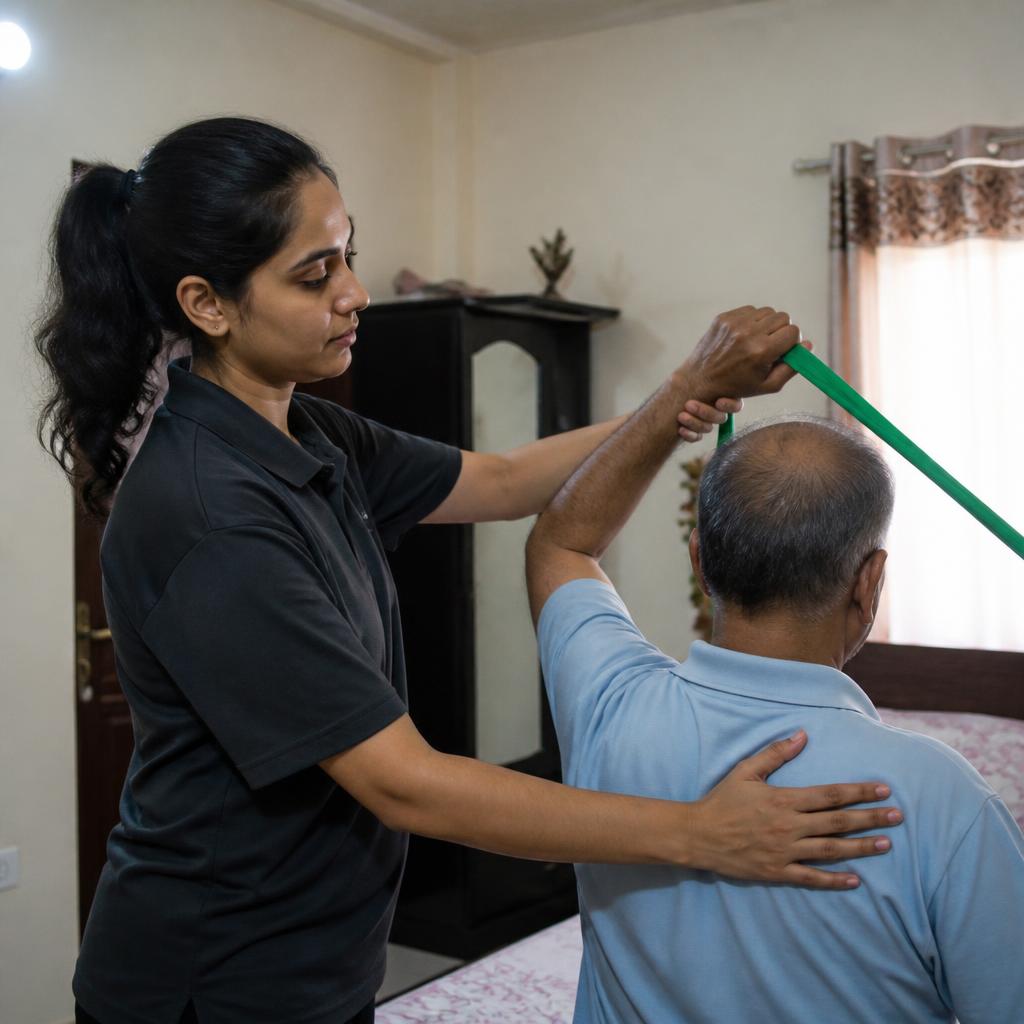
The therapist can assess a desk, bag, bottle, or training movement in the home and teach a short forearm routine. They may discuss grip size, handle position, warm-up, and the difference between a temporary load modification and complete rest. Follow-up checks whether strength and daily use are improving together.
Do
- Keep the elbow and wrist comfortable during daily lifting, warm up before racquet or gym work, and use a gradual strengthening dose rather than testing maximum grip repeatedly.
- Keep a simple record of symptoms, activity, sleep, and the tasks that are becoming easier or harder.
- Share medical reports, medication changes, surgeon restrictions, and any recent change in symptoms before exercise is progressed.
Don’t
- Do not rely on an elbow strap as permission to continue every painful activity, stretch aggressively into sharp pain, or stop all arm use for weeks without a plan.
- Do not copy an exercise from a video if it increases symptoms, requires equipment you cannot control, or conflicts with a medical restriction.
- Do not use pain, fatigue, or a single good day as the only measure of readiness for a harder task.
Safety and when to seek medical advice
Seek medical assessment after a significant injury, deformity, marked swelling, fever, numbness with weakness, or loss of elbow movement. Persistent pain that does not behave like a load-related problem also deserves review.
Booking and follow-up
Home physiotherapy is arranged after the team understands the person’s condition, location, current precautions, and preferred care. Goswami Rehab offers home visits at ₹1,125–₹1,350 and online consultation at ₹742. Send the online booking request with the main concern, city, and preferred dates; the team confirms the appropriate next step within 24 hours. A teleconsultation can be useful when travel is difficult or when an exercise plan needs review, but it does not replace emergency or specialist medical care.
The article is educational information only. It does not diagnose a condition or replace advice from a doctor, surgeon, obstetrician, cancer team, or treating physiotherapist. Individual plans, timelines, and outcomes vary.
Clinical sources & further reading
These public resources provide general clinical guidance. They do not replace an assessment or an individual treatment plan.
- Tennis elbowNHS
- Tennis elbowNHS
- Musculoskeletal disorders at workHealth and Safety Executive
- Gurugram District: official district informationDistrict Administration, Gurugram
- RehabilitationMedlinePlus, U.S. National Library of Medicine
- Orthopedic conditionsNational Institute of Arthritis and Musculoskeletal and Skin Diseases
Continue exploring
Choose your next step
Keep exploring with a focused guide, a relevant care option, or a direct enquiry.
Need professional advice?
Book an assessment with our expert team.