At a glance
What this guide can help you understand
How load, strength, terrain, bike position, and recovery can be assessed when returning to running or cycling after injury in Bengaluru.
What should you bring to a consultation?
Share your main concern, when it started, what affects it, current medicines, and any reports or precautions you have been given.
See our clinical assessment approachWhen should you pause and seek medical advice?
Pause routine exercise and seek medical advice for sudden severe change, new neurological symptoms, breathing difficulty, chest pain, major injury, or feeling acutely unwell.
This guide is educational and does not replace diagnosis or urgent care.
Returning to a favourite sport after injury involves more than waiting until pain disappears. The body needs enough strength, range, control, and recovery capacity for the actual duration, surface, hills, braking, turning, or traffic demands. A physiotherapist can help separate readiness for easy movement from readiness for a full training week.
The practical context in this city
Bengaluru runners and cyclists may use apartment roads, parks, indoor equipment, or mixed routes with frequent stops and surface changes. A home session can address stairs, balance, bike-mount practice, or a strength programme when travel to a clinic is inconvenient. The route should be introduced in stages rather than treated as a single test.
What a physiotherapist assesses
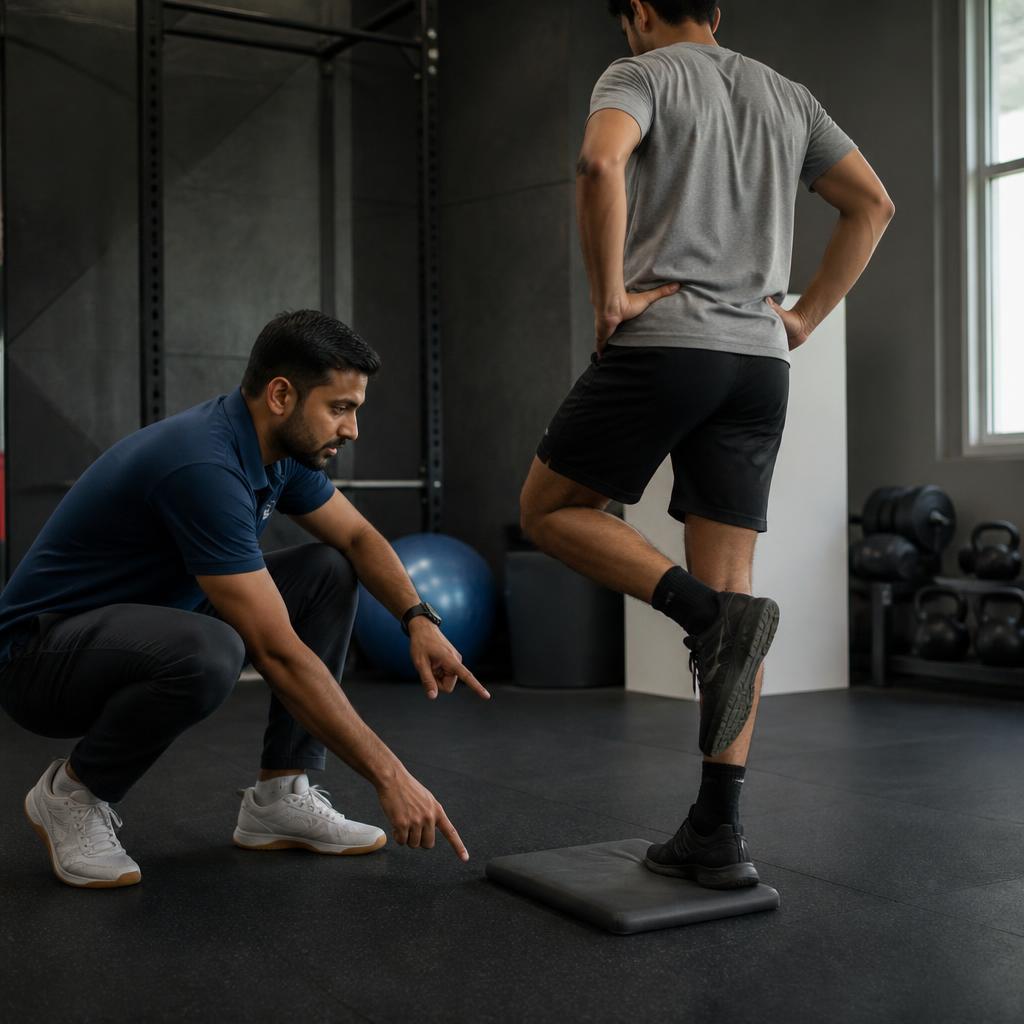
The assessment identifies the injury, current medical restrictions, swelling or pain response, strength, calf and hip capacity, single-leg control, balance, footwear, bike position, and recent training change. The therapist asks what happened in the hours and day after activity, because delayed response can be more informative than symptoms during a short session.
How rehabilitation can progress
A graded plan may begin with walking, easy spinning, or controlled strength work, then add duration before intensity. Hills, speed, intervals, technical surfaces, and group riding are separate demands. One change at a time makes it easier to identify an excessive dose. Rest days and sleep are part of training, not evidence of failure.
What to expect from a home physiotherapy session
The therapist observes a squat, step, calf raise, balance task, or safe bike setup and reviews the training log. They may prescribe a strength circuit and a first walk-run or cycling dose with a next-day check. The programme changes according to recovery, confidence, and movement quality. For athletes who cannot travel easily, Bengaluru home physiotherapy for sports injury recovery can connect the assessment to the person’s own stairs, balance tasks, or bike setup.
Do
- Warm up, check the bike and footwear, build one training variable at a time, and use next-day symptoms to guide progression.
- Keep a simple record of symptoms, activity, sleep, and the tasks that are becoming easier or harder.
- Share medical reports, medication changes, surgeon restrictions, and any recent change in symptoms before exercise is progressed.
Don’t
- Do not return because a short route feels fine if the following day brings swelling, a limp, or a large drop in function, and do not increase hills, distance, and speed together.
- Do not copy an exercise from a video if it increases symptoms, requires equipment you cannot control, or conflicts with a medical restriction.
- Do not use pain, fatigue, or a single good day as the only measure of readiness for a harder task.
Safety and when to seek medical advice
Any of these problems—a new inability to bear weight, locking, rapidly increasing swelling, a suspected fracture, calf swelling, chest pain, or severe breathlessness—needs medical assessment. Repeated giving way or a worsening limp needs rehabilitation review.
Booking and follow-up
Home physiotherapy is arranged after the team understands the person’s condition, location, current precautions, and preferred care. Goswami Rehab offers home visits at ₹1,125–₹1,350 and online consultation at ₹742. Send the online booking request with the main concern, city, and preferred dates; the team confirms the appropriate next step within 24 hours. A teleconsultation can be useful when travel is difficult or when an exercise plan needs review, but it does not replace emergency or specialist medical care.
The article is educational information only. It does not diagnose a condition or replace advice from a doctor, surgeon, obstetrician, cancer team, or treating physiotherapist. Individual plans, timelines, and outcomes vary.
Clinical sources & further reading
These public resources provide general clinical guidance. They do not replace an assessment or an individual treatment plan.
- Physical Activity BasicsCenters for Disease Control and Prevention
- PhysiotherapyNHS
- Orthopedic conditionsNational Institute of Arthritis and Musculoskeletal and Skin Diseases
- Government of KarnatakaGovernment of Karnataka
- RehabilitationMedlinePlus, U.S. National Library of Medicine
- Musculoskeletal disorders at workHealth and Safety Executive
Continue exploring
Choose your next step
Keep exploring with a focused guide, a relevant care option, or a direct enquiry.
Need professional advice?
Book an assessment with our expert team.