At a glance
What this guide can help you understand
GBS can involve rapid weakness, hospital or ICU care, and a long rehabilitation process. This guide explains how physiotherapy may support recovery alongside medical management.
What should you bring to a consultation?
Share your main concern, when it started, what affects it, current medicines, and any reports or precautions you have been given.
See our clinical assessment approachWhen should you pause and seek medical advice?
Pause routine exercise and seek medical advice for sudden severe change, new neurological symptoms, breathing difficulty, chest pain, major injury, or feeling acutely unwell.
This guide is educational and does not replace diagnosis or urgent care.
Guillain-Barré Syndrome (GBS) is one of the most acutely terrifying neurological conditions a person can face. Within days — sometimes hours — an otherwise healthy person can go from mild leg weakness to complete paralysis and respiratory failure requiring mechanical ventilation.
Recovery from GBS varies widely. Medical management and rehabilitation can support movement, breathing, function, and participation, but the pace and eventual level of independence cannot be predicted for an individual. Physiotherapy is coordinated with the medical team from the acute phase onward.
GBS and Physiotherapy Rehabilitation
GBS is an autoimmune condition in which the body's immune system mistakenly attacks the peripheral nervous system — the network of nerves outside the brain and spinal cord. This demyelination (damage to the nerve's insulating sheath) disrupts the signals travelling between the brain and the muscles.
The condition typically follows an infection (respiratory or gastrointestinal) by 2–4 weeks. The ascending pattern of weakness — starting in the legs and moving upward — is characteristic. At its peak, 25–30% of patients require respiratory support.
Once the acute immune process settles, nerves may begin to recover, but the timing varies. Physiotherapy focuses on protecting the body during the acute phase and supporting safe activity as strength and sensation change.
Phase 1 — Acute Phase (ICU/Hospital)
During the acute phase, physiotherapy may help reduce the risks associated with immobility:
- Chest physiotherapy: Airway clearance techniques may be considered for people on ventilators or at risk of aspiration, as directed by the medical team
- Passive movement: Regular gentle ranging of the limbs may help manage joint stiffness and maintain soft-tissue length
- Positioning: Careful positioning can help reduce pressure, contracture, and nerve-compression risks
- Sensory stimulation: Touch and proprioceptive input supports neurological awareness even when movement is absent
Phase 2 — Recovery Phase (Hospital and Homecare)
As nerve function begins to return, the rehabilitation intensifies. GBS recovery follows the reverse of the disease progression — function typically returns proximally (shoulders, hips) before distally (hands, feet).
Key physiotherapy goals:
- Progressive strengthening: As muscles recover from weakness, carefully graded strengthening can build capacity. Fatigue needs to be monitored because excessive loading may worsen symptoms
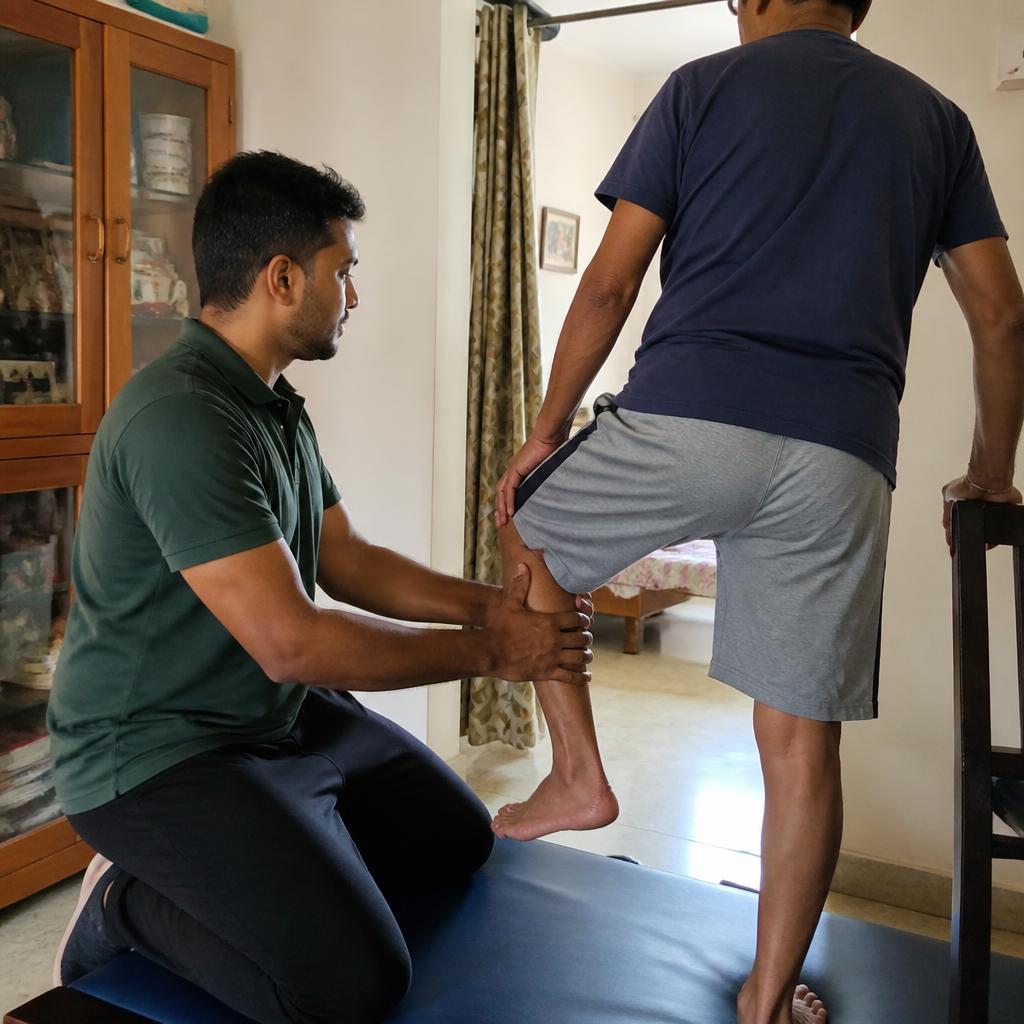
- Gait retraining: Walking is relearned from supported standing to independent ambulation, often requiring temporary aids
- Fatigue management: Post-GBS fatigue is profound and poorly understood. Pacing strategies are essential — both during sessions and across the day
- Balance rehabilitation: Proprioceptive loss (impaired sense of body position) can affect balance; structured balance training may be included when safe
- Fine motor retraining: Hand function may take time to return; task-specific practice for writing, dressing, and daily tasks can support participation
What Families Need to Know
GBS recovery takes time and may continue for months or longer. The pattern is non-linear, so goals and session intensity should be reviewed as symptoms, strength, fatigue, and medical advice change.
The emotional dimension is significant. Patients who were fully independent adults, often in the prime of their lives, face complete physical dependence. Acknowledging this, supporting psychological wellbeing, and celebrating every milestone is part of comprehensive GBS rehabilitation.
At Goswami Rehab, our homecare GBS programs are designed to meet the patient at whatever stage of recovery they are in — from early post-discharge to long-term community rehabilitation.
Clinical sources & further reading
These public resources provide general clinical guidance. They do not replace an assessment or an individual treatment plan.
Continue exploring
Choose your next step
Keep exploring with a focused guide, a relevant care option, or a direct enquiry.
For this topic, see the stroke and neurological rehabilitation.
Need professional advice?
Book an assessment with our expert team.