At a glance
What this guide can help you understand
Traumatic brain injury affects every patient differently. Homecare neurological physiotherapy provides consistent, environment-specific rehabilitation that drives meaningful recovery.
What should you bring to a consultation?
Share your main concern, when it started, what affects it, current medicines, and any reports or precautions you have been given.
See our clinical assessment approachWhen should you pause and seek medical advice?
Pause routine exercise and seek medical advice for sudden severe change, new neurological symptoms, breathing difficulty, chest pain, major injury, or feeling acutely unwell.
This guide is educational and does not replace diagnosis or urgent care.
Traumatic brain injury (TBI) is one of the most complex conditions in rehabilitation medicine. No two injuries are identical — the location and severity of the brain injury determine an entirely unique pattern of physical, cognitive, and emotional consequences.
What is consistent across TBI cases is that rehabilitation is individualised and may involve early, ongoing physiotherapy alongside medical and neuropsychological care. The pace and extent of change vary, and progress is reviewed over time.
The Physical Consequences of TBI
Depending on the location and extent of injury, physical challenges after TBI may include:
- Hemiplegia or hemiparesis: Weakness or paralysis on one side of the body
- Ataxia: Problems with coordination and balance from cerebellar involvement
- Spasticity: Increased muscle tone causing stiffness and abnormal postures
- Fatigue: Neurological fatigue is different from ordinary tiredness — it is profound and poorly understood by those who haven't experienced it
- Cognitive-motor impairments: Difficulty planning, initiating, and sequencing movements
Goals of Neurological Physiotherapy
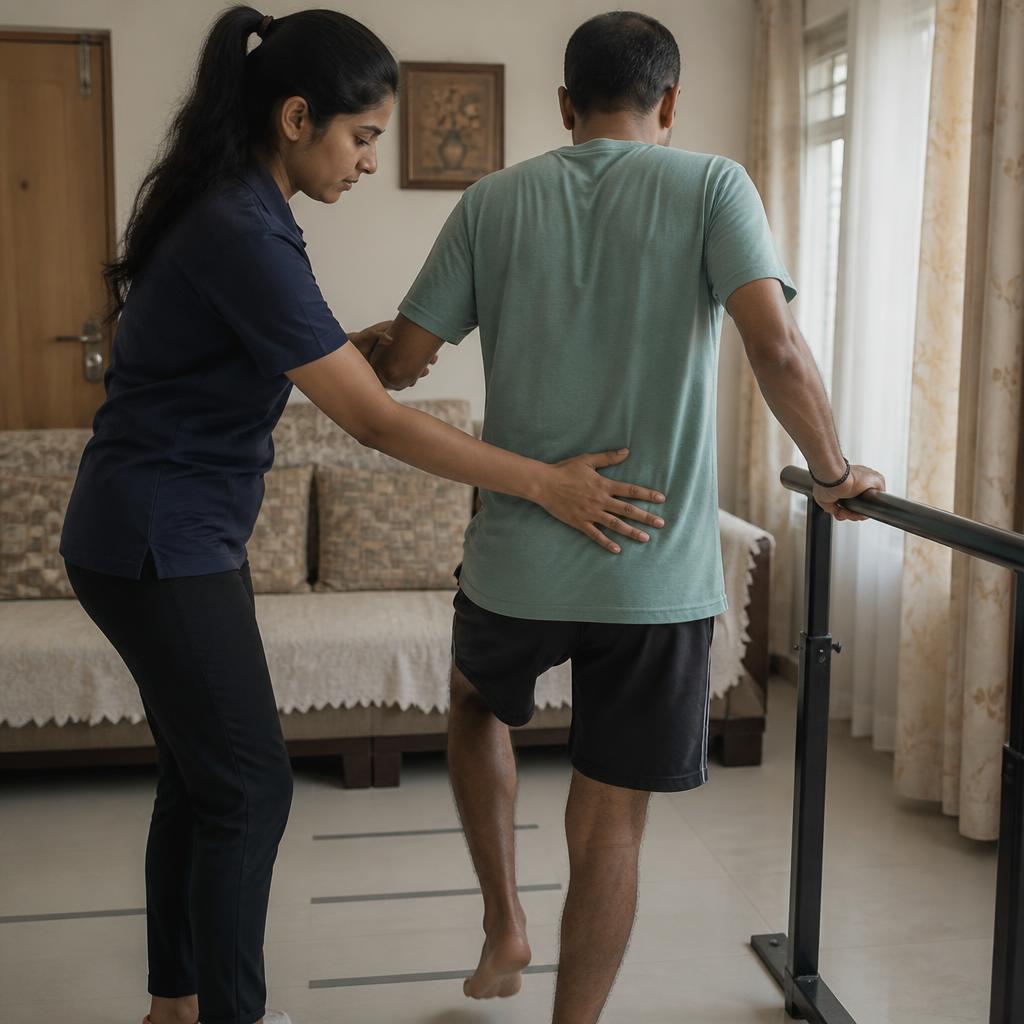
Restoring Safe Mobility Beginning with bed mobility, transfers, and standing tolerance, progressing to walking with appropriate aids, and then reducing or eliminating those aids over time.
Managing Spasticity Positioning programs, passive stretching, and active movement may help manage stiffness and the risk of contractures (shortening of muscles and tendons) while maintaining tissue health in affected limbs.
Rebuilding Motor Control Specific, repetitive task training using the affected limbs can connect practice with daily goals. The balance between active and assisted practice should be guided by the person's ability, fatigue, safety, and rehabilitation plan.
Balance and Falls Prevention TBI frequently disrupts the cerebellum and vestibular pathways. Structured balance training, starting from supported positions and progressing to dynamic and dual-task conditions, is a core component.
The Role of the Family
Family members are often the primary caregivers after TBI. Our approach involves teaching family members safe handling, positioning, and how to encourage the patient to use their affected side in daily activities. Learned non-use — where the person habitually uses only their unaffected side — can make daily tasks harder. Families can support safe use of the affected side when advised by the treating team.
Long-Term Outlook
Recovery after TBI is often slow and non-linear, with good days and hard days. Some people continue to change over months or years, but the trajectory and goals are individual. A rehabilitation team can review progress and update the plan over time.
Goswami Rehab provides homecare neuro-rehabilitation for TBI patients at all stages of recovery — from early post-acute through to long-term community rehabilitation. Our team works with your medical team and adapts the program as your recovery evolves.
Clinical sources & further reading
These public resources provide general clinical guidance. They do not replace an assessment or an individual treatment plan.
Continue exploring
Choose your next step
Keep exploring with a focused guide, a relevant care option, or a direct enquiry.
For this topic, see the stroke and neurological rehabilitation.
Need professional advice?
Book an assessment with our expert team.