At a glance
What this guide can help you understand
Recovery after a stroke can take time and varies from person to person. Homecare physiotherapy supports movement, communication goals alongside the wider care team, and independence — here's what the journey may look like.
What should you bring to a consultation?
Share your main concern, when it started, what affects it, current medicines, and any reports or precautions you have been given.
See our clinical assessment approachWhen should you pause and seek medical advice?
Pause routine exercise and seek medical advice for sudden severe change, new neurological symptoms, breathing difficulty, chest pain, major injury, or feeling acutely unwell.
This guide is educational and does not replace diagnosis or urgent care.
A stroke is one of the most disorienting events a person and their family can face. In an instant, movement, speech, or memory can be affected. The brain can adapt after injury through a process called neuroplasticity, and physiotherapy is one part of a coordinated rehabilitation plan that can support this adaptation.
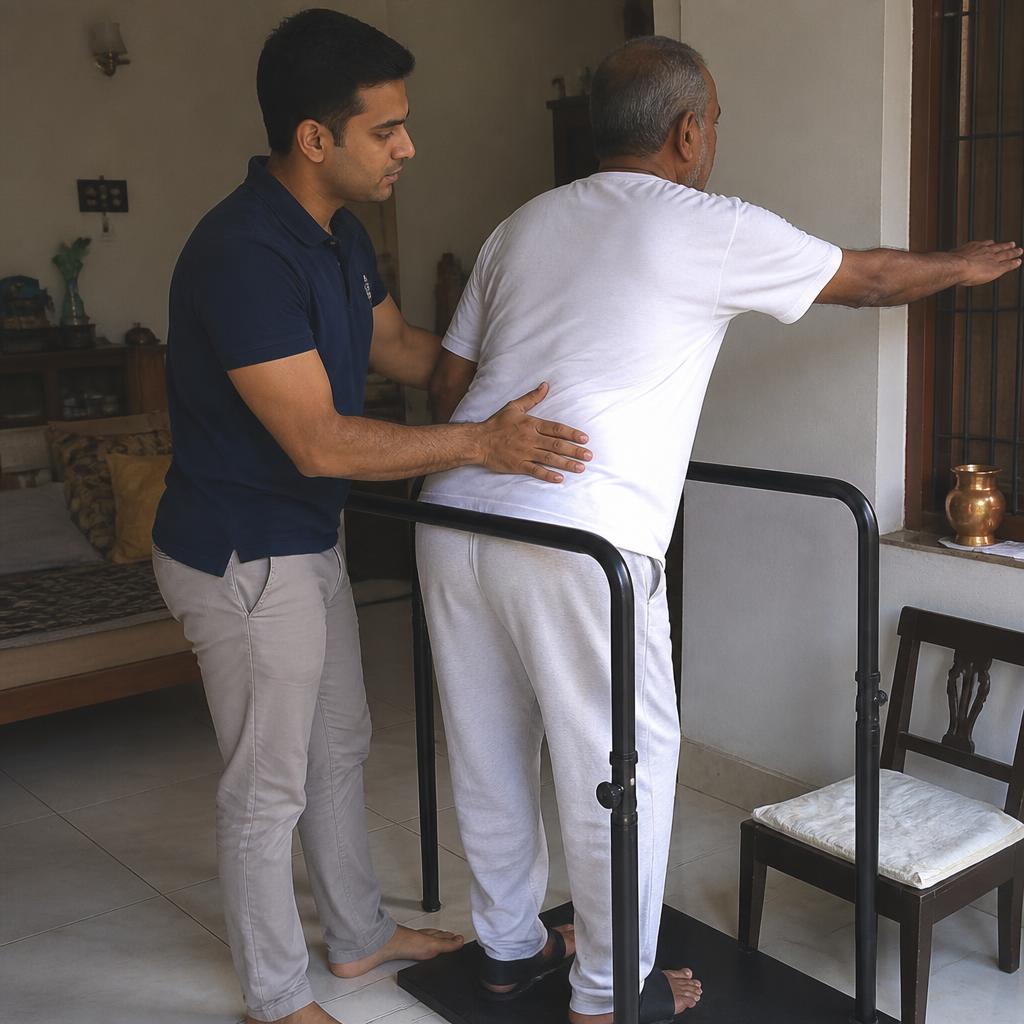
Homecare physiotherapy after stroke may be useful when travel is difficult or when daily tasks at home are the main goals. Familiar surroundings can make practice more relevant, and family members can participate when the treating team considers this appropriate.
How Stroke Rehabilitation Uses Task Practice
When a stroke damages brain tissue, the brain and body may adapt in different ways. Repetitive, task-specific movement is commonly used in rehabilitation to practise useful skills. Progress is often faster early on, but improvement can continue beyond the first few months and varies with the stroke, health, support, and rehabilitation plan.
The Four Pillars of Stroke Rehabilitation
1. Mobility and Transfers Re-learning to roll, sit up, stand, and walk safely is the foundation. Our physiotherapists work on bed mobility, sit-to-stand transfers, and progressive gait training using the patient's home environment as the therapy space.
2. Upper Limb Function Arm and hand recovery may differ from leg recovery. We use task-specific training — reaching for objects, gripping cups, turning pages — because practising meaningful activities helps connect exercises with everyday goals.
3. Balance and Safer Mobility Falls can interrupt stroke rehabilitation. We assess the person's balance and use graded, supported challenges to practise safer transfers and mobility.
4. Spasticity Management Increased muscle tone (spasticity) in the affected limbs is common. Positioning, stretching, and movement techniques help manage spasticity and prevent the development of contractures.
What to Expect Over Time
- Weeks 1–4: Focus on basic mobility, preventing complications, and establishing a daily routine
- Months 2–3: Progressive loading, functional tasks, and increasing independence
- Months 3–6: Higher-level activities, community mobility, return to hobbies
- Beyond 6 months: Continued improvement is possible — neuroplasticity does not have a hard stop date
The Family's Role
Stroke rehabilitation is a team effort. We coach family members on safe handling, positioning, and how to encourage practice between sessions without overloading the patient. Your involvement can support carryover between visits.
At Goswami Rehab, we provide structured homecare neuro-rehabilitation programs designed around each patient's specific needs, goals, and home environment. Early assessment, appropriate practice, and regular review can help guide the next step — contact us to begin.
Clinical sources & further reading
These public resources provide general clinical guidance. They do not replace an assessment or an individual treatment plan.
Continue exploring
Choose your next step
Keep exploring with a focused guide, a relevant care option, or a direct enquiry.
Need professional advice?
Book an assessment with our expert team.