At a glance
What this guide can help you understand
Parkinson's disease is progressive, and physiotherapy can support movement, balance, and everyday participation. Here's how a structured homecare program may fit into wider care.
What should you bring to a consultation?
Share your main concern, when it started, what affects it, current medicines, and any reports or precautions you have been given.
See our clinical assessment approachWhen should you pause and seek medical advice?
Pause routine exercise and seek medical advice for sudden severe change, new neurological symptoms, breathing difficulty, chest pain, major injury, or feeling acutely unwell.
This guide is educational and does not replace diagnosis or urgent care.
Parkinson's disease is a progressive neurological condition that affects movement, balance, and coordination. While medication manages the biochemical aspects of the disease, physiotherapy addresses the functional consequences — how the person actually moves, falls, and lives day to day.
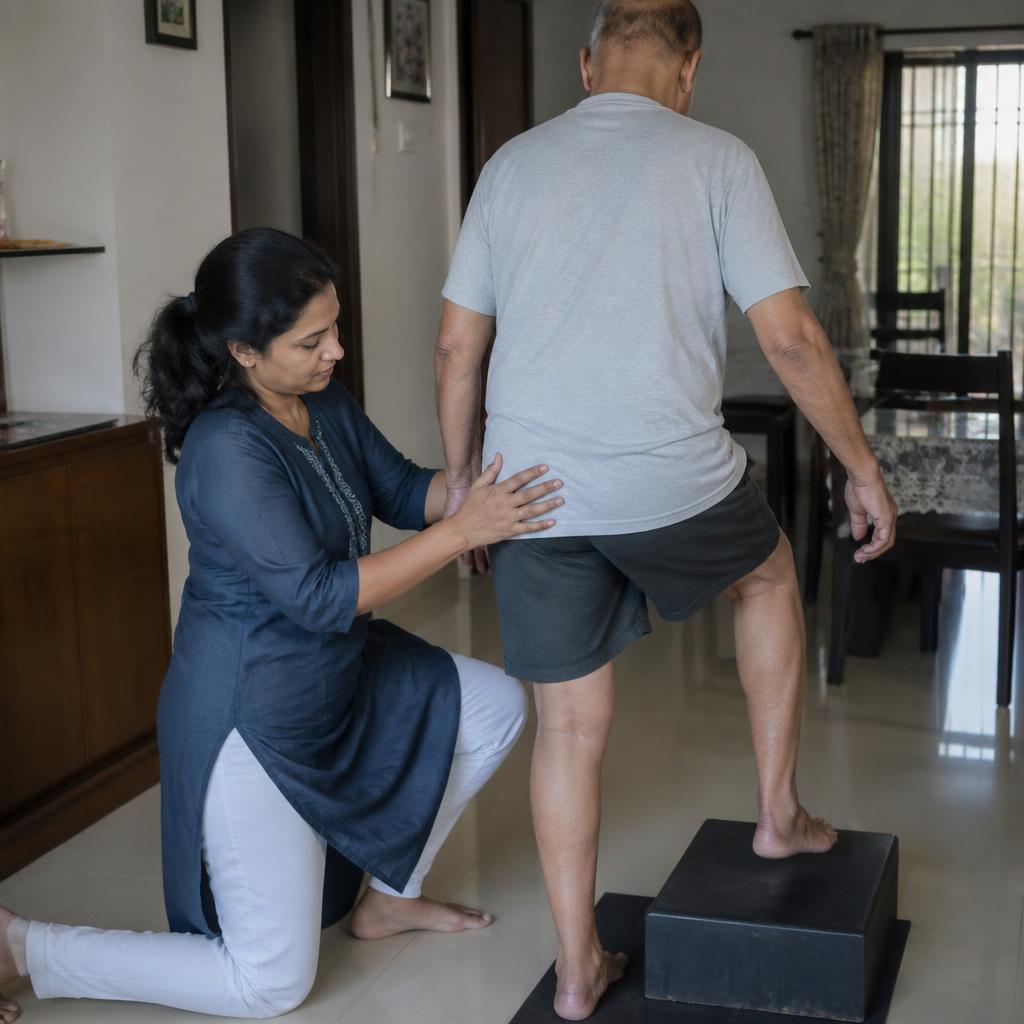
Physiotherapy may support mobility, balance, confidence, and participation for people with Parkinson's disease. Homecare can be useful when transport and fatigue make clinic visits difficult, and it allows practice in the environment where everyday tasks happen. Results vary, and physiotherapy complements rather than replaces neurological and medical care.
How Parkinson's Can Affect Movement
The core movement challenges in Parkinson's include:
- Rigidity: Increased muscle stiffness that makes movement slow and effortful
- Bradykinesia: Slowness of movement, affecting tasks like buttoning shirts or walking
- Postural instability: Impaired balance reflexes that can increase fall risk
- Festination: A shuffling, forward-leaning gait where the person takes many small, rapid steps
- Freezing: Sudden episodes where the feet feel glued to the floor, often at doorways or when turning
What Physiotherapy Addresses
Gait Training We may use auditory and visual cues — rhythmic beats or floor markers — to support step timing and walking practice. The choice of cue and its effect varies, so it is reviewed against the person's symptoms and goals.
Balance Training Graded balance challenges, starting from safe supported positions and progressing to more dynamic activities, improve the postural reflexes that protect against falls. We also assess the home for fall hazards and recommend modifications.
Big Movement Training (LSVT BIG) The LSVT BIG program, developed specifically for Parkinson's disease, trains patients to make intentionally large movements. Because Parkinson's causes movements to become smaller over time, training the brain to make big, exaggerated movements recalibrates perception and improves functional movement quality.
Flexibility and Rigidity Management Stretching programs targeting the common areas of rigidity — trunk rotation, hip extension, shoulder mobility — reduce discomfort and improve posture.
Frequency and Consistency
Parkinson's disease is an ongoing condition, so some people benefit from periodic review and continued practice. The frequency depends on symptoms, goals, medication timing, fatigue, and access to care; there is no single schedule that suits everyone.
We also work closely with the patient's neurologist and family so the physiotherapy program can complement medication timing. The treating team can decide whether sessions are best planned during a medication "on" period.
Goswami Rehab provides specialist neuro-rehabilitation homecare for Parkinson's patients across India. Our programs are evidence-based, practically focused, and built around each patient's current stage of the disease.
Clinical sources & further reading
These public resources provide general clinical guidance. They do not replace an assessment or an individual treatment plan.
Continue exploring
Choose your next step
Keep exploring with a focused guide, a relevant care option, or a direct enquiry.
Need professional advice?
Book an assessment with our expert team.