At a glance
What this guide can help you understand
After total hip replacement, homecare physiotherapy can support safe mobility, transfers, and daily activities while you follow the surgical team's precautions.
What should you bring to a consultation?
Share your main concern, when it started, what affects it, current medicines, and any reports or precautions you have been given.
See our clinical assessment approachWhen should you pause and seek medical advice?
Pause routine exercise and seek medical advice for sudden severe change, new neurological symptoms, breathing difficulty, chest pain, major injury, or feeling acutely unwell.
This guide is educational and does not replace diagnosis or urgent care.
Total hip replacement (THR) is an orthopaedic surgery that replaces the damaged joint with a prosthetic implant. Rehabilitation after surgery focuses on the strength, coordination, confidence, and daily tasks needed to use it safely, with progress shaped by the operation and each person's health.
Structured homecare physiotherapy after hip replacement can help a person practise walking, transfers, and household tasks in context. It should be adapted to the surgical approach, precautions, symptoms, and guidance from the orthopaedic team rather than treated as a substitute for follow-up.
Understanding the Surgery and Its Demands
In a total hip replacement, the damaged ball-and-socket joint is replaced with a prosthetic implant. Depending on the surgical approach (posterior, anterior, or lateral), specific muscles are cut or moved during the procedure. These muscles need to be carefully rehabilitated — not just rested.
The key muscles involved are the hip abductors (particularly gluteus medius), hip extensors (gluteus maximus), and the hip flexors. Weakness in these groups is the primary driver of the limp that persists long after surgery if rehabilitation is incomplete.
Hip Precautions: Important During Early Rehabilitation
Depending on the surgical approach, your surgeon will specify precautions to prevent dislocation of the new joint. The most common posterior approach precautions are:
- Do not bend the hip beyond 90 degrees
- Do not cross your legs or ankles
- Do not rotate your foot inward
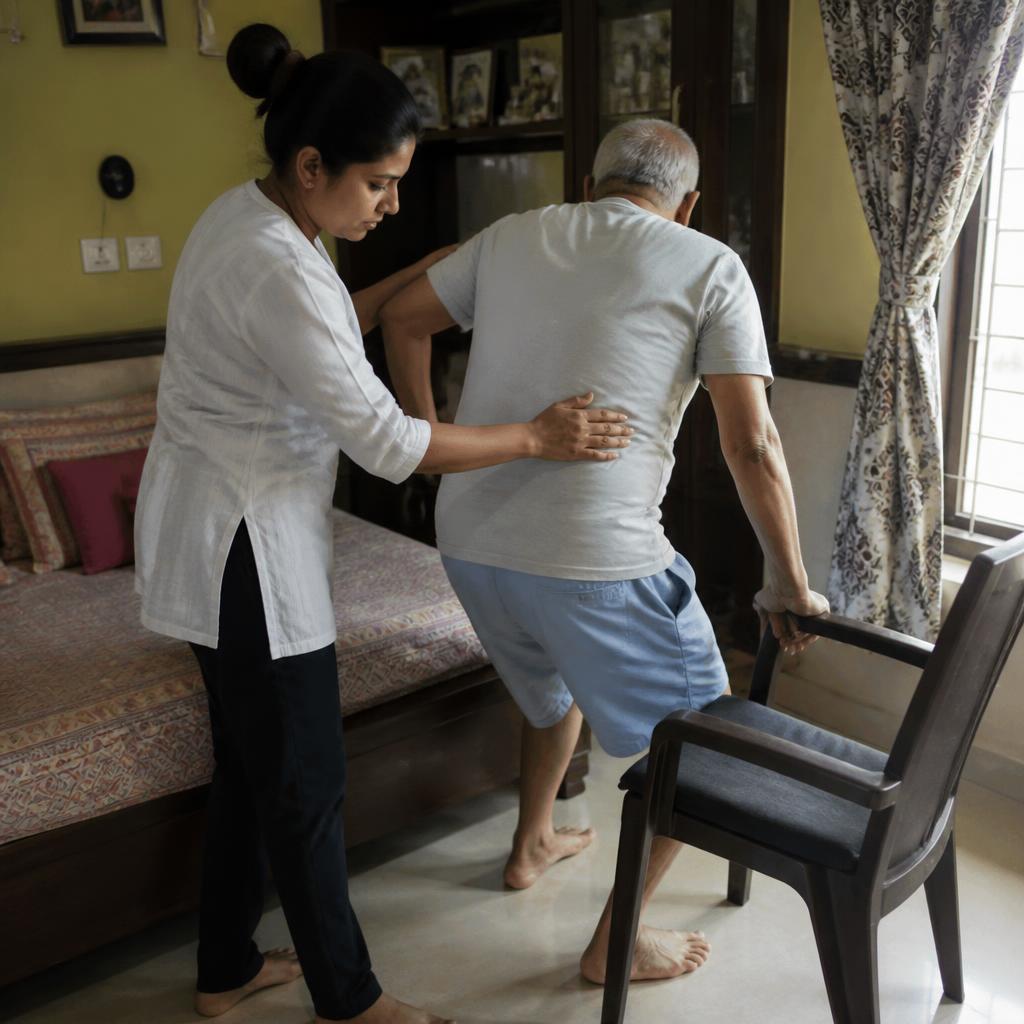
Our physiotherapists are trained in hip precautions and will guide all exercises and daily activities within these constraints. We also assess your home setup — chair heights, toilet risers, bed height — and make practical recommendations.
Week-by-Week Recovery
Week 1–2: Walking with a frame or crutches, bed exercises, managing swelling and pain, practising safe transfers (bed, chair, toilet).
Week 3–6: Progressing to one crutch or stick, increasing walking distance, beginning gentle hip strengthening within precautions.
Week 6–12: Discontinuing walking aids (when safe), strengthening the hip abductors and extensors progressively, addressing the limp.
Month 3–6: Returning to driving, recreational walking, stairs without support, light recreational activities.
How Homecare Physiotherapy Can Support Hip Replacement Recovery
The home environment presents the real challenges of recovery — the specific heights of your chairs, your stairs, your bathroom setup. Practising in this context means the exercises are immediately functional. There is no transfer learning required from a gym to daily life.
Family members can observe techniques and assist safely when needed — an advantage that a clinic session cannot replicate.
Goswami Rehab's post-THR homecare program is structured around your surgical notes, your home environment, and your personal goals. We coordinate with your orthopaedic surgeon and provide written progress reports on request.
Clinical sources & further reading
These public resources provide general clinical guidance. They do not replace an assessment or an individual treatment plan.
Continue exploring
Choose your next step
Keep exploring with a focused guide, a relevant care option, or a direct enquiry.
Need professional advice?
Book an assessment with our expert team.