At a glance
What this guide can help you understand
What to expect from physiotherapy after a fracture, including protection, stiffness management, strength, and return to daily tasks.
What should you bring to a consultation?
Share your main concern, when it started, what affects it, current medicines, and any reports or precautions you have been given.
See our clinical assessment approachWhen should you pause and seek medical advice?
Pause routine exercise and seek medical advice for sudden severe change, new neurological symptoms, breathing difficulty, chest pain, major injury, or feeling acutely unwell.
This guide is educational and does not replace diagnosis or urgent care.
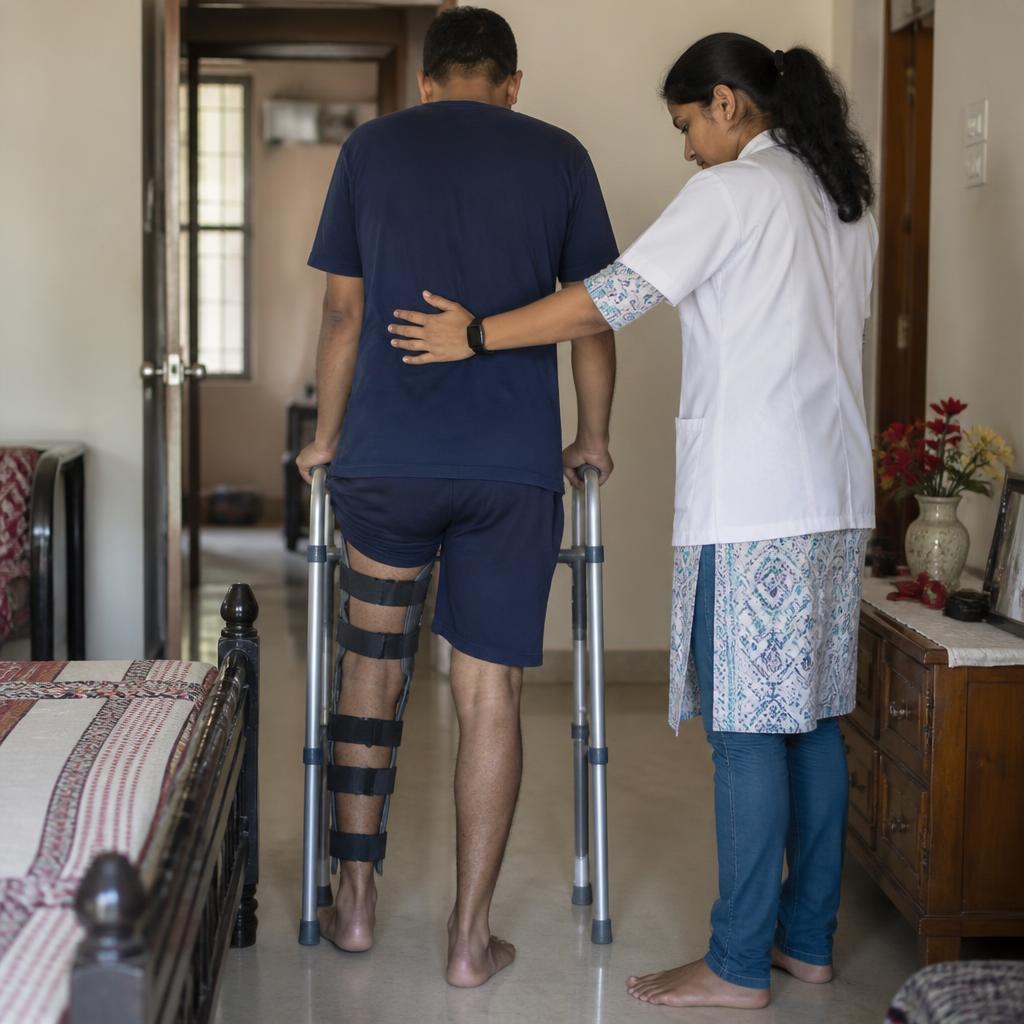
Fracture rehabilitation depends on the bone involved, alignment, fixation, soft-tissue injury, healing on imaging, and the restrictions set by the orthopaedic team. Physiotherapy must respect those restrictions; strengthening or weight-bearing is progressed only when medically appropriate.
Stages of Rehabilitation
During protection, treatment may focus on swelling control, safe transfers, maintaining movement in unaffected joints, and using a prescribed sling, brace, walker, or crutches. Once movement is allowed, the focus expands to restoring range, reducing stiffness, rebuilding muscle, and relearning useful tasks.
Making Progress Safely
Progress can be measured through movement, grip or leg strength, walking distance, stairs, dressing, work, and confidence. Pain, swelling, wound changes, altered sensation, or sudden loss of function should be reported rather than pushed through. A home visit can identify barriers such as stairs, low chairs, or unsafe bathroom transfers.
Do not remove a cast, change weight-bearing, or begin resistance exercises without the treating medical team’s instructions.
Textbook basis: Principles are synthesised from O’Sullivan’s Physical Rehabilitation, Kisner & Colby’s Therapeutic Exercise, and Goodman & Fuller’s Pathology for the Physical Therapist.
Clinical sources & further reading
These public resources provide general clinical guidance. They do not replace an assessment or an individual treatment plan.
Continue exploring
Choose your next step
Keep exploring with a focused guide, a relevant care option, or a direct enquiry.
Need professional advice?
Book an assessment with our expert team.