At a glance
What this guide can help you understand
Total knee replacement is a common orthopaedic surgery in India. The weeks after surgery involve staged physiotherapy, symptom monitoring, and guidance from the surgical team — here's a general overview of what to discuss with your clinicians.
What should you bring to a consultation?
Share your main concern, when it started, what affects it, current medicines, and any reports or precautions you have been given.
See our clinical assessment approachWhen should you pause and seek medical advice?
Pause routine exercise and seek medical advice for sudden severe change, new neurological symptoms, breathing difficulty, chest pain, major injury, or feeling acutely unwell.
This guide is educational and does not replace diagnosis or urgent care.
Total knee replacement (TKR) surgery replaces a damaged knee joint with an artificial implant. Recovery and rehabilitation usually continue for months, with the pace shaped by the surgery, the person's health, the surgeon's instructions, and physiotherapy goals.
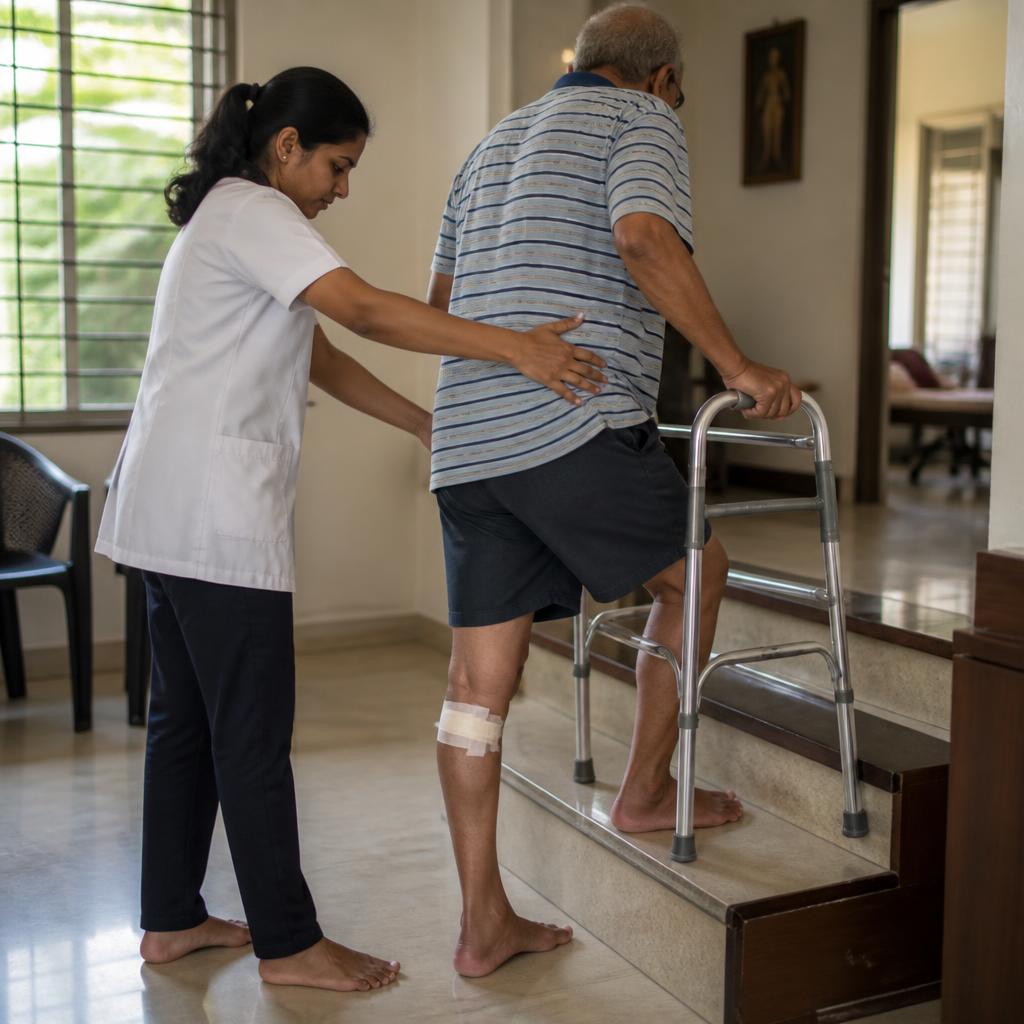
Homecare physiotherapy after TKR can help when travel is difficult. Patients often return home while still in the early stages of recovery, so a physiotherapist can review movement, transfers, walking, and the home setup within the precautions provided by the surgical team.
Week 1–2: Protection and Early Movement
The first two weeks often focus on managing swelling and pain while beginning gentle movement. Some swelling is common after surgery, but a sudden increase, marked redness, wound changes, fever, calf pain, or breathlessness should be reported promptly to the surgical or medical team.
Key goals:
- Achieve full knee extension (straightening) — this protects the joint
- Begin gentle flexion (bending) exercises
- Practice safe bed transfers and standing with support
- Walking short distances with a walker or crutches
Cold therapy may be suggested during this phase, if it is safe for you and permitted by the surgical team. Follow their instructions for duration, skin protection, and frequency rather than using a fixed schedule.
Week 3–6: Restoring Range of Motion
By week 3, the goal is progressing knee flexion toward 90 degrees. Most daily activities — sitting comfortably, climbing stairs, getting in and out of a car — require at least 90–100 degrees of flexion.
Exercises at this stage include:
- Heel slides and wall slides for flexion
- Straight leg raises for quadriceps strength
- Short arc quads
- Seated knee flexion and extension
Walking distance gradually increases. Most patients transition from a walker to a cane around weeks 4–6 depending on strength and balance.
Week 6–12: Strengthening and Function
This phase is about rebuilding the muscle strength that was lost before and after surgery. The quadriceps and gluteal muscles are the primary focus.
- Step-ups and mini squats
- Leg press (low resistance, high repetitions)
- Balance and proprioception training
- Stair climbing with increasing confidence
Return to driving depends on the operated side, medication, strength, reaction time, insurance, and local guidance. Ask the surgeon or physiotherapist when an emergency stop and other driving tasks can be performed safely.
Month 3–6: Return to Full Activity
By month 3, most patients are walking without any aid. The focus shifts to building endurance, returning to recreational activities, and achieving the full range of motion the implant allows.
The Most Common Mistakes
- Skipping physiotherapy: Missing planned sessions or home practice can make it harder to review movement and progress. Discuss barriers with the treating team rather than stopping without advice.
- Pushing through sharp pain: Discomfort during exercise is normal. Sharp, acute pain is a signal to stop.
- Neglecting the extension: Patients often focus on bending but lose extension. Full extension is actually more important — a bent knee at rest causes long-term problems.
Goswami Rehab provides dedicated post-TKR homecare programs across India. We come to you, work within your home environment, and build the program around your surgical instructions, assessment findings, and goals.
Clinical sources & further reading
These public resources provide general clinical guidance. They do not replace an assessment or an individual treatment plan.
Continue exploring
Choose your next step
Keep exploring with a focused guide, a relevant care option, or a direct enquiry.
Need professional advice?
Book an assessment with our expert team.