At a glance
What this guide can help you understand
How Noida families can connect spinal-surgery precautions with safer bed, chair, bathroom, and doorway movement at home.
What should you bring to a consultation?
Share your main concern, when it started, what affects it, current medicines, and any reports or precautions you have been given.
See our clinical assessment approachWhen should you pause and seek medical advice?
Pause routine exercise and seek medical advice for sudden severe change, new neurological symptoms, breathing difficulty, chest pain, major injury, or feeling acutely unwell.
This guide is educational and does not replace diagnosis or urgent care.
After spinal surgery, the first meaningful movement may be turning in bed, sitting at the edge, standing from a chair, or reaching the bathroom without losing control. Those tasks are not the same as proving that the back is strong. Physiotherapy should connect the surgeon’s restrictions with the person’s actual home route and teach movement that is safe for the operation and current neurological status.
The practical context in this city
Noida is the setting for this home-movement question, not evidence of a local surgical outcome or a universal recovery pathway. A home assessment can look at the bed height, toilet route, chair support, lift or stairs, caregiver position, and the amount of sitting or walking needed during the day. The procedure, wound, neurological findings, brace or walking-aid instructions, and surgeon’s restrictions determine what can be practised.
What a physiotherapist assesses
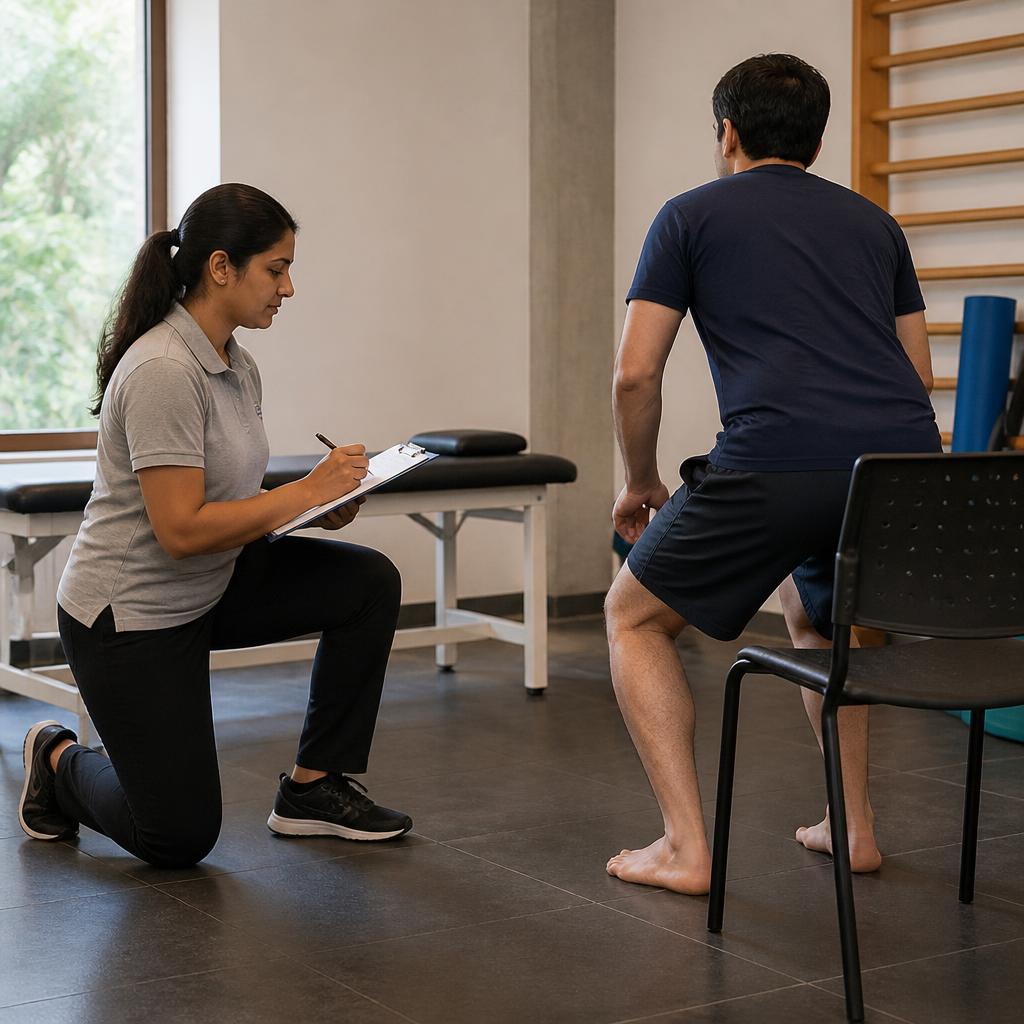
The therapist reviews the operation and discharge instructions before observing rolling, lying-to-sitting, sit-to-stand, short walking, turning, and the person’s use of a rail or walking aid. They ask about new leg symptoms, numbness, bladder or bowel changes, wound concerns, pain behaviour, sleep, and confidence. A movement may be modified because of a restriction rather than because it is universally dangerous; the team must explain that distinction.
How rehabilitation can progress
Practice can begin with a controlled bed or chair transition and then connect to the real bathroom, kitchen, doorway, or lift route. Assistance, surface, support, distance, and task complexity can change one at a time while the clinician watches control and the later response. A good plan values a repeatable transfer and a calm recovery period over a difficult manoeuvre completed once.
What to expect from a home physiotherapy session
A home visit may rehearse the exact bed exit, bathroom turn, chair height, or short corridor walk that matters. The therapist can position a walking aid, teach a caregiver where to stand without pulling, and identify which tasks are independent, supervised, or not yet appropriate. The written plan should state when the surgeon or rehabilitation team needs to be contacted.
Do
- Keep the surgeon’s restrictions visible, clear the route, use the assessed support, and practise one real transition with attention to breathing and control.
- Keep a short record of symptoms, sleep, activity, food or bowel changes where relevant, and the task that is becoming easier or harder.
- Share discharge summaries, medication changes, restrictions, equipment, and new symptoms before a programme is progressed.
Don’t
- Do not force a twist, lift a heavy object, climb extra stairs, or treat a pain-free transfer as permission to ignore procedure-specific precautions.
- Do not copy another person’s protocol or use one good day as proof that a larger workload is safe.
- Do not delay medical review for a new or rapidly changing symptom because it appears during rehabilitation.
Safety and when to seek medical advice
Seek urgent medical review for new or worsening leg weakness, new loss of sensation, a change in bladder or bowel control, inability to walk, severe escalating pain, wound separation, fever, or sudden loss of function. If pain, numbness, balance, or walking changes after a previously stable period, pause progression and contact the treating team.
Booking and follow-up
Home physiotherapy is arranged after the team understands the person’s condition, location, current precautions, and preferred care. Goswami Rehab offers home visits at ₹1,125–₹1,350 and online consultation at ₹742. Send the online booking request with the main concern, city, and preferred dates; the team confirms the appropriate next step within 24 hours. A teleconsultation can help review a previously assessed plan, but it does not replace emergency or specialist medical care.
This article is educational information only. It does not diagnose a condition or replace advice from a doctor, surgeon, neurologist, pulmonologist, dietitian, or treating physiotherapist. Individual plans, timelines, and outcomes vary.
Related care: home physiotherapy coverage in Noida and stroke and neurological rehabilitation.
Clinical sources & further reading
These public resources provide general clinical guidance. They do not replace an assessment or an individual treatment plan.
- Post-operative spinal surgery physiotherapyNHS Greater Glasgow and Clyde
- Lumbar decompression surgery: recoveryNHS
- Exercises following spinal surgeryRoyal National Orthopaedic Hospital
- Lumbar decompression surgeryNHS Inform
- Low back surgery exercise guideAmerican Academy of Orthopaedic Surgeons
- Gautam Buddh Nagar district: official informationDistrict Administration, Gautam Buddh Nagar
Continue exploring
Choose your next step
Keep exploring with a focused guide, a relevant care option, or a direct enquiry.
Need professional advice?
Book an assessment with our expert team.