At a glance
What this guide can help you understand
A practical guide to balance exercise, lighting, bathroom safety, footwear, and confidence-building for older adults living in Jaipur.
What should you bring to a consultation?
Share your main concern, when it started, what affects it, current medicines, and any reports or precautions you have been given.
See our clinical assessment approachWhen should you pause and seek medical advice?
Pause routine exercise and seek medical advice for sudden severe change, new neurological symptoms, breathing difficulty, chest pain, major injury, or feeling acutely unwell.
This guide is educational and does not replace diagnosis or urgent care.
Fall prevention is more than removing one rug. Vision, medication, blood-pressure changes, foot sensation, leg strength, reaction time, fear, and the design of daily tasks interact. A physiotherapist can help an older adult practise useful balance while the family makes targeted changes instead of making the person afraid to move.
The practical context in this city
The relevant home route in Jaipur might involve a bathroom, a threshold, a staircase, a courtyard, or floor-level activities. The safest solution depends on that person’s mobility and family routine. A recommendation should be tested in the actual space and should preserve independence where possible.
What a physiotherapist assesses
The therapist asks about previous falls and near-falls, dizziness, vision, footwear, medication changes, pain, continence urgency, and what the person stopped doing after a fall. They observe sit-to-stand, turning, reaching, walking, dual tasks, and the use of any aid. A medical referral may be needed for fainting, unexplained falls, or a new neurological symptom.
How rehabilitation can progress
Training may move from supported weight shifts and repeated sit-to-stand to stepping, turning, reaching, carrying, and obstacle practice. Strength is built in the legs and trunk, while confidence is rebuilt through predictable exposure. The person’s most important task—walking to the bathroom, answering the door, or using stairs—should guide the exercise selection.
What to expect from a home physiotherapy session
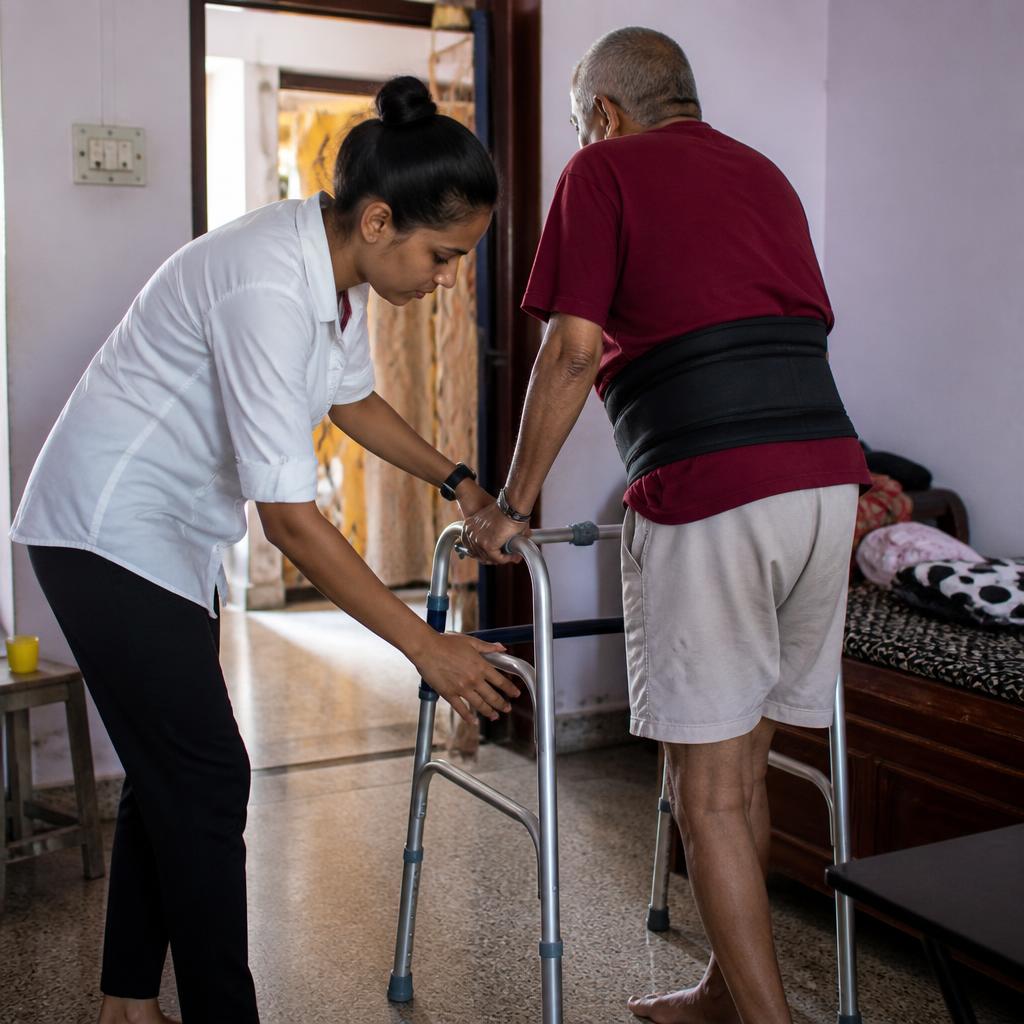
The therapist walks through the main route with the person and caregiver, checks lighting and surfaces, and demonstrates safe guarding. Exercises are practised near a stable support, then written in plain language with a frequency and stop rule. Follow-up can measure fewer near-falls, less assistance, and greater confidence, not only a test score.
Do
- Improve lighting and contrast, keep a clear route, wear secure footwear, rise slowly if light-headed, and practise the prescribed balance work when a safe support or helper is available.
- Keep a simple record of symptoms, activity, sleep, and the tasks that are becoming easier or harder.
- Share medical reports, medication changes, surgeon restrictions, and any recent change in symptoms before exercise is progressed.
Don’t
- Do not remove all activity after a fall, stand on a chair to reach storage, or use furniture that moves as a balance support.
- Do not copy an exercise from a video if it increases symptoms, requires equipment you cannot control, or conflicts with a medical restriction.
- Do not use pain, fatigue, or a single good day as the only measure of readiness for a harder task.
Safety and when to seek medical advice
Any of these symptoms—new fainting, chest pain, sudden weakness, speech or vision changes, severe headache, or inability to bear weight after a fall—needs urgent care. Recurrent falls, unexplained dizziness, and rapidly worsening balance need medical review.
Booking and follow-up
Home physiotherapy is arranged after the team understands the person’s condition, location, current precautions, and preferred care. Goswami Rehab offers home visits at ₹1,125–₹1,350 and online consultation at ₹742. Send the online booking request with the main concern, city, and preferred dates; the team confirms the appropriate next step within 24 hours. A teleconsultation can be useful when travel is difficult or when an exercise plan needs review, but it does not replace emergency or specialist medical care.
The article is educational information only. It does not diagnose a condition or replace advice from a doctor, surgeon, obstetrician, cancer team, or treating physiotherapist. Individual plans, timelines, and outcomes vary.
Clinical sources & further reading
These public resources provide general clinical guidance. They do not replace an assessment or an individual treatment plan.
- STEADI: Stopping Elderly Accidents, Deaths & InjuriesCenters for Disease Control and Prevention
- FallsWorld Health Organization
- Falls in older people: assessing risk and preventionNICE
- Government of RajasthanGovernment of Rajasthan
- RehabilitationMedlinePlus, U.S. National Library of Medicine
- Neurologic diseasesMedlinePlus, U.S. National Library of Medicine
Continue exploring
Choose your next step
Keep exploring with a focused guide, a relevant care option, or a direct enquiry.
Need professional advice?
Book an assessment with our expert team.