At a glance
What this guide can help you understand
A practical home rehabilitation guide to transfers, residual-limb care, prosthetic preparation, and confidence after amputation in Tigaon.
What should you bring to a consultation?
Share your main concern, when it started, what affects it, current medicines, and any reports or precautions you have been given.
See our clinical assessment approachWhen should you pause and seek medical advice?
Pause routine exercise and seek medical advice for sudden severe change, new neurological symptoms, breathing difficulty, chest pain, major injury, or feeling acutely unwell.
This guide is educational and does not replace diagnosis or urgent care.
Amputation rehabilitation begins before a prosthesis is fitted. Pain, wound healing, swelling, strength, balance, transfers, emotional adjustment, and the person’s home and work goals all need attention. The programme is coordinated with the surgical and prosthetic team and changes as healing progresses.
The practical context in this city
In Tigaon, the most useful first goal may be moving safely between bed, chair, bathroom, and a familiar outdoor surface. The therapist should ask what equipment and help are realistically available rather than assuming a standard accessible home. A home visit can identify a safe temporary route while referrals for prosthetic or equipment services are arranged.
What a physiotherapist assesses
The therapist checks wound and skin instructions, residual-limb shape and sensitivity, pain, hip or knee range, upper-limb strength, sitting and standing balance, transfers, wheelchair use, and the person’s goals. They also screen for diabetes, vascular concerns, infection, phantom sensations, and the psychological impact of the change.
How rehabilitation can progress
Early goals include positioning, gentle range, upper-body strength, bed mobility, transfers, and protecting the healing limb. Later work may include standing, balance, prosthetic preparation, gait training, uneven surfaces, and task-specific endurance. A prosthesis is not the only marker of progress; safe independence without one can be a meaningful stage.
What to expect from a home physiotherapy session
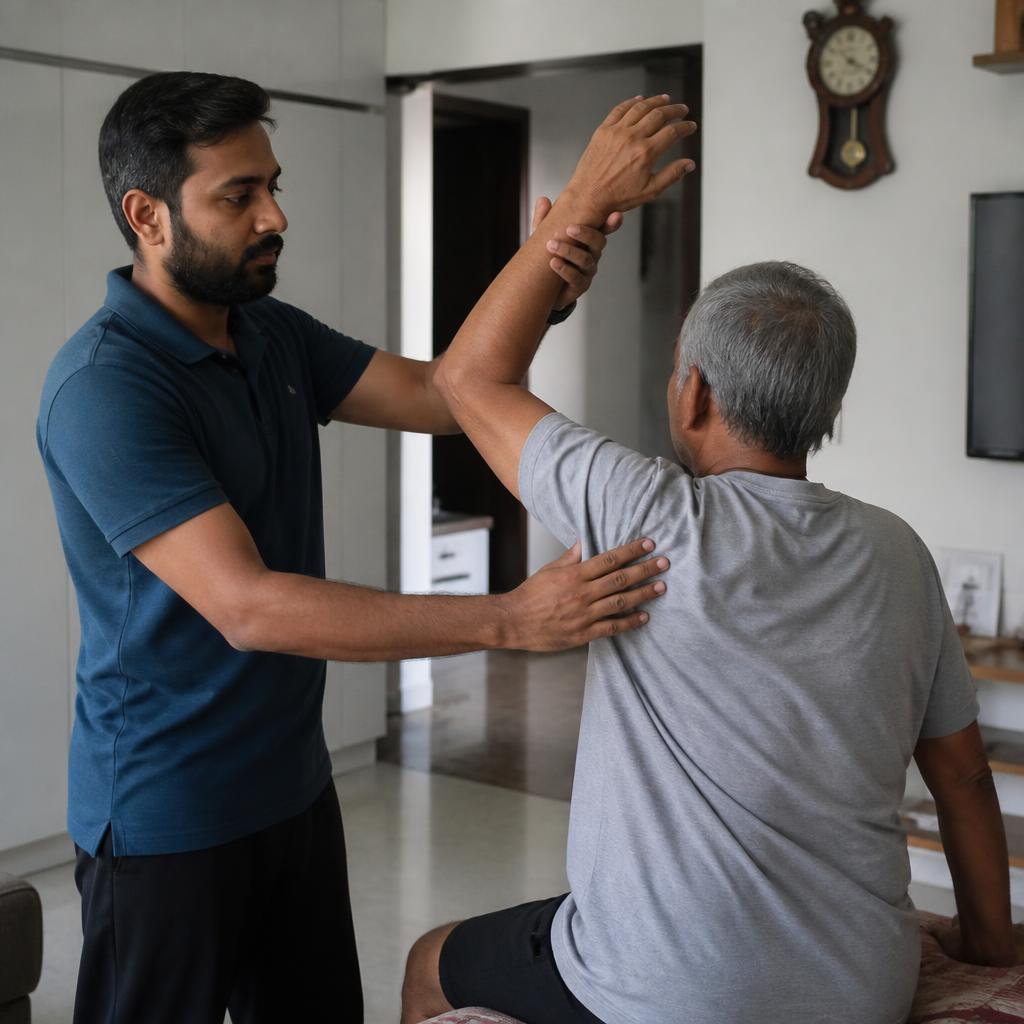
The therapist observes the bed-to-chair transfer, checks the main walking or wheelchair route, and teaches positioning, skin observation, and a strengthening plan. When the medical team permits, the person practises loading and balance with the correct support. The family learns how to assist without rubbing a healing area or making every task passive.
Do
- Follow wound and prosthetic-team instructions, inspect skin after equipment use, keep the residual limb positioned as taught, and practise transfers with the agreed level of help.
- Keep a simple record of symptoms, activity, sleep, and the tasks that are becoming easier or harder.
- Share medical reports, medication changes, surgeon restrictions, and any recent change in symptoms before exercise is progressed.
Don’t
- Do not place pressure on an unhealed wound, tighten a compression device without guidance, or attempt prosthetic walking before fit, healing, and balance have been reviewed.
- Do not copy an exercise from a video if it increases symptoms, requires equipment you cannot control, or conflicts with a medical restriction.
- Do not use pain, fatigue, or a single good day as the only measure of readiness for a harder task.
Safety and when to seek medical advice
Any of these signs—increasing redness, warmth, discharge, fever, severe pain, a dark or cold limb, sudden breathlessness, chest pain, or a fall with injury—needs urgent medical attention. New or worsening vascular or diabetic symptoms should be reported promptly.
Booking and follow-up
Home physiotherapy is arranged after the team understands the person’s condition, location, current precautions, and preferred care. Goswami Rehab offers home visits at ₹1,125–₹1,350 and online consultation at ₹742. Send the online booking request with the main concern, city, and preferred dates; the team confirms the appropriate next step within 24 hours. A teleconsultation can be useful when travel is difficult or when an exercise plan needs review, but it does not replace emergency or specialist medical care.
The article is educational information only. It does not diagnose a condition or replace advice from a doctor, surgeon, obstetrician, cancer team, or treating physiotherapist. Individual plans, timelines, and outcomes vary.
Clinical sources & further reading
These public resources provide general clinical guidance. They do not replace an assessment or an individual treatment plan.
- AmputationNHS
- Assistive technologyWorld Health Organization
- Pressure soresNHS
- Faridabad District: official district informationDistrict Administration, Faridabad
- RehabilitationMedlinePlus, U.S. National Library of Medicine
- Orthopedic conditionsNational Institute of Arthritis and Musculoskeletal and Skin Diseases
Continue exploring
Choose your next step
Keep exploring with a focused guide, a relevant care option, or a direct enquiry.
Need professional advice?
Book an assessment with our expert team.