At a glance
What this guide can help you understand
A careful home physiotherapy guide to swelling awareness, movement, skin care, compression conversations, and red flags after cancer treatment in Jaipur.
What should you bring to a consultation?
Share your main concern, when it started, what affects it, current medicines, and any reports or precautions you have been given.
See our clinical assessment approachWhen should you pause and seek medical advice?
Pause routine exercise and seek medical advice for sudden severe change, new neurological symptoms, breathing difficulty, chest pain, major injury, or feeling acutely unwell.
This guide is educational and does not replace diagnosis or urgent care.
Lymphoedema is swelling caused by a problem with lymph drainage. After cancer treatment, swelling may affect an arm, leg, breast, chest, or another area. The right plan depends on the cancer treatment, surgery, skin condition, infection risk, symptoms, and the advice of the oncology team. It is not safe to treat every new swelling as simple fluid retention.
The practical context in this city
A home plan in Jaipur should fit appointments, heat, clothing, work, family support, and access to the cancer or lymphoedema team. The therapist can help the person practise movement in a familiar setting, but local convenience must not delay a review of new, painful, red, or rapidly increasing swelling.
What a physiotherapist assesses
Assessment includes onset and change in swelling, skin integrity, pain, heaviness, tightness, infection history, breathing symptoms, surgery and radiation details, movement, strength, and function. Circumference or volume measures may be used consistently, but a number alone does not determine treatment. Compression requires a suitable assessment, correct fit, and medical coordination.
How rehabilitation can progress
Gentle movement, breathing, skin care, and gradual strengthening are often considered within the person’s treatment plan. The load is progressed slowly, with attention to heaviness, pain, skin response, and fatigue. Some people need specialist lymphoedema treatment, compression, or a review of infection and cancer-related causes before exercising more.
What to expect from a home physiotherapy session
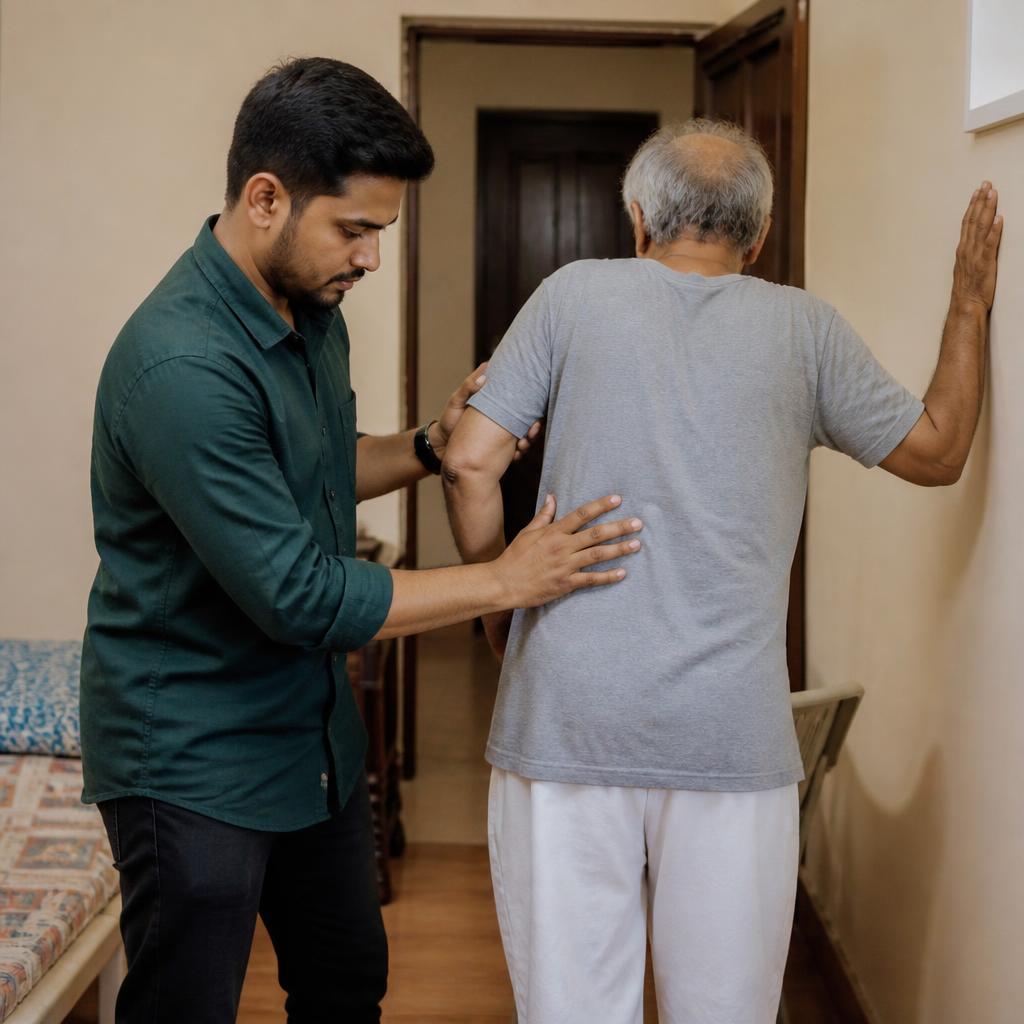
The therapist checks the swollen area respectfully, reviews the oncology instructions, and observes the movements that are difficult—dressing, reaching, walking, or climbing stairs. They may teach a short mobility sequence, skin-check routine, and activity diary, and explain how to communicate a change to the medical team. Massage or compression is not started automatically.
Do
- Protect and moisturise intact skin as advised, keep nails and small cuts clean, move regularly within tolerance, and tell the oncology team about a new or changing swelling.
- Keep a simple record of symptoms, activity, sleep, and the tasks that are becoming easier or harder.
- Share medical reports, medication changes, surgeon restrictions, and any recent change in symptoms before exercise is progressed.
Don’t
- Do not self-prescribe tight compression, ignore redness or fever, use vigorous massage over painful tissue, or let fear of swelling lead to complete inactivity without clinical advice.
- Do not copy an exercise from a video if it increases symptoms, requires equipment you cannot control, or conflicts with a medical restriction.
- Do not use pain, fatigue, or a single good day as the only measure of readiness for a harder task.
Safety and when to seek medical advice
Any of these changes—rapid swelling, redness, heat, severe pain, fever, an unexplained lump, new chest symptoms, or sudden shortness of breath—needs prompt medical assessment. The cancer team should guide decisions when swelling is new or changing.
Booking and follow-up
Home physiotherapy is arranged after the team understands the person’s condition, location, current precautions, and preferred care. Goswami Rehab offers home visits at ₹1,125–₹1,350 and online consultation at ₹742. Send the online booking request with the main concern, city, and preferred dates; the team confirms the appropriate next step within 24 hours. A teleconsultation can be useful when travel is difficult or when an exercise plan needs review, but it does not replace emergency or specialist medical care.
The article is educational information only. It does not diagnose a condition or replace advice from a doctor, surgeon, obstetrician, cancer team, or treating physiotherapist. Individual plans, timelines, and outcomes vary.
Clinical sources & further reading
These public resources provide general clinical guidance. They do not replace an assessment or an individual treatment plan.
Continue exploring
Choose your next step
Keep exploring with a focused guide, a relevant care option, or a direct enquiry.
Need professional advice?
Book an assessment with our expert team.