At a glance
What this guide can help you understand
A task-focused rehabilitation guide to squatting, floor-to-stand movement, lifting, pacing, and physical work in Tigaon.
What should you bring to a consultation?
Share your main concern, when it started, what affects it, current medicines, and any reports or precautions you have been given.
See our clinical assessment approachWhen should you pause and seek medical advice?
Pause routine exercise and seek medical advice for sudden severe change, new neurological symptoms, breathing difficulty, chest pain, major injury, or feeling acutely unwell.
This guide is educational and does not replace diagnosis or urgent care.
Squatting, lifting, carrying, and getting up from the floor are skills that can be trained. They are not automatically dangerous, but they become harder when strength, ankle movement, balance, load size, fatigue, or pain changes. A physiotherapist can help a person find a safer version of the task and build capacity gradually.
The practical context in this city
Some people in Tigaon may need to move between floor-level activities, outdoor surfaces, household tasks, or physical work. The article does not assume that every household or worker performs the same tasks. The right plan starts with the specific movement that is difficult and the equipment, space, and help available.
What a physiotherapist assesses
The therapist asks whether pain is in the back, hip, knee, ankle, or shoulder and whether it appears during lowering, lifting, turning, or after repeated work. They assess ankle and hip movement, leg and trunk strength, balance, breathing, load position, footwear, and the person’s ability to recover after a shift. Numbness, weakness, or systemic symptoms alter the pathway.
How rehabilitation can progress
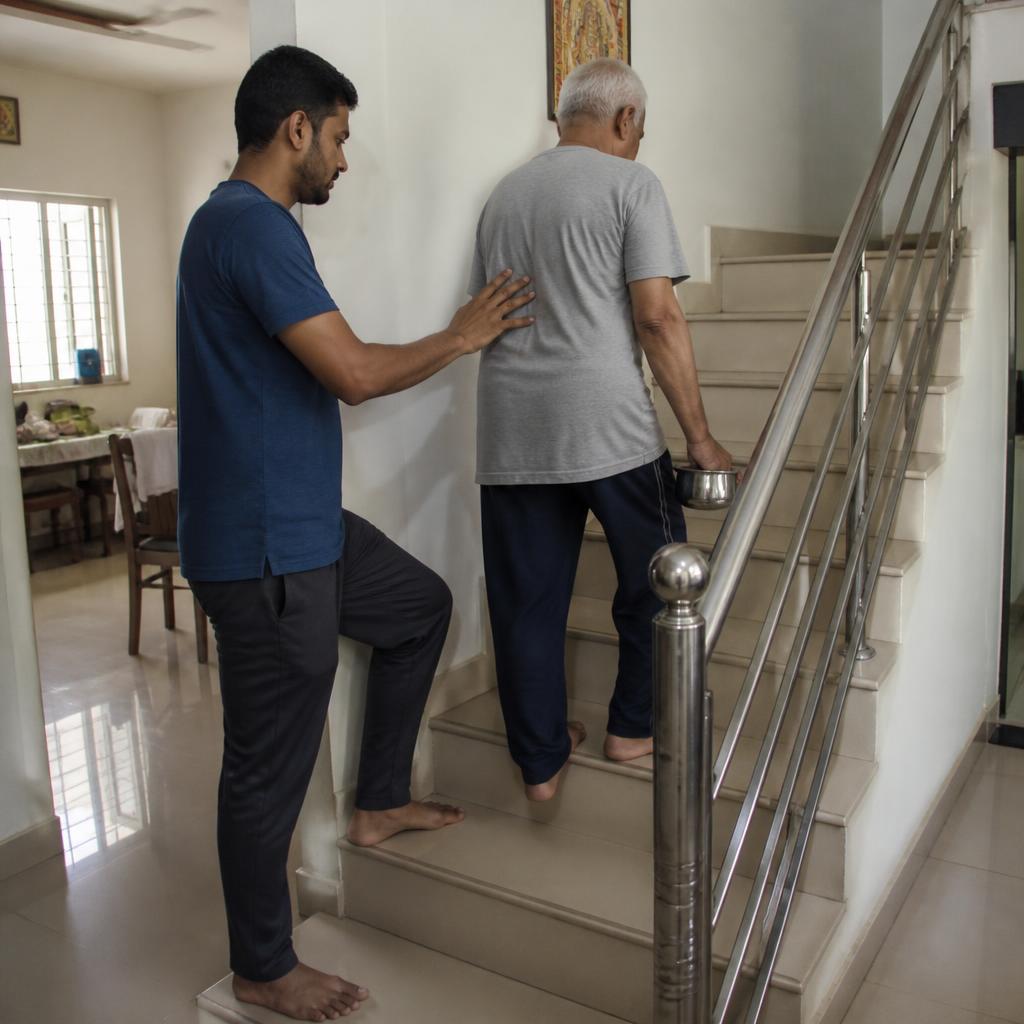
Training may start with a raised sit-to-stand, supported hinge, light carry, or partial squat. It can progress through range, repetitions, load, speed, distance, and uneven surfaces one at a time. A good technique is not frozen: the person learns several options, including using a support, bringing a load closer, splitting a load, or asking for help.
What to expect from a home physiotherapy session
The therapist observes a safe demonstration with no or minimal load, then chooses a chair, step, wall, or household object for practice. They coach breathing, foot placement, hip and knee coordination, and pacing. The work plan includes a recovery check so the person learns whether the dose was manageable the next morning.
Do
- Keep loads close, use the strongest available position, split heavy tasks, alternate demanding and lighter work, and build strength through the range you can control.
- Keep a simple record of symptoms, activity, sleep, and the tasks that are becoming easier or harder.
- Share medical reports, medication changes, surgeon restrictions, and any recent change in symptoms before exercise is progressed.
Don’t
- Do not twist while carrying a heavy object, hold your breath through every lift, or continue repeated work when weakness, loss of balance, or radiating symptoms are increasing.
- Do not copy an exercise from a video if it increases symptoms, requires equipment you cannot control, or conflicts with a medical restriction.
- Do not use pain, fatigue, or a single good day as the only measure of readiness for a harder task.
Safety and when to seek medical advice
Urgent assessment is needed for new bladder or bowel loss with saddle numbness, progressive leg weakness, a major fall, severe unremitting pain, fever, or unexplained weight loss. Any of these symptoms—chest pain, fainting, or severe breathlessness during physical work—needs immediate care.
Booking and follow-up
Home physiotherapy is arranged after the team understands the person’s condition, location, current precautions, and preferred care. Goswami Rehab offers home visits at ₹1,125–₹1,350 and online consultation at ₹742. Send the online booking request with the main concern, city, and preferred dates; the team confirms the appropriate next step within 24 hours. A teleconsultation can be useful when travel is difficult or when an exercise plan needs review, but it does not replace emergency or specialist medical care.
The article is educational information only. It does not diagnose a condition or replace advice from a doctor, surgeon, obstetrician, cancer team, or treating physiotherapist. Individual plans, timelines, and outcomes vary.
Clinical sources & further reading
These public resources provide general clinical guidance. They do not replace an assessment or an individual treatment plan.
- Manual handling at workHealth and Safety Executive
- Physical Activity BasicsCenters for Disease Control and Prevention
- PhysiotherapyNHS
- Faridabad District: official district informationDistrict Administration, Faridabad
- RehabilitationMedlinePlus, U.S. National Library of Medicine
- Orthopedic conditionsNational Institute of Arthritis and Musculoskeletal and Skin Diseases
Continue exploring
Choose your next step
Keep exploring with a focused guide, a relevant care option, or a direct enquiry.
Need professional advice?
Book an assessment with our expert team.